China FDI hesitancy: Why Xi's open-door pitch isn't convincing foreign firms
Synopsis
Xi Jinping is personally wooing Tesla's Musk, Nvidia's Huang, and Apple's Cook — but China's own laws, which compel employees inside foreign firms to spy for the state, may be doing more damage to inbound investment than any tariff. The higher the technology value, the sharper the deterrent: Beijing's security apparatus and its open-door rhetoric are pulling in opposite directions.
Key Takeaways
Xi Jinping has personally met top global CEOs — including Elon Musk , Jensen Huang , Tim Cook , Larry Fink , and Kelly Ortberg — to pitch China as an open investment destination.
China has enacted laws requiring citizens, including employees of foreign firms, to report to state security agencies under penalty of law.
The surveillance obligation effectively turns workforces inside foreign-invested enterprises into intelligence assets for the Chinese state.
Higher-value technology operations face greater government scrutiny, making the deterrent effect most acute in sectors Beijing most wants to attract.
Foreign companies are increasingly exploring alternatives in Southeast Asia , India , and Mexico , accelerating the 'China-plus-one' diversification trend.
Critics argue the Chinese Communist Party (CCP) 's insistence on political primacy is structurally incompatible with genuine economic openness.
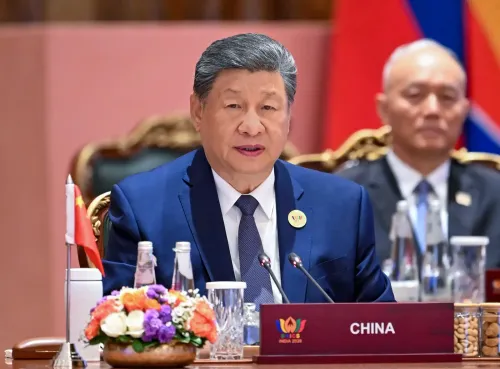
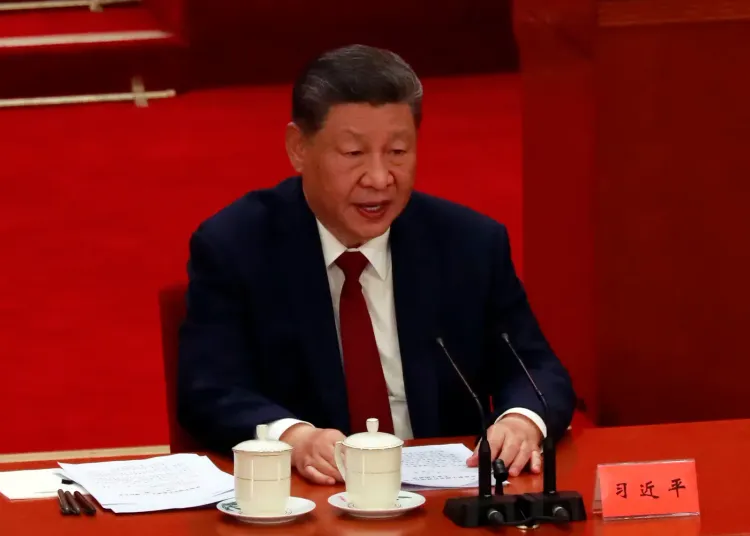
China's President Xi Jinping has made attracting foreign investment a centrepiece of his diplomatic outreach, personally addressing some of the world's most powerful corporate leaders in recent months — yet a growing body of evidence suggests that Beijing's legislative overreach is quietly undermining those overtures, according to an analysis in The Diplomat.
Xi's Pitch to Global Business Leaders
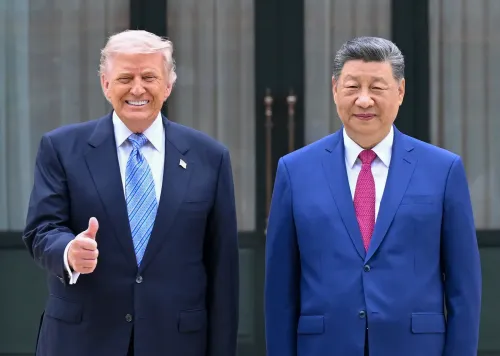
Among the executives Xi Jinping has met are Elon Musk of Tesla and SpaceX, Jensen Huang of Nvidia, Tim Cook of Apple, Larry Fink of BlackRock, and Kelly Ortberg of Boeing. In these meetings, Xi reportedly assured them that China 'will only open its door wider' and that 'China-U.S. economic and trade ties are mutually beneficial and win-win in nature.'
The messaging is consistent and deliberate — a direct appeal from the highest level of Chinese leadership to reassure global capital that the world's second-largest economy remains open for business.
The Counter-Signal: Surveillance Laws That Chill Investment
However, the same period has seen Beijing enact a series of laws and decrees that compel ordinary Chinese citizens — including employees of foreign-invested enterprises — to act as informants for state security agencies. These regulations require individuals to report behaviour deemed suspicious, seditious, or potentially harmful to China's national security, under penalty of law.
The practical implication for foreign businesses is stark: the very workforce inside their China-based operations is legally obligated to surveil and report to the state. According to the analysis in The Diplomat, this effectively transforms employees into intelligence assets — a reality that no risk-conscious multinational can ignore when making capital allocation decisions.
Technology Firms Face the Sharpest Dilemma
The deterrent effect intensifies as one moves up the value chain. The higher the technological sophistication of a company's operations, the more likely it is to attract scrutiny and potential interference from Chinese government authorities, the analysis notes. For firms in semiconductors, artificial intelligence, or advanced manufacturing — precisely the sectors Xi most wants to attract — the risk calculus is particularly unfavourable.
This creates a structural contradiction at the heart of China's foreign investment strategy: the industries it most needs are the ones most deterred by its own security apparatus.
Alternatives Gaining Ground
Foreign companies are reportedly reassessing their options, with lower-cost manufacturing destinations in Southeast Asia, India, and Mexico increasingly seen as safer and more welcoming alternatives. This 'China-plus-one' diversification trend has accelerated since 2020, and Beijing's surveillance legislation may be cementing it further.
Historically, the Chinese Communist Party (CCP) has treated its own political primacy as non-negotiable — a posture that critics argue is now in direct tension with the economic openness Xi publicly advocates. As global capital becomes more mobile and geopolitical risk more legible, that contradiction may prove increasingly costly for China's growth ambitions.
Point of View
Not with the employer. No board-level risk committee can paper over that. What is striking is that this deterrent falls hardest on exactly the high-technology, high-value sectors China needs most to move up the economic ladder. The 'open door' rhetoric and the closed-fist security posture cannot coexist indefinitely — and global capital, which is now far better at pricing geopolitical risk than it was a decade ago, appears to be making that judgement quietly but decisively.
NationPress
1 Oct 2026
Frequently Asked Questions
Why are foreign companies hesitant to invest in China despite Xi Jinping's assurances?
China has enacted laws requiring citizens — including employees of foreign-invested companies — to report to state security agencies, effectively making workforces inside foreign firms into informants for the government. This legal obligation creates significant operational and intelligence risk that deters foreign capital, according to an analysis in The Diplomat.
Which global business leaders has Xi Jinping personally courted for investment?
Xi Jinping has met Elon Musk of Tesla and SpaceX, Jensen Huang of Nvidia, Tim Cook of Apple, Larry Fink of BlackRock, and Kelly Ortberg of Boeing, reportedly assuring them that China 'will only open its door wider.'
How do China's surveillance laws specifically affect foreign businesses?
The laws compel ordinary Chinese citizens to report behaviour deemed suspicious or harmful to national security, under penalty of law. For foreign firms, this means their own employees inside China-based operations are legally obligated to surveil and report to state security — a risk that is especially acute for technology-intensive businesses.
Which sectors face the greatest deterrent from China's security laws?
High-value technology sectors — including semiconductors, artificial intelligence, and advanced manufacturing — face the sharpest deterrent, as the higher the technological sophistication of operations, the more attention and potential interference they attract from Chinese authorities.
What alternatives are foreign companies considering instead of China?
Foreign companies are increasingly looking at manufacturing destinations in Southeast Asia, India, and Mexico as safer and more cost-competitive alternatives, accelerating the 'China-plus-one' diversification strategy that has been gaining traction since 2020.