China's transnational repression in US: Congress sounds alarm at CECC hearing
Synopsis
On the 37th anniversary of Tiananmen, the US Congress heard chilling firsthand accounts — a father warned by the FBI that a Chinese spy was tracking his Olympic-athlete daughter, and a Hong Kong activist living under a HK$1 million bounty on American soil. With Freedom House logging 319 incidents since 2014, lawmakers are pushing a bipartisan bill to formally define and combat Beijing's reach inside the United States.
Key Takeaways
The CECC held a hearing on 5 June 2025 — the 37th anniversary of the Tiananmen Square crackdown — on China's alleged transnational repression inside the US.
Freedom House data cited at the hearing documents 319 reported incidents of Chinese transnational repression since 2014 .
Activist Arthur Liu testified that the FBI warned him in 2021 of a suspected Chinese spy tracking him and his daughter, figure skater Alysa Liu , ahead of the 2022 Beijing Winter Olympics .
Anna Kwok of the Hong Kong Democracy Council said Hong Kong authorities issued a HK$1 million bounty for her arrest after she testified before Congress in 2023 .
Lawmakers renewed calls for the bipartisan Transnational Repression Policy Act to establish a statutory definition and coordinate federal, state, and local responses.
State officials from Nebraska and Alaska told the commission that local governments are enacting their own laws to counter Chinese influence operations.
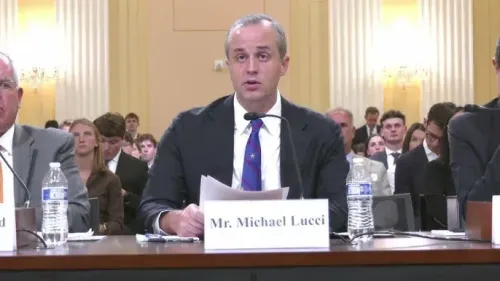
The Chinese government's campaign to silence dissidents and critics living on American soil came under sharp congressional scrutiny on 5 June 2025, as the Congressional-Executive Commission on China (CECC) convened a hearing on the 37th anniversary of the Tiananmen Square crackdown. Lawmakers, state officials, and pro-democracy activists testified to what they described as an escalating pattern of intimidation, surveillance, and coercion directed at people residing in the United States.
What Lawmakers Said at the CECC Hearing
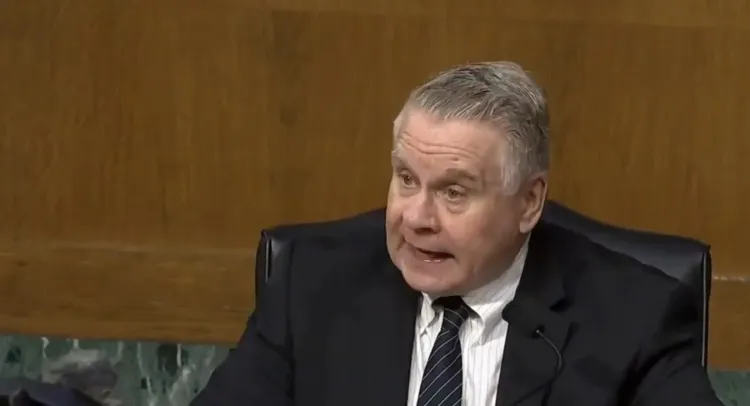
Co-Chair Representative Chris Smith opened the session by cataloguing the Chinese Communist Party's (CCP) alleged toolkit: detaining family members in China, doxing, deploying spyware and deepfakes, issuing Hong Kong bounties, and operating what he called 'illegal police stations right here in the United States.' Smith drew a stark moral line, stating: 'Tiananmen cannot be erased. You either stand with the tank man or you stand with the tank. There is no middle ground.'
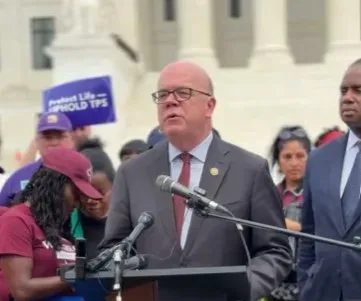
Co-Chair Representative Jim McGovern described China as 'the world's worst perpetrator of transnational repression,' citing data from Freedom House documenting 319 reported incidents since 2014. McGovern urged passage of the bipartisan Transnational Repression Policy Act, which would establish a statutory definition of the practice and strengthen coordinated responses at the federal, state, and local levels.
Personal Testimony: Activists Describe Living Under Surveillance
Arthur Liu, a former Chinese democracy activist who fled China following the 1989 Tiananmen crackdown and settled in California, told lawmakers he had believed political persecution was behind him upon arriving in the United States. That assumption shattered in 2021, when the FBI warned him that a Chinese operative was allegedly tracking him and seeking personal information about him and his daughter, Olympic figure skater Alysa Liu, ahead of the 2022 Beijing Winter Olympics.
'The FBI told me to watch out for my surroundings and be careful,' Liu testified. He said agents informed him that a suspected Chinese spy would monitor his movements, place a GPS tracker on his vehicle, and attempt to obtain passport information. 'I was terrified for the safety of Alisa when she goes to Beijing to compete for the United States of America,' he said.
Anna Kwok, board chair of the Hong Kong Democracy Council, described an intensifying campaign against pro-democracy figures in the US. Following her testimony before Congress in 2023, Hong Kong authorities reportedly issued a HK$1 million bounty for her arrest. She said she subsequently received online threats and faced intimidation during protests in San Francisco coinciding with Chinese President Xi Jinping's visit to the United States.
'Feeling safe is a privilege,' Kwok told lawmakers. 'I am among hundreds of thousands of rights defenders in America who live every single day knowing we are being watched and threatened.' She also disclosed that her father had been imprisoned in Hong Kong, describing the detention of family members as a deliberate instrument of coercion against activists abroad.
State-Level Response: From Nebraska to Alaska
State officials told the commission that local governments are increasingly stepping up to counter perceived Chinese influence operations. Eliot Bostar, a Nebraska state senator, outlined a suite of laws enacted in his state targeting foreign influence, critical infrastructure protection, and transnational repression. 'The People's Republic of China is a threat to every state and every community in our country,' Bostar said.
Stephen Cox, counsel to the Governor of Alaska and a former US attorney, argued that state authorities have a growing and distinct role, as threats now intersect with consumer protection, technology, and infrastructure. 'Consumers are on the front lines of our geopolitical conflict with China,' Cox said.
Legislative Push and What Comes Next
The hearing renewed momentum for federal legislation aimed at improving coordination among authorities at all levels in responding to transnational repression cases. The Transnational Repression Policy Act, backed by both parties, remains a focal point. This comes amid a broader pattern of congressional scrutiny of Beijing's overseas operations, with the CECC having documented a steady rise in reported incidents over the past decade. How quickly the legislation advances through a divided Congress will determine whether the hearing produces policy change or remains a statement of concern.
Point of View
It signals that Congress is framing Beijing's overseas operations as a continuation of the same authoritarian impulse, not a separate foreign-policy issue. The 319 Freedom House incidents are almost certainly an undercount, since most targets never report. The more structurally significant development is the state-level mobilisation: when Nebraska and Alaska start legislating against Chinese influence, it suggests the threat perception has moved well beyond the Beltway. The Transnational Repression Policy Act's fate in a divided Congress will be the real test of whether this hearing produces law or just headlines.
NationPress
19 Sept 2026
Frequently Asked Questions
What is transnational repression and why is the US Congress concerned about it?
Transnational repression refers to a government's use of intimidation, surveillance, coercion, or violence to silence critics living outside its borders. The US Congress is concerned because Freedom House has documented 319 reported incidents linked to China since 2014, including cases on American soil involving GPS tracking, bounties, and the detention of activists' family members in China.
What did Arthur Liu testify at the CECC hearing?
Arthur Liu, a Chinese democracy activist living in California, testified that the FBI warned him in 2021 that a suspected Chinese operative was tracking him and seeking personal information about him and his daughter, Olympic figure skater Alysa Liu, ahead of the 2022 Beijing Winter Olympics. He said he was told the spy planned to place a GPS tracker on his vehicle and obtain passport information.
Who is Anna Kwok and what threats has she faced?
Anna Kwok is the board chair of the Hong Kong Democracy Council. After testifying before Congress in 2023, she said Hong Kong authorities issued a HK$1 million bounty for her arrest. She has also reported receiving online threats, facing intimidation during protests in San Francisco, and the imprisonment of her father in Hong Kong as leverage against her activism.
What is the Transnational Repression Policy Act?
The Transnational Repression Policy Act is a bipartisan bill before the US Congress that would establish a statutory definition of transnational repression and strengthen coordination among federal, state, and local authorities in identifying and responding to such cases. Representative Jim McGovern cited it as a key legislative priority at the CECC hearing.
What role are US state governments playing in countering Chinese influence?
State governments are increasingly enacting their own legislation. Nebraska state senator Eliot Bostar described laws targeting foreign influence, critical infrastructure, and transnational repression. Alaska's counsel to the Governor, Stephen Cox, argued that states are on the front lines because threats now intersect with consumer protection, technology, and infrastructure issues.