US lawmakers blast China's Ethnic Unity Law over minority rights

Synopsis
A rare bipartisan bloc of senior US senators and House members — spanning both parties and key committees — has condemned China's new Ethnic Unity and Progress Law, warning it doesn't just suppress minorities inside China but creates a legal basis to pursue critics anywhere in the world. The extraterritorial reach of the law is the sharpest point of alarm.
Key Takeaways
A bipartisan group of US lawmakers condemned China's Ethnic Unity and Progress Law on 2 July .
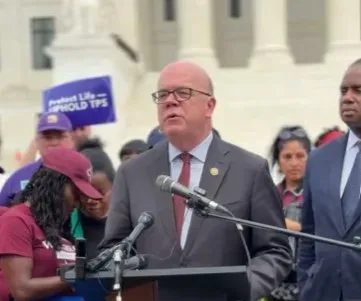
The statement was led by Senate Foreign Relations Committee Chair Jim Risch and Ranking Member Jeanne Shaheen , with nine additional congressional signatories.
Lawmakers warned the law extends Beijing's legal authority to prosecute critics living outside China .
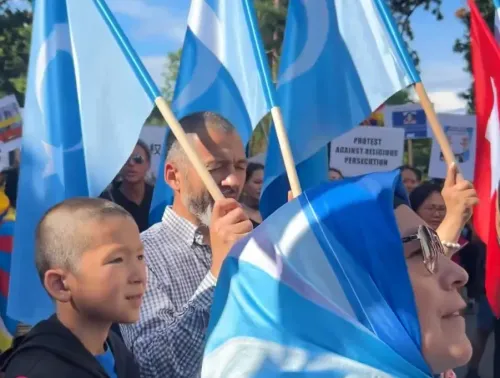
Communities cited as at risk include Tibetans , Uyghurs , and Mongolians .
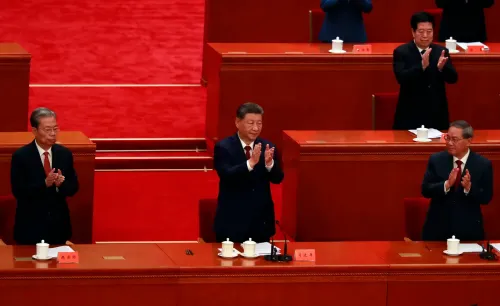
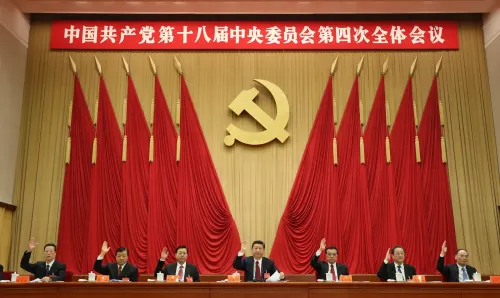
China has rejected the criticism, calling its minority policies a matter of internal affairs aimed at national unity and development.
Congress pledged continued pushback against what it described as CCP transnational repression.
A bipartisan group of senior US lawmakers on 2 July sharply condemned China's newly enacted Ethnic Unity and Progress Law, warning that it would deepen the erosion of rights for ethnic and religious minorities while dramatically expanding Beijing's legal reach to target dissidents living abroad. The statement represents one of the most coordinated congressional responses to Chinese domestic legislation in recent years.
Who Signed the Statement
The condemnation was led by Senate Foreign Relations Committee Chairman Jim Risch and Ranking Member Jeanne Shaheen, and co-signed by Senators John Curtis, Jeff Merkley, Jacky Rosen, Ted Budd, Tim Kaine, Tammy Duckworth, and Lindsey Graham. The statement was also endorsed by House Select Committee on China Chairman John Moolenaar, Ranking Member Ro Khanna, and Representative Young Kim.
What the Law Does, According to Critics
The lawmakers alleged that China's new legislation 'codifies Beijing's unjust policies that increasingly seek to erase the religion, culture, and language of minority groups located both inside and outside China.' They expressed particular alarm over provisions that, in their reading, extend Chinese legal jurisdiction beyond its own borders.
'In particular, we are deeply concerned by language in the law that demands ideological compliance with the Chinese Communist Party (CCP), mandating that even people outside China deemed to be undermining 'ethnic unity and progress' by the Chinese government can be held legally responsible in China,' the statement read.
The group described the legislation as giving Beijing 'near limitless authority to prosecute those who would speak out against Beijing's oppression,' and warned it forms part of a broader legal framework to legitimise transnational repression.
Minorities in the Crosshairs
The lawmakers cited Tibetans, Uyghurs, and Mongolians as communities already denied the right to self-determination by the CCP for decades — rights they noted remain formally enshrined in China's own constitution. The statement was issued ahead of the law's formal implementation by the Chinese government.
This comes amid a long-running pattern of US sanctions on Chinese officials and entities over alleged human rights abuses in Xinjiang and Tibet, a policy sustained across multiple administrations. Washington has repeatedly accused Beijing of suppressing the cultural, religious, and linguistic rights of minority communities in those regions.
Beijing's Position
China has consistently rejected these characterisations. Beijing maintains that its policies in Xinjiang, Tibet, and other ethnic minority regions are designed to promote national unity, economic development, and social stability. Chinese authorities have accused the United States and other Western governments of politicising human rights and interfering in what they describe as internal affairs.
Congressional Pledge
The bipartisan group pledged continued opposition to what they described as China's efforts to project its authority beyond its borders. 'We will continue to push back against the CCP's efforts to undermine the sovereignty of other countries and support the internationally recognised human rights of Tibetans, Uyghurs, and other ethnic and minority groups,' the statement said. Whether Congress translates this condemnation into new legislative action — such as expanded sanctions or targeted visa restrictions — remains to be seen.
Point of View
And the congressional statement is right to single it out. Beijing has been quietly building a legal architecture for transnational repression — from overseas police stations to Interpol red-notice abuse — and this law adds a formal statutory layer to that infrastructure. What is missing from the congressional response is a concrete legislative follow-through: a statement without a sanctions bill or a visa-restriction rider is largely symbolic. The US has condemned Chinese minority policies across administrations without fundamentally altering Beijing's calculus. The question is whether this bipartisan consensus translates into enforceable pressure, or remains another entry in a long ledger of unanswered condemnations.
NationPress
30 Sept 2026
Frequently Asked Questions
What is China's Ethnic Unity and Progress Law?
China's Ethnic Unity and Progress Law is a newly enacted piece of legislation that, according to US lawmakers, codifies policies aimed at assimilating ethnic and religious minority groups — including Tibetans, Uyghurs, and Mongolians — while expanding Beijing's legal authority to hold accountable even those outside China deemed to be undermining 'ethnic unity and progress.' China says the law promotes national unity and social stability.
Why are US lawmakers concerned about the law's extraterritorial provisions?
The bipartisan group of senators and House members warned that the law's language mandates ideological compliance with the CCP and allows Beijing to legally pursue individuals living outside China who are deemed to be undermining ethnic unity. They described this as giving Beijing 'near limitless authority' to prosecute overseas critics and legitimise transnational repression.
Which US lawmakers signed the statement condemning the law?
The statement was led by Senate Foreign Relations Committee Chairman Jim Risch and Ranking Member Jeanne Shaheen, and co-signed by Senators John Curtis, Jeff Merkley, Jacky Rosen, Ted Budd, Tim Kaine, Tammy Duckworth, and Lindsey Graham. House Select Committee on China Chairman John Moolenaar, Ranking Member Ro Khanna, and Representative Young Kim also endorsed it.
How has China responded to US criticism of its minority policies?
China has consistently rejected US allegations, maintaining that its policies in Xinjiang, Tibet, and other ethnic minority regions are intended to promote national unity, economic development, and social stability. Beijing has accused Washington and other Western governments of politicising human rights and interfering in China's internal affairs.
What action has the US previously taken over China's minority rights record?
The United States has, across multiple administrations, imposed sanctions on Chinese officials and entities over alleged human rights abuses in Xinjiang and restrictions in Tibet. Washington has repeatedly accused Beijing of suppressing the cultural, religious, and linguistic rights of Uyghurs, Tibetans, and other minority communities.