China using bot networks to undermine US AI buildout, Congress told
Synopsis
Witnesses before a US congressional panel alleged on 16 September that China deployed roughly 200,000 fake accounts and state-media campaigns to sabotage American AI infrastructure — contributing to delays or cuts in $23.6 billion of data centre investment across 14 states. The testimony exposes an information-operations dimension to the US-China tech war that goes well beyond chip export controls.
Key Takeaways
China allegedly used a network of approximately 200,000 fake accounts on X and state-media campaigns to stoke opposition to US AI data centres, according to testimony before a House Foreign Affairs subcommittee on 16 September 2026 .
The alleged influence operation affected 21 campaigns across 14 US states , contributing to delays or reductions in roughly $23.6 billion in proposed AI infrastructure investment.
Campaigns reportedly resulted in 10 data centre moratoriums, one permanent ban, and four rejected or abandoned projects.
Witness Sam Lyman alleged Beijing subsidised up to half the energy costs of AI data centres inside China while promoting anti-AI-infrastructure narratives abroad — a 'documented double standard.' Matthew Johnson of the Jamestown Foundation said the CCP targets universities, think tanks, journalists and companies to shape US public debate and government decisions.
India's expanding AI and data centre ambitions make the US-China technology contest directly relevant to its chip access and Indo-Pacific technology partnerships.
China is deploying bot networks, state media, and US-based front groups to stoke public opposition to American artificial intelligence infrastructure, witnesses alleged before a House Foreign Affairs subcommittee on 16 September 2026. The hearing examined covert foreign influence operations attributed to China, Russia, Iran, Cuba, and other countries.
Key Allegations Against Beijing
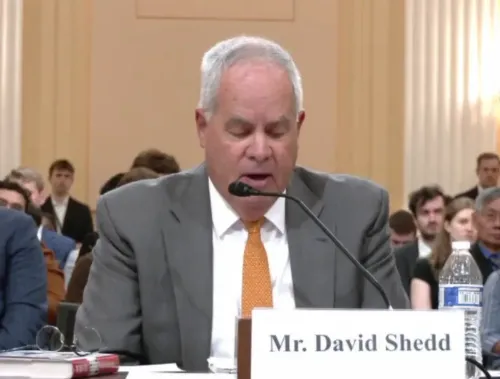
Sam Lyman, head of research at the Bitcoin Policy Institute, told lawmakers that Beijing was presenting sharply different messages about artificial intelligence to domestic and international audiences. 'China has launched complex bot networks and media campaigns to turn American public opinion against AI and data centers,' Lyman testified.
He said social media platform X had disclosed a network of approximately 200,000 suspected fake accounts linked to China in August, with around 200 of those accounts carrying messages specifically opposing US data centres. The accounts concentrated on electricity prices, strain on power grids, and the environmental footprint of AI infrastructure.
The Alleged Double Standard
Lyman further alleged that Chinese state media had actively promoted similar anti-AI-infrastructure arguments to American audiences, even as Beijing reportedly subsidised up to half of the energy costs incurred by AI data centres operating inside China. 'That is a documented double standard that we've seen with the networks advocacy,' he said.
He also accused a network of US-based nonprofit organisations — allegedly supported by Shanghai-based businessman Neville Roy Singham — of amplifying messages critical of the American technology industry. According to his testimony, this network's activities affected 21 campaigns across 14 US states and contributed to delays or reductions involving approximately $23.6 billion in proposed AI infrastructure investment. The campaigns reportedly contributed to 10 data centre moratoriums, one permanent ban, and four rejected or abandoned projects.
Caution Against Overcorrection
Lyman was careful to distinguish between foreign-orchestrated opposition and legitimate domestic concern. 'Two things can be true at once,' he said. 'First, there is a foreign influence campaign against American AI. And second, Americans have genuine concerns about the data center buildout that need to be heard.' Communities have independently raised questions about electricity demand, water consumption, land use, and higher utility costs.
Matthew Johnson, a senior fellow at the Jamestown Foundation, told the panel that the Chinese Communist Party (CCP) seeks relationships with institutions capable of shaping public debate and government decisions. 'Beijing cannot simply command an American university, company, journalist, think tank or activist,' Johnson said. 'It must gain access and cultivate relationships within institutions that shape perception, expertise and decision making.' He added that Beijing uses market access, research partnerships, funding and data as incentives, while deploying visa restrictions, market pressure, intimidation and legal costs against those who resist.
Congressional Reaction
Subcommittee Chairman Bill Huizenga, a Michigan Republican, said the hearing's goal was to expose hidden funding and artificial amplification without curbing constitutionally protected speech. 'Transparency is a key to ensuring Americans can engage in robust debate on issues facing our nation,' Huizenga said.
Representative Sydney Kamlager-Dove, the panel's ranking Democrat, acknowledged that foreign influence warranted scrutiny but argued Congress should simultaneously examine President Donald Trump's foreign business relationships and his administration's handling of advanced AI chip exports — widening the accountability lens beyond China alone.
Why This Matters for India and the Indo-Pacific
India is rapidly expanding its own AI and data centre capacity, driven by surging demand for cloud computing, digital public infrastructure and advanced computing services. The country is also seeking greater access to high-end chips while deepening technology partnerships with the United States. Decisions made in Washington on chips, data centres and technology controls ripple through global supply chains, and the intensifying US-China technology rivalry is already reshaping investment choices and partnership structures across the Indo-Pacific.
As geopolitical competition over AI supremacy deepens, the congressional testimony signals that information operations — not just export controls or tariffs — are now a front in the broader technology contest.
Point of View
But the ranking Democrat's counter-point deserves equal weight: if AI chip export policy is simultaneously being relaxed or manipulated for commercial reasons, the credibility of a 'defend AI infrastructure' framing is undermined. For India, the more urgent lesson is that the same playbook could be run against its own rapidly expanding data centre ecosystem by any number of state actors.
NationPress
16 Sept 2026
Frequently Asked Questions
What did witnesses allege China is doing to US AI infrastructure?
Witnesses told a House Foreign Affairs subcommittee on 16 September 2026 that China deployed bot networks of roughly 200,000 fake accounts, state media campaigns, and US-based nonprofit networks to build public opposition to American AI data centres. The alleged operations contributed to delays or reductions in approximately $23.6 billion in proposed AI infrastructure investment across 14 US states.
Who is Neville Roy Singham and what is his alleged role?
Neville Roy Singham is a Shanghai-based businessman whom witness Sam Lyman accused of supporting a network of US-based nonprofit organisations that amplified messages critical of the American technology industry. Lyman alleged this network's activities influenced 21 campaigns across 14 states, contributing to data centre moratoriums, a permanent ban, and several rejected projects.
What is the alleged double standard in China's AI policy?
Sam Lyman testified that Chinese state media promoted anti-AI-infrastructure narratives to American audiences at the same time Beijing was reportedly subsidising up to half the energy costs of AI data centres inside China. He called this a 'documented double standard' in the network's advocacy.
Did Congress accept that all opposition to US data centres is foreign-driven?
No. Witness Sam Lyman explicitly cautioned against treating every American opponent of data centres as part of a foreign influence campaign, noting that communities have genuine concerns about electricity demand, water use, land use and utility costs. Ranking Democrat Sydney Kamlager-Dove also called for scrutiny of the Trump administration's own AI chip export decisions alongside the China inquiry.
Why does this congressional hearing matter for India?
India is rapidly scaling its AI and data centre capacity and is seeking greater access to advanced chips through US technology partnerships. Decisions in Washington on AI infrastructure, chip exports and technology controls directly affect global supply chains and India's own digital ambitions. The US-China rivalry over AI is also reshaping investment choices across the Indo-Pacific, of which India is a key player.