China stealing US AI secrets, Congress warned at CCP hearing
Synopsis
A former US Defence Intelligence Agency chief told Congress on 27 June that China has built a systematic machine to steal American AI and advanced technology — and named a specific 'distillation' attack allegedly used by Alibaba against AI firm Anthropic. The testimony signals that Washington's tech-security concern has moved from general alarm to named companies and named techniques.
Key Takeaways
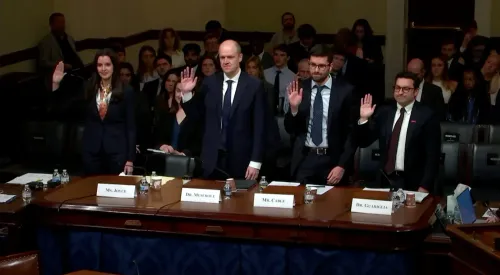
The House Select Committee on the Chinese Communist Party heard testimony on 27 June that China is intensifying efforts to steal US AI and advanced technology secrets.
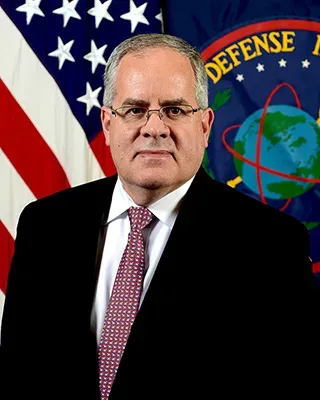
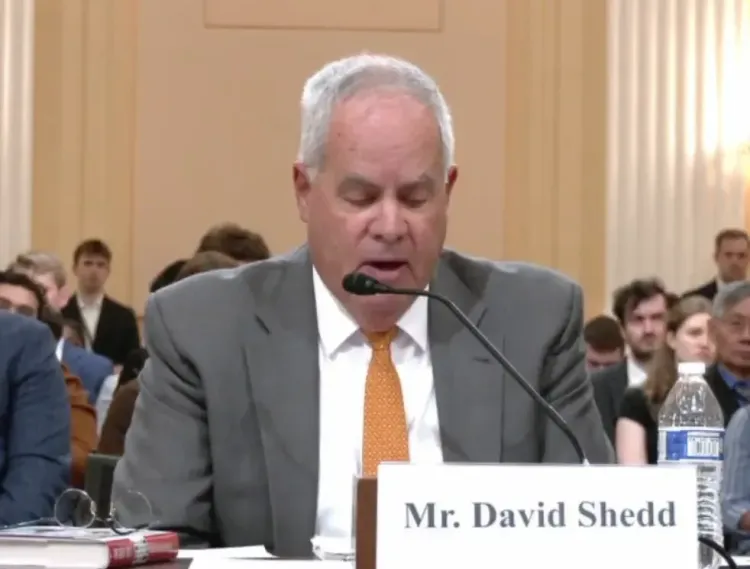
Former Acting Defence Intelligence Agency Director David Shedd described a campaign blending cyber espionage , human intelligence, academic collaboration, and commercial investments.
Lawmakers cited reports that Alibaba allegedly used a 'distillation' attack against US AI firm Anthropic to extract AI model knowledge at low cost.
Targeted sectors include artificial intelligence , semiconductors , biotechnology , quantum computing , and advanced weapons systems .
Shedd urged Congress to enforce existing TikTok legislation as an immediate signal to Beijing and called for stronger government-industry cooperation to protect US intellectual property.
US lawmakers received a stark warning on 27 June that China is dramatically escalating its campaign to steal American artificial intelligence technology and other advanced innovations through a coordinated blend of cyber espionage, human intelligence operations, academic partnerships, and commercial investments — a campaign described as a mounting threat to both US national security and global technological leadership.
What the Hearing Revealed
The warning was delivered before the House Select Committee on the Chinese Communist Party, where former Acting Director of the Defence Intelligence Agency, David Shedd, testified that Beijing has constructed an elaborate infrastructure to systematically extract American commercial and technological secrets. 'The campaign which blends cyber espionage, human intelligence, academic collaboration, and commercial investments has been instrumental in propelling China's rapid economic and military rise,' Shedd told the committee.
He described how China had leveraged this multi-pronged approach to transform itself into a global technological power, targeting companies, universities, and individual researchers across sectors including artificial intelligence, telecommunications, biotechnology, quantum computing, and advanced weapons systems. 'Corporate America, professors, academic researchers, are all fair targets,' he said, adding that China's intelligence services had grown dramatically in size and capability.
The Alibaba-Anthropic 'Distillation' Allegation
A significant portion of the hearing focused on emerging threats to the AI sector specifically. Lawmakers referred to reports that Chinese technology giant Alibaba had allegedly targeted US AI company Anthropic through what was described as a 'distillation' attack — a technique designed to extract knowledge embedded in advanced AI models.
Shedd explained that the method involves simplifying outputs from expensive, high-capability AI models so they can be reproduced at a fraction of the original development cost. 'They're able to bypass the investment that these large AI companies in the United States have put into it,' he said, arguing that such techniques allow Chinese firms to 'leapfrog' years of costly research and development without making equivalent investments.
Key Sectors Under Threat
The testimony underscored that Beijing's intelligence apparatus does not limit itself to defence-related targets. According to Shedd, the operation spans civilian and dual-use technologies alike — with AI, semiconductors, and quantum computing increasingly viewed in Washington as critical battlegrounds carrying both commercial and military significance. This comes amid a broader recognition that the US-China strategic rivalry has moved decisively into the technology domain.
What Lawmakers Were Urged to Do
Shedd called for stronger government-industry cooperation to protect what he termed the 'crown jewels' of American technology, urging Congress to prioritise safeguarding intellectual property. When asked what immediate legislative steps could raise the cost of Chinese influence operations, he pointed to TikTok, arguing that enforcing existing legislation affecting the platform would send a clear signal to Beijing while limiting its access to US user data.
Broader Strategic Context
The hearing reflects a deepening consensus in Washington that technological competition with China has become the central axis of the two countries' strategic rivalry. Notably, this is not the first time Congress has convened to address Chinese technology theft — but the explicit focus on AI distillation attacks and named US companies marks a sharper, more operationally specific line of concern than previous sessions. How Congress translates this testimony into enforceable policy will determine whether the warning produces concrete protection or remains a rhetorical escalation.
Point of View
And the legislative response has historically lagged the threat. The TikTok recommendation is telling: it is the one enforcement lever already in law, which implies that new legislation faces serious headwinds. The deeper question is whether the US can protect AI 'crown jewels' without restricting the open academic and commercial ecosystem that produced them in the first place — a contradiction the hearing did not resolve.
NationPress
25 Sept 2026
Frequently Asked Questions
What did the US Congress hearing on China and AI reveal?
The hearing before the House Select Committee on the Chinese Communist Party on 27 June heard testimony that China has built a systematic campaign to steal American AI and advanced technology through cyber espionage, human intelligence, academic partnerships, and commercial investments. Former Acting Defence Intelligence Agency Director David Shedd described the effort as central to China's rapid economic and military rise.
What is an AI 'distillation' attack and why does it matter?
A distillation attack involves querying an advanced AI model repeatedly to extract its knowledge, then using those outputs to train a cheaper, simpler model that replicates the original's capabilities at far lower cost. Lawmakers cited reports that Alibaba allegedly used this technique against US AI company Anthropic, allowing Chinese firms to bypass years of costly research and development investment.
Which US sectors and companies are being targeted by China?
According to testimony, Beijing's intelligence agencies target companies, universities, and researchers working in artificial intelligence, telecommunications, biotechnology, quantum computing, and advanced weapons systems. Anthropic was specifically cited in connection with an alleged distillation attack attributed to Alibaba.
What did lawmakers recommend to counter Chinese technology theft?
David Shedd urged stronger government-industry cooperation to protect intellectual property and called on Congress to enforce existing legislation affecting TikTok as an immediate step that would signal resolve to Beijing while limiting Chinese access to US user data.
Why is AI technology a focus of US-China strategic rivalry?
Artificial intelligence, along with semiconductors and quantum computing, is increasingly viewed in Washington as a dual-use technology with both major commercial value and direct military applications. Control over these technologies is seen as central to long-term strategic and economic dominance, making them primary targets for state-sponsored espionage.