US Congress probes Airbnb, Anysphere over Chinese AI data and censorship risks

Synopsis
US Congress has formally targeted Airbnb and Anysphere for using Chinese AI models — alleging hidden censorship, data exposure, and a systematic Chinese campaign to extract America's most advanced AI capabilities through fraudulent distillation. It is one of the sharpest Congressional moves yet to police the AI supply chain.
Key Takeaways
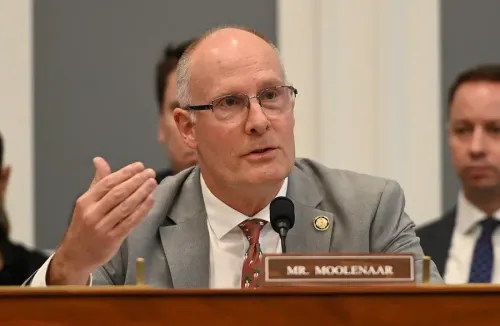
House Select Committee on China and House Homeland Security Committee jointly launched the probe on Wednesday .
Airbnb is under scrutiny for reportedly using Alibaba's Qwen model in customer service operations.
Anysphere's Cursor software is flagged for alleged links to Beijing -based Moonshot AI .
Lawmakers allege Chinese firms used "adversarial model distillation" — extracting US AI capabilities through millions of fraudulent interactions.
Both companies must submit detailed responses on data handling and Chinese AI ties by May .
The probe follows a White House science policy memo in April describing the practice as an "industrial-scale" extraction campaign.
Two key US House committees have launched a formal investigation into national security risks posed by American companies using Chinese-developed artificial intelligence models, citing concerns over data exposure, censorship, and supply chain vulnerabilities. The probe, announced on Wednesday, targets companies including Airbnb and Anysphere, and marks one of the most direct Congressional interventions yet into the use of Chinese AI by US firms.
Who Is Investigating and Why
House Select Committee on China Chairman John Moolenaar and House Homeland Security Committee Chairman Andrew Garbarino jointly announced the inquiry. Moolenaar said the companies' decisions to build products on Chinese Communist AI models threaten critical infrastructure Americans use every day. "The AI models these companies use are trained by China's censorship regime and introduce hidden vulnerabilities that put Americans' data and businesses at risk," he said.
Garbarino warned that Beijing is seeking to exploit US innovation for strategic gain. "The Chinese Communist Party is trying to turn America's AI breakthroughs into Beijing's strategic advantage," he said, adding that such models could "undercut US leadership" and embed "CCP-aligned technology across the software supply chains our economy and national security depend on."
Key Allegations Against Airbnb and Anysphere
In a letter addressed to Airbnb Chief Executive Brian Chesky, the committees cited the company's reported use of Alibaba's Qwen model in customer service operations. "The Committees have serious concerns about the national security and data-security implications of that approach for Airbnb's American customers and for the integrity of its systems," the lawmakers wrote.
Separately, the committees raised concerns about Anysphere's Cursor software, which they said was built on a model linked to Beijing-based Moonshot AI. Lawmakers alleged that Chinese firms carried out "coordinated campaigns to extract advanced capabilities from American AI systems through adversarial distillation," generating millions of interactions through fraudulent accounts.
The Adversarial Distillation Threat
At the centre of the investigation is the practice of "adversarial model distillation" — a technique lawmakers say Chinese firms use to extract capabilities from advanced US AI systems and repurpose them into cheaper models stripped of safeguards. "The billions of dollars American companies invest in foundational research… is being undercut by a sustained extraction campaign," the committees wrote, warning that stripped-down models could be used by "hostile state actors, terrorist organisations, and criminal enterprises."
The committees also alleged that Chinese AI systems may "covertly censor and manipulate information pursuant to Chinese law" and align outputs with Communist Party directives. Using such models through external systems, they warned, could expose sensitive user data to entities subject to Chinese law. Notably, the investigation follows an April White House science policy memo that described such activities as "deliberate, industrial-scale campaigns" to extract US AI capabilities.
What the Companies Must Now Do
Both Airbnb and Anysphere have been asked to provide detailed information on their use of Chinese AI models, covering data handling practices, security assessments, and any ties to Chinese providers. Responses are due in May. The inquiry comes as US-China competition in artificial intelligence intensifies — a sector both governments consider critical to long-term economic and national security dominance.
The probe signals that Congressional scrutiny of Chinese AI adoption by US companies is likely to deepen, with further companies potentially drawn into the investigation as responses arrive.
Point of View
Not merely a business decision. The framing of Chinese AI models as architecturally designed to serve the Chinese state — rather than simply being cheaper alternatives — represents a doctrinal shift. What remains untested is whether this scrutiny will extend beyond two named companies or harden into binding procurement rules. The adversarial distillation allegation, if substantiated, would fundamentally reframe the global AI race — from a competition of who innovates fastest to who can protect their innovations longest.
NationPress
19 Sept 2026
Frequently Asked Questions
Why are US House committees investigating Airbnb and Anysphere?
The committees are investigating whether Airbnb and Anysphere's use of Chinese-developed AI models poses national security risks, including data exposure, censorship, and supply chain vulnerabilities. Airbnb is alleged to use Alibaba's Qwen model, while Anysphere's Cursor software is linked to Beijing-based Moonshot AI.
What is adversarial model distillation and why does it matter?
Adversarial model distillation is a technique where Chinese firms allegedly extract advanced capabilities from US AI systems by generating millions of interactions — often through fraudulent accounts — and using that data to build cheaper, stripped-down models without safeguards. Lawmakers warn these models could be exploited by hostile state actors and criminal enterprises.
What action has Congress taken against the companies?
Both Airbnb and Anysphere have been sent formal letters requesting detailed information on their use of Chinese AI models, including data handling practices, security assessments, and ties to Chinese providers. Responses are due in May 2025.
How does Chinese AI pose a censorship risk to US users?
According to the committees, Chinese AI systems may covertly censor and manipulate information in line with Chinese law and Communist Party directives. Using such models could also expose sensitive user data to entities subject to Chinese government oversight.
What is the broader context of this investigation?
The probe follows a White House science policy memo in April 2025 that described Chinese extraction of US AI capabilities as deliberate and industrial-scale. It comes amid intensifying US-China competition in artificial intelligence, which both governments view as critical to long-term economic and national security.