China-linked scam networks cost Americans $10bn in 2024, Congress warns

Synopsis
A bipartisan US House panel has put a number on China-linked online fraud: $10 billion drained from Americans in a single year, routed through Southeast Asian compounds that blend human trafficking, cybercrime, and illicit finance. Lawmakers are now pushing dedicated legislation — and warning that without Beijing's cooperation, the crisis will only deepen.
Key Takeaways
Americans lost at least $10 billion in 2024 to China-linked scam networks based in Southeast Asia , according to a bipartisan House Select Committee on China report.
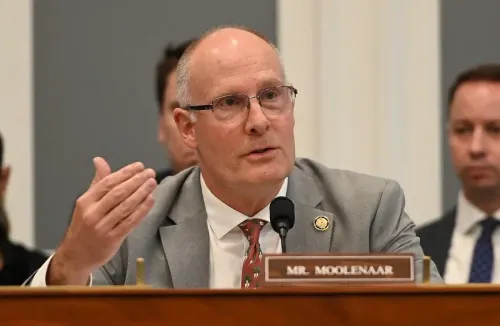
House Select Committee Chairman John Moolenaar said the scams operate at 'industrial scale,' enabled by corruption, weak governance, and illicit finance.
The Prince Group headquarters in Cambodia was reportedly constructed by a Chinese state-owned enterprise, per committee findings.
Expert Erin West called the crisis a 'Scamdemic' and described it as a national security threat, citing inadequate law enforcement support for victims.
Analyst Jason Tower warned that China's domestic crackdown pushed scam networks abroad, making it 'a global China problem.' Lawmakers are pushing the bipartisan Dismantle Foreign Scam Syndicates Act to create a dedicated inter-agency task force.
China-linked scam networks operating out of Southeast Asia drained at least $10 billion from American victims in 2024, top US lawmakers alleged on 20 May, warning that the fraud ecosystem has escalated into a direct national security threat. The findings emerged from a bipartisan investigative report released by the House Select Committee on China.
Industrial-Scale Fraud, Congressional Findings
House Select Committee on China Chairman John Moolenaar described the operations as running at an 'industrial scale,' driven by criminal groups with links to China and sustained by corruption, weak governance, and illicit finance flows. 'These victims are our families, neighbours and friends, and they are being ripped off by sophisticated criminal networks linked to China,' Moolenaar said.
The committee's bipartisan report concluded that these scam networks are not isolated criminal enterprises but form part of a broader ecosystem encompassing fraud, human trafficking, cybercrime, and illicit finance. Moolenaar acknowledged that the Chinese government does not centrally direct the scam compounds, but argued its 'deliberate failure to combat this threat' has actively enabled their expansion.
Human Trafficking at the Core
Ranking member Ro Khanna, the Indian American Congressman, said many of these networks operate from compounds in Southeast Asia controlled by organised criminal groups with ties to China. 'All too often, the person on the other end of the text is a human trafficking victim, locked in a scam compound with instructions to steal as much money from victims as possible,' Khanna said.
The committee's investigation found that the headquarters of Prince Group in Cambodia was constructed by a Chinese state-owned enterprise — a detail that underscores the structural entanglement between state-linked entities and criminal infrastructure. Khanna was careful to note, however: 'While there are Chinese ties, the scam is not a vast conspiracy by the Chinese government. We can't solve this crisis without their cooperation.'
Experts Call It a 'Scamdemic'
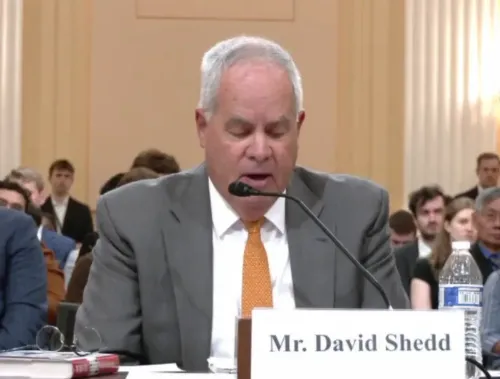
Erin West, founder of Operation Shamrock, testified that victims were not receiving adequate assistance from law enforcement. She quoted one victim asking: 'Why in the United States in 2026, are victims having to solve their own crimes?' West characterised the crisis as a 'Scamdemic,' insisting it was 'not simply fraud' but a matter of national security.
Independent analyst Jacob Sims warned that the deeper threat lay not only in the physical compounds but in 'the political architecture that protects it,' describing Cambodia as 'an advanced case of what criminal authoritarianism looks like in the digital era.'
Jason Tower, a senior expert at the Global Initiative Against Transnational Organized Crime, said China's domestic crackdown on such operations had simply pushed scam networks offshore. 'This is not a Southeast Asia problem. This is a global China problem,' Tower said.
Legislative Response and Next Steps
Lawmakers also pressed witnesses on the enabling role of social media platforms, cryptocurrency networks, and private companies in facilitating these scams. Chairman Moolenaar urged Congress to pass the bipartisan Dismantle Foreign Scam Syndicates Act, which would establish an inter-agency task force specifically mandated to counter foreign scam syndicates. The bill's passage would mark the first dedicated legislative mechanism targeting this threat at the federal level.
With losses running into the tens of billions and human trafficking woven into the operational model, the committee's findings signal that Washington is moving to treat online fraud originating from China-linked networks as a geopolitical challenge — not merely a consumer protection issue.
Point of View
But the more consequential finding is structural: a Chinese state-owned enterprise reportedly built the infrastructure that houses a criminal scam compound in Cambodia. That detail collapses the distinction between state adjacency and state complicity, even as lawmakers like Khanna are careful not to overstate it. The push to frame this as a national security issue — rather than consumer fraud — is a deliberate escalation, one that gives the executive branch broader tools to act. Whether that framing survives the diplomatic cost of demanding Beijing's cooperation, while simultaneously accusing it of 'deliberate failure,' is the contradiction at the heart of this committee's report.
NationPress
14 Sept 2026
Frequently Asked Questions
How much did Americans lose to China-linked scams in 2024?
Americans lost at least $10 billion in 2024 to scam networks linked to China and operating from Southeast Asia, according to allegations made by the House Select Committee on China. The committee released a bipartisan investigative report detailing the scale of the fraud.
Is the Chinese government directly running these scam operations?
According to the committee's findings, the Chinese government does not centrally direct the scam compounds. However, Chairman John Moolenaar argued its 'deliberate failure to combat this threat' has enabled their growth, while Ranking Member Ro Khanna said cooperation from Beijing is essential to resolving the crisis.
What role does human trafficking play in these scam networks?
Human trafficking is central to the operational model. Ro Khanna testified that many individuals sending fraudulent messages are trafficking victims held in scam compounds in Southeast Asia and coerced into defrauding others.
What is the Dismantle Foreign Scam Syndicates Act?
It is a bipartisan legislative measure urged by Chairman John Moolenaar that would create a dedicated inter-agency task force to counter foreign scam syndicates. It represents the first proposed federal mechanism specifically targeting this threat.
Why are these scam compounds based in Southeast Asia?
According to expert Jason Tower of the Global Initiative Against Transnational Organized Crime, China's domestic crackdown on such operations pushed the networks offshore into countries like Cambodia, where weak governance and corruption provide cover for their activities.