Inside China's AI labs: soft power, ink maps and global ambition
Synopsis
A visit to Shanghai's AI research institutes reveals how China is deploying cultural diplomacy — including an ink-wash map featuring Huawei chips and AI ethics as twin peaks — to shape global narratives around artificial intelligence and court Global South partners.
Key Takeaways
Shanghai -based AI research institutes are hosting foreign delegations as part of a broader soft-power strategy in the China – US tech rivalry.
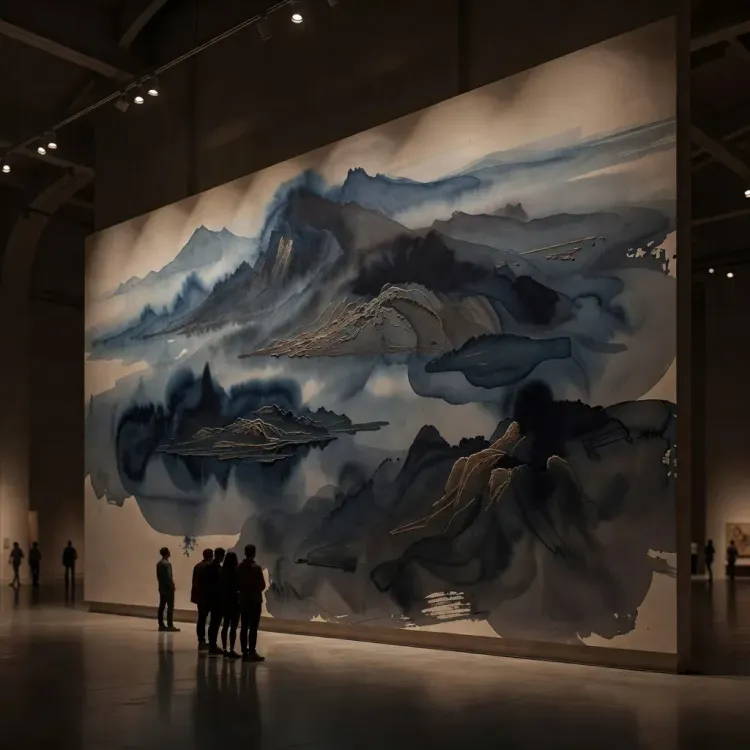
An ink-wash map inside one institute rendered Huawei 's chip at an estuary and AI ethics as twin peaks, sparking questions among international guests.
Companies including Alibaba Group Holding , Ant Group , and Moonshot AI — maker of the Kimi K model — are part of China 's expanding AI ecosystem being showcased internationally.
The World Artificial Intelligence Cooperation Organisation , based in Hangzhou , and Fudan University in Shanghai are key nodes in China 's AI diplomacy network.
Global South nations are the primary target audience as Beijing positions itself as a collaborative AI partner amid tightening Washington export controls.
Shanghai's artificial intelligence research institutes are quietly becoming arenas of geopolitical storytelling, where immersive exhibitions blend technical ambition with cultural diplomacy — offering foreign visitors a curated window into China's vision for the global AI order.
Art as argument
Inside the exhibition hall of a Shanghai-based AI research institute, an ink-wash map stretched across an entire wall. The work rendered chipmakers as mountains on islands and algorithms as jagged ranges, while questions of privacy, fairness and machine consciousness drifted at the edges like uncharted territory. Foreign guests traced the brushstrokes, drawn in by the visual metaphor.
Questions surfaced quickly. Huawei's chip was placed at an estuary; AI ethics were rendered as twin peaks. A staffer clarified, more than once, that the installation was art — not an official statement of facts. The disclaimer itself was telling.
Why it matters
The scene captures a broader pattern in the China–US technology contest: as export controls and chip restrictions tighten under the Donald Trump administration in Washington, Beijing is investing in narrative infrastructure alongside technical infrastructure. Institutions aligned with companies such as Alibaba Group Holding, Ant Group, and Moonshot AI — the developer behind the Kimi K model series — are increasingly hosting international delegations, particularly from the Global South.
Academic hubs like Fudan University in Shanghai and policy bodies such as the World Artificial Intelligence Cooperation Organisation, headquartered in Hangzhou, are amplifying this outreach, positioning China as a collaborative partner rather than a unilateral tech hegemon.
The competitive backdrop
The lab visits arrive at a pivotal moment. China's domestic AI ecosystem — anchored by large-language models from Alibaba, frontier research from institutes in Beijing and Shanghai, and hardware increasingly reliant on Huawei's domestically produced chips — is maturing rapidly despite western sanctions. The ink-wash map's placement of Huawei's chip at an estuary, a point of confluence and outflow, may be art, but it is art with a point of view.
Meanwhile, Global South nations — many of which are weighing partnerships with both Washington and Beijing — are the most immediate audience for this kind of soft-power cultivation.
What's next
As the World Artificial Intelligence Cooperation Organisation expands its membership and Chinese AI firms continue to internationalise, the contest for technical standards, data governance norms, and AI ethics frameworks will intensify. The labs opening their doors today are laying the groundwork for the alliances — and the narratives — that will shape global AI governance for the decade ahead.
Point of View
China is doubling down on norm-setting and narrative diplomacy to secure influence where sanctions cannot reach. What mainstream coverage often misses is that the real battleground is not just transistor counts but governance frameworks — who defines AI ethics, data sovereignty, and cooperation standards for the Global South. Institutions like the World Artificial Intelligence Cooperation Organisation are not peripheral; they are the soft infrastructure of a parallel tech order. The art-not-policy disclaimer from lab staffers is itself a form of deniable messaging — plausible enough to deflect criticism, vivid enough to leave an impression.
NationPress
16 Sept 2026
Frequently Asked Questions
What did a visit to China's AI labs reveal about its global strategy?
Visits to Shanghai -based AI research institutes revealed that China is using immersive cultural exhibitions — including an ink-wash map depicting chipmakers and AI ethics — to shape international perceptions and court foreign, particularly Global South , partners. The labs host delegations as part of a broader soft-power push running alongside China 's technical AI development.
Why is Huawei's chip placement on the AI map significant?
Huawei 's chip was depicted at an estuary on the ink-wash map — a point of confluence and outflow — prompting questions from foreign guests about its symbolic meaning. While a staffer described the work as art rather than an official statement, the imagery reflects Huawei 's central role in China 's domestic semiconductor ambitions as western export controls tighten.
What is the World Artificial Intelligence Cooperation Organisation?
The World Artificial Intelligence Cooperation Organisation is a body headquartered in Hangzhou that is expanding its international membership as part of China 's effort to set global AI governance norms. It functions alongside academic institutions like Fudan University to position Beijing as a collaborative leader in AI policy.
Which Chinese AI companies are involved in this international outreach?
Alibaba Group Holding , Ant Group , and Moonshot AI — the developer of the Kimi K model series — are among the firms whose work features in China 's expanding AI diplomacy efforts. Their models and research are showcased to international delegations visiting institutes in Shanghai and Beijing .
How does this fit into the broader China-US technology contest?
As the Donald Trump administration in Washington tightens chip export controls, Beijing is investing in soft-power infrastructure — lab tours, cultural exhibitions, and multilateral bodies — to build alliances the sanctions cannot block. The Global South is the primary target, with China positioning itself as an open, collaborative AI partner in contrast to western restrictions.