Huawei, China Tower push 'air-space-ground-sea' networks for AI era
Synopsis
Huawei's rotating chairman Wang Tao told MWC Shanghai 2026 that AI agents could number 1 trillion globally by 2030 — and that only a network spanning air, space, ground and sea can handle it. China Tower's 6.2 million base stations are already being repositioned for that future.
Key Takeaways
Wang Tao , rotating chairman of Huawei Technologies since April 2026 , called 2026 a 'crucial inflection point for mobile communication' at MWC Shanghai on 24 June 2026 .
He projected global AI agent numbers reaching up to 1 trillion by 2030 , requiring internet coverage to expand from 20 per cent to 100 per cent of Earth's surface.
China 's 5G subscriber base has surpassed 1.1 billion users , according to Wang.
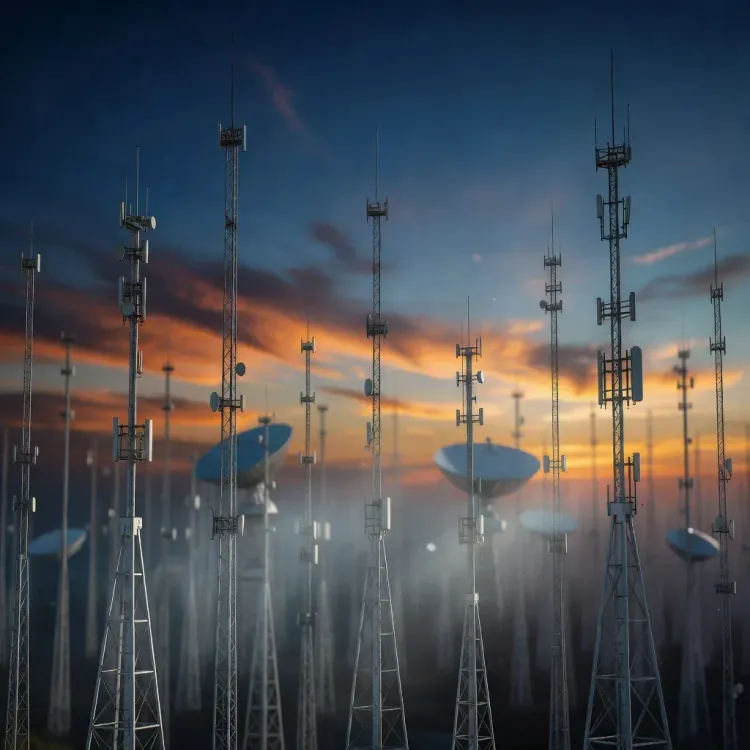
China Tower chairman Zhang Zhiyong said the company is leveraging its 6.2 million base stations — including 3.28 million dedicated 5G sites — to build an integrated air-space-ground-sea network.
SpaceX 's market debut has been cited as a catalyst sharpening the Chinese telecoms industry's focus on non-terrestrial connectivity.
Huawei Technologies and China Tower are championing a sweeping vision of 'air-space-ground-sea' connectivity at Mobile World Congress (MWC) Shanghai on Wednesday, 24 June 2026, arguing that terrestrial networks alone cannot sustain the explosive growth of artificial intelligence infrastructure. The push comes as Beijing accelerates investment in AI computing capacity and as SpaceX's market debut has sharpened the industry's focus on beyond-Earth connectivity.
Why it matters
Wang Tao, rotating chairman of Huawei Technologies — a role he assumed in April 2026 — told the MWC Shanghai audience that the geographic reach of the internet must expand from the current 20 per cent of the Earth's surface to 100 per cent, covering 'high altitudes, oceans and deserts.' He described 2026 as a 'crucial inflection point for mobile communication.'
Wang projected that the number of AI agents worldwide could reach as many as 1 trillion by 2030, a scale that would force mobile operators to extend services far beyond urban centres. With China's 5G subscriber base already surpassing 1.1 billion users, he argued the coming decade demands 'an unprecedented technological leap.'
The competitive backdrop
China Tower chairman Zhang Zhiyong said the state-owned tower operator is repurposing its existing infrastructure to anchor the multi-domain network vision. The company currently manages more than 6.2 million base stations across China, of which 3.28 million are dedicated 5G sites — a physical footprint that gives it a structural advantage in deploying hybrid air-ground-sea coverage.
The framing aligns with a broader industry pivot: as AI workloads grow more agentic and geographically distributed, connectivity gaps in oceans, deserts and high-altitude corridors become critical bottlenecks. SpaceX's entry into public markets has intensified scrutiny of low-Earth-orbit alternatives, prompting Chinese carriers to articulate integrated terrestrial-satellite strategies of their own.
What's next
Both executives signalled that the transition toward 6G research and integrated non-terrestrial networks will define the next infrastructure cycle. Operators and vendors are expected to use the remainder of MWC Shanghai 2026 to announce pilot programmes and standards partnerships that could shape global spectrum and architecture decisions.
The companies most exposed to this shift include satellite broadband providers, tower operators in emerging markets, and AI platform vendors whose inference workloads increasingly demand always-on, borderless connectivity. Watch for regulatory signals from Beijing on spectrum allocation for non-terrestrial networks in the second half of 2026.
Point of View
Giving Huawei political cover to accelerate standards lobbying at the ITU and regional bodies. What mainstream coverage underplays is China Tower's role: with 6.2 million base stations already deployed, it holds a physical-infrastructure moat that satellite-only players like SpaceX cannot replicate on the ground. The real contest is over who sets the architecture standards for non-terrestrial network integration — and MWC Shanghai is where China is making its opening bid.
NationPress
22 Sept 2026
Frequently Asked Questions
What is the 'air-space-ground-sea' network concept announced at MWC Shanghai 2026?
The 'air-space-ground-sea' network is a connectivity vision championed by Huawei and China Tower at MWC Shanghai on 24 June 2026, aiming to extend internet coverage from the current 20 per cent of Earth's surface to 100 per cent by integrating terrestrial base stations with high-altitude, satellite and maritime links. Huawei rotating chairman Wang Tao framed it as essential infrastructure for an AI-agent-driven world.
Why does Huawei say 100% Earth coverage is needed for AI?
Wang Tao projected that AI agents could number as many as 1 trillion globally by 2030, a scale that pushes computing and connectivity demand far beyond existing urban networks. He argued that covering oceans, deserts and high altitudes is no longer optional once AI systems operate autonomously across geographies.
How many 5G base stations does China Tower operate?
China Tower manages more than 6.2 million base stations in total, of which 3.28 million are dedicated 5G sites, according to chairman Zhang Zhiyong. The company says it is repurposing these locations as anchor points for the integrated air-space-ground-sea network.
What role does SpaceX play in China's telecoms strategy?
SpaceX's market debut has been cited by industry executives as a catalyst that intensified the Chinese telecoms sector's focus on non-terrestrial and satellite connectivity. Chinese carriers and vendors are now articulating integrated strategies that position domestic infrastructure as a comprehensive alternative.
What comes after 5G for Chinese telecoms operators?
Both Huawei and China Tower signalled at MWC Shanghai 2026 that 6G research and integrated non-terrestrial network standards will define the next infrastructure cycle. Regulatory decisions from Beijing on spectrum allocation for non-terrestrial networks in the second half of 2026 are seen as the next major milestone to watch.