Supernodes: China's answer to the US AI chip bottleneck
Synopsis
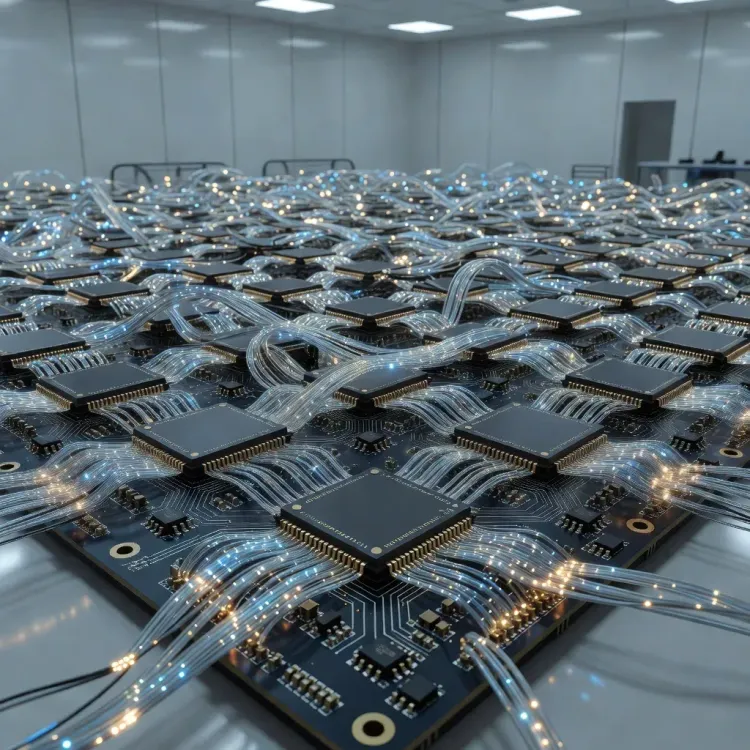
China's chipmakers are redefining AI infrastructure with 'supernodes' — systems that fuse hundreds of chips into one giant supercomputer — as a strategic workaround to US export controls blocking access to Nvidia's most advanced processors.
Key Takeaways
Supernodes — systems integrating hundreds or thousands of chips into a unified supercomputer — dominated discussions at the World Artificial Intelligence Conference (WAIC) in Shanghai in 2026 .
Huawei Technologies and Biren Technology both showcased supernode-capable hardware at the summit, signalling a coordinated domestic push.
Morgan Stanley analysts said China's AI computing competition has shifted from chip specs to 'interconnects, memory sharing, and system reliability.' Chen Daliang , CEO of Suanova , cautioned that simply grouping GPUs does not constitute a supernode — the architecture requires deep system-level engineering.
The supernode strategy is widely seen as a response to US export controls restricting China's access to Nvidia's top-tier chips.
Key players including Alibaba Group Holding , Tencent , and Sugon are operating in the broader ecosystem shaping this infrastructure shift.
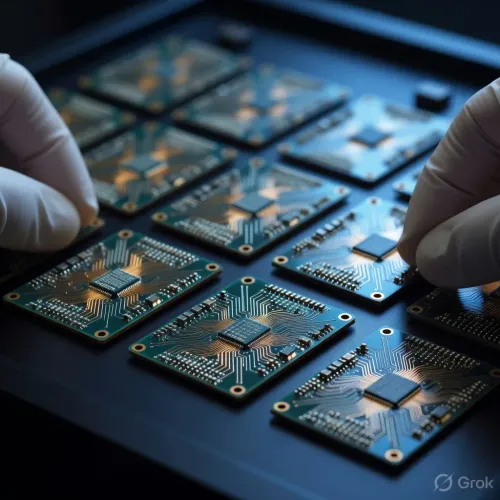
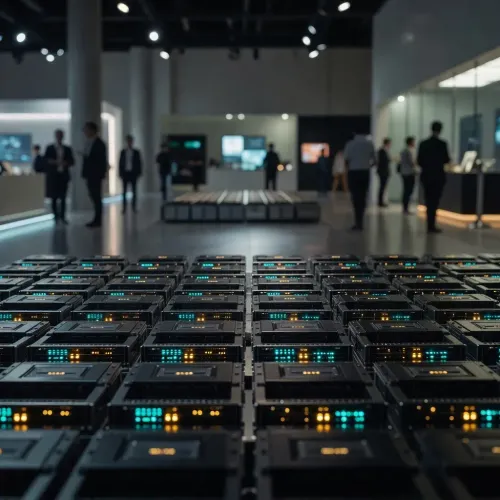
China's top artificial intelligence firms and chipmakers are betting on a new computing architecture called the 'supernode' to overcome the country's AI processing power deficit, with the concept taking centre stage at the World Artificial Intelligence Conference (WAIC) held in Shanghai in 2026. As AI models scale beyond 1 trillion parameters, the industry is pivoting from raw chip performance to system-level integration — knitting hundreds or thousands of chips into a unified computing fabric.
What exactly is a supernode?
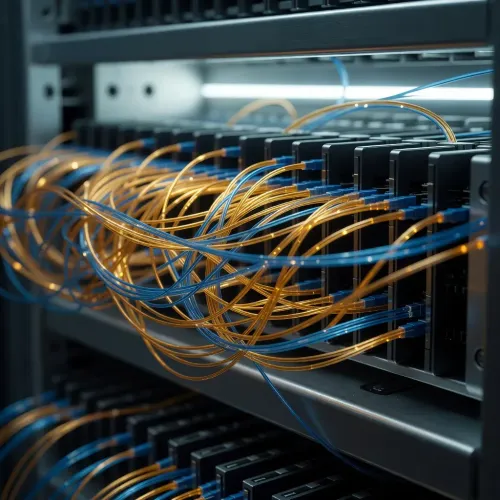
A supernode is not simply a cluster of graphics processing units bolted together. Chen Daliang, CEO of Suanova — a Shanghai-based AI computing resources provider and subsidiary of Hong Kong-listed Yeebo Technology — put it plainly: 'People think putting enough GPUs [graphics processing units] together makes a supernode, which is definitely not the case.' The architecture demands tightly coordinated interconnects, shared memory pools, and high system reliability to function as a single coherent supercomputer.
Why it matters for China's AI ambitions
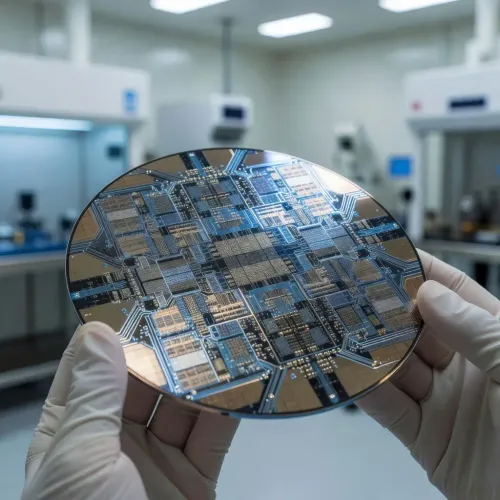
The pivot to supernodes reflects a structural shift in how China is approaching its AI computing bottleneck, particularly given restricted access to advanced chips from Nvidia amid ongoing US export controls. At WAIC, domestic chipmakers including Huawei Technologies and Biren Technology unveiled hardware specifically engineered for supernode configurations. The strategic logic is clear: if individual chips cannot match Nvidia's top-tier performance, system-level integration may close the gap.
The competitive backdrop
Morgan Stanley analysts noted in a research note published on Tuesday that competition across China's AI computing ecosystem has shifted away from stand-alone chip specifications and towards 'interconnects, memory sharing, and system reliability.' This framing signals that the battleground is no longer just semiconductor fabrication — it is the full-stack infrastructure layer. Major technology groups including Alibaba Group Holding, Tencent, and server maker Sugon are all active participants in this evolving landscape.
Can supernodes solve the bottleneck?
Whether supernodes can immediately resolve China's AI computing power deficit remains an open question. Building reliable, high-throughput interconnects at the scale of thousands of chips is an engineering challenge that even well-resourced firms have struggled to master. The architecture introduces new failure points — network latency, memory coherence, and thermal management — that stand-alone GPU clusters do not face in the same way.
What's next
The supernode race is still in its early stages, but the commercial stakes are rising rapidly as frontier AI model training demands compound. Domestic chipmakers that can demonstrate credible supernode performance at scale will be best positioned to capture enterprise and government AI infrastructure spending in China. How quickly Huawei Technologies, Biren Technology, and peers can validate their architectures in production environments will determine whether supernodes become a genuine strategic counterweight to US-led AI computing dominance.
Point of View
In part, a reframing exercise: by shifting the competitive metric from per-chip performance to system-level throughput, Chinese firms can sidestep direct comparisons with Nvidia's H100 and B200 GPUs — a category they cannot win under current export restrictions. What mainstream coverage underplays is the engineering difficulty: high-bandwidth, low-latency chip interconnects at scale remain an unsolved problem even for well-funded US hyperscalers. Morgan Stanley's framing of the shift toward 'interconnects, memory sharing, and system reliability' is telling — these are precisely the dimensions where proprietary software stacks and years of production hardening matter most, giving Nvidia's NVLink ecosystem a durable moat. The real test will come when Chinese cloud providers must train frontier models on domestic supernode clusters under real production conditions, not conference demonstrations.
NationPress
25 Oct 2026
Frequently Asked Questions
What is a supernode in AI computing?
A supernode is a computing architecture that links hundreds or thousands of AI chips together to function as a single, unified supercomputer. It goes well beyond simply grouping GPUs — it requires tightly engineered interconnects, shared memory, and high system reliability, according to Suanova CEO Chen Daliang.
Why is China developing supernode technology?
China is developing supernode technology primarily to overcome its AI computing bottleneck caused by US export controls that restrict access to Nvidia's most advanced chips. By integrating domestically produced chips at the system level, Chinese firms aim to achieve competitive AI training capacity without relying on restricted hardware.
Which Chinese companies are building supernodes?
Huawei Technologies and Biren Technology both showcased supernode-capable hardware at the 2026 World Artificial Intelligence Conference in Shanghai. Broader ecosystem players including Alibaba Group Holding, Tencent, Sugon, and Suanova are also involved in China's AI computing infrastructure push.
Can supernodes immediately solve China's AI chip shortage?
Not immediately, according to industry commentary. Building reliable supernode systems at scale introduces complex engineering challenges around network latency, memory coherence, and thermal management that go beyond what stand-alone GPU clusters face. The architecture is promising but remains largely unproven in large-scale production environments.
What did Morgan Stanley say about China's AI computing shift?
Morgan Stanley analysts said in a research note published on Tuesday that competition across China's AI computing ecosystem has moved away from stand-alone chip specifications and towards 'interconnects, memory sharing, and system reliability.' This signals a full-stack infrastructure battle rather than a purely semiconductor-level contest.