CM Fadnavis Lays Foundation of New Meghalaya House in Navi Mumbai

Synopsis
Maharashtra CM Devendra Fadnavis and Meghalaya CM Conrad K. Sangma jointly laid the foundation stone of the New Meghalaya House in Navi Mumbai on August 8, 2026, with Maharashtra transferring a government plot to Meghalaya — a milestone in inter-state cooperation under the Ek Bharat, Shreshtha Bharat framework.
Key Takeaways
Maharashtra formally transferred a government plot in Navi Mumbai to the Government of Meghalaya for the construction of the New Meghalaya House.
CM Devendra Fadnavis and Meghalaya CM Conrad K.
Sangma jointly laid the foundation stone on August 8, 2026 .
The facility will serve Meghalaya's students, patients, artists, and professionals visiting Maharashtra.
The event was framed within PM Narendra Modi 's Ek Bharat, Shreshtha Bharat initiative, launched in 2015 .
Meghalaya DCM Prestone Tynsong , Minister Sosthenes Sohtun, and MP Milind Deora attended the ceremony.
Both CMs indicated future cooperation in culture, music, trade, and agriculture beyond the Bhavan project.
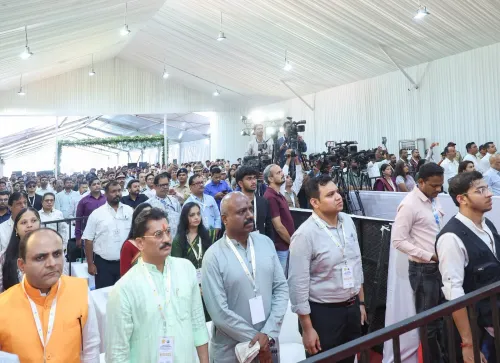
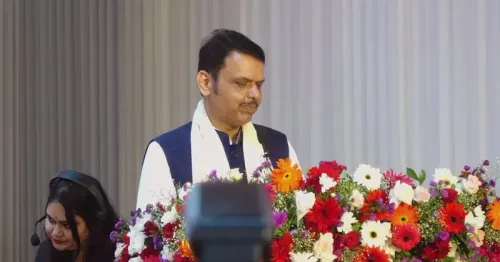
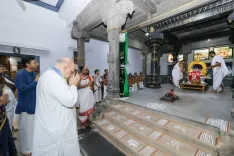
A handshake between two states — one on the western coast, one tucked into the northeastern hills — took concrete form on Saturday, August 8, 2026, when Maharashtra Chief Minister Devendra Fadnavis handed over a government plot to Meghalaya and jointly laid the foundation stone of the New Meghalaya House in Navi Mumbai alongside Meghalaya Chief Minister Conrad K. Sangma.
A Plot, a Stone, and a Promise
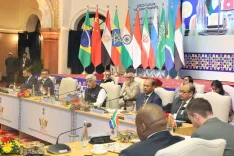
The ceremony marked the formal transfer of land from the Government of Maharashtra to the Government of Meghalaya — the first physical step toward a facility that both chief ministers described as long overdue. Fadnavis called the new Bhavan 'a symbol of the strong bond between Maharashtra and Meghalaya,' one that will offer 'a larger space for students, patients, artists, professionals and other visitors from Meghalaya.' Meghalaya Deputy Chief Minister Prestone Tynsong, Minister Sosthenes Sohtun, and MP Milind Deora were among the dignitaries present at the foundation stone laying.
Why Navi Mumbai, and Why Now
Indian states have long maintained guest houses — commonly called Bhavans — in major metros to support citizens travelling for education, healthcare, and employment. Navi Mumbai, a planned satellite city, offers the infrastructure and connectivity that make it a practical anchor for visitors from the Northeast. The move fits squarely within the logic of cooperative federalism: as migration and mobility between regions grows, so does the need for dedicated support infrastructure far from home.
Fadnavis explicitly framed the event within Prime Minister Narendra Modi's Ek Bharat, Shreshtha Bharat initiative — a programme launched in 2015 to deepen cultural, social, and developmental ties among Indian states. The scheme pairs states across regions for sustained exchange, and the Meghalaya Bhavan is a tangible, brick-and-mortar expression of that ambition.
Beyond the Bhavan: What Both CMs Are Signalling
Fadnavis was careful to frame the Bhavan as a starting point, not an endpoint. He outlined future cooperation spanning 'culture, music, trade, agriculture and other areas,' positioning the facility as a hub rather than a hostel. Sangma's presence alongside the full Meghalaya delegation — including the Deputy CM and a cabinet minister — signals that Shillong views the partnership as a political priority, not a ceremonial gesture.
The kicker is in the timeline Fadnavis offered: he projected that over the next 10 to 15 years, citizens of Meghalaya using the space 'will appreciate this well-planned, future-ready space.' That is a bet on both states' continuity of purpose — and on the idea that inter-state bonds, once built into the ground, are harder to undo than any political cycle.
Point of View
Hosting a Northeast state's Bhavan in Maharashtra strengthens his credentials as a pan-India coalition builder within the BJP's federal architecture. For Sangma, securing prime land in a western metro is a practical win for Meghalaya's growing diaspora of students and medical travellers. The event also reinforces the BJP's electoral calculus in the Northeast, where alliance management with regional parties like the NPP remains essential.
NationPress
8 Aug 2026
Frequently Asked Questions
Where is the New Meghalaya House being built?
The New Meghalaya House is being built in Navi Mumbai , Maharashtra. The Government of Maharashtra transferred a plot of land to the Government of Meghalaya specifically for this construction.
Who laid the foundation stone of the New Meghalaya House?
Maharashtra Chief Minister Devendra Fadnavis and Meghalaya Chief Minister Conrad K. Sangma jointly laid the foundation stone on August 8, 2026 .
What is Ek Bharat Shreshtha Bharat and how is it connected to this event?
Ek Bharat, Shreshtha Bharat is a central government initiative launched in 2015 to promote cultural, social, and developmental cooperation among Indian states. CM Fadnavis cited the scheme as the guiding spirit behind Maharashtra's decision to support the new Meghalaya Bhavan.
Who will benefit from the new Meghalaya House in Navi Mumbai?
The facility is intended to serve students, patients, artists, professionals, and other visitors from Meghalaya who travel to Maharashtra, providing them with a dedicated and larger support space.
What future cooperation did CM Fadnavis announce between Maharashtra and Meghalaya?
Beyond the Bhavan, Fadnavis outlined plans for deeper ties in culture, music, trade, and agriculture , describing the new facility as a hub for ongoing inter-state collaboration rather than a standalone project.