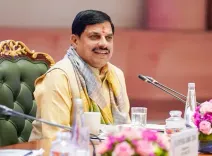
BRICS culture meet adopts Bhopal Declaration; consensus on return of stolen artefacts
Synopsis
The Bhopal Declaration, adopted at the 11th BRICS Culture Ministers' meeting, marks a rare multilateral consensus on returning stolen artefacts — and India is using it to spotlight a domestic milestone: over 700 cultural treasures repatriated since 2014, with a target of 1,000 by year-end. The shift from symbolic declarations to outcome-linked roadmaps signals a more assertive Indian cultural diplomacy.
Key Takeaways
The 11th BRICS Meeting of Ministers of Culture concluded in Bhopal with the adoption of the Bhopal Declaration .
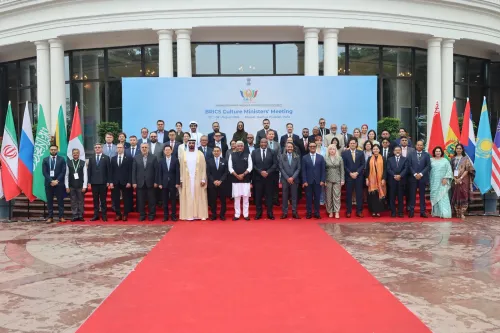
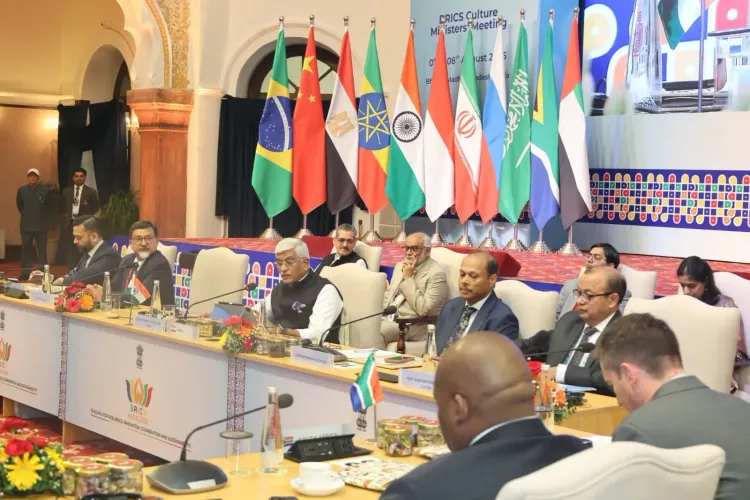
14 countries — 10 BRICS members and 4 partner nations — participated; 55 delegates attended.
Member countries reached consensus on strengthening cooperation for the repatriation of stolen and illicitly trafficked cultural artefacts .
India has repatriated more than 700 cultural treasures since 2014 , up from just 13 before that year; the target is 1,000 by end of 2025.
India's proposal for a Voluntary Artist Registry received support from all partner countries.
The declaration also emphasises cooperation on UNESCO multilateral heritage nominations and expanding the global creative economy for artists and craftspeople.
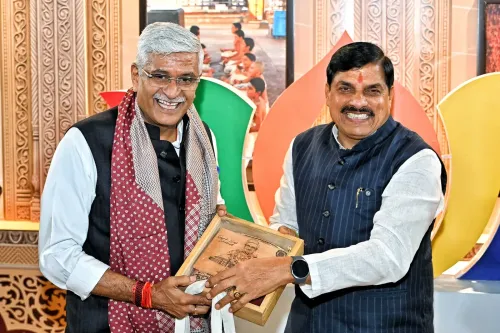
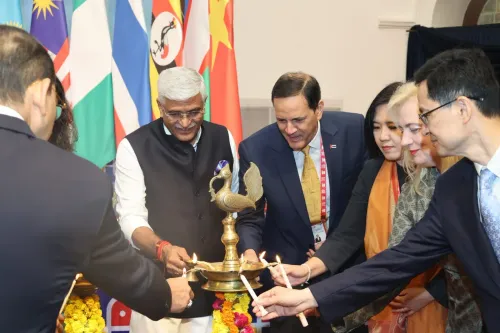
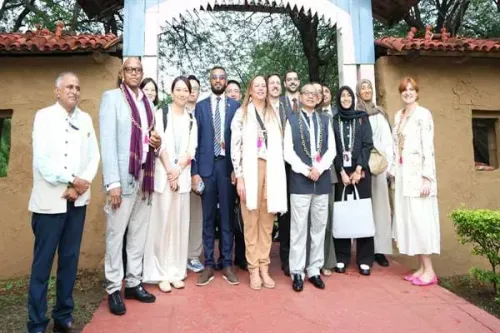
The 11th BRICS Meeting of Ministers of Culture, held under India's chairmanship, concluded in Bhopal on 9 August 2025 with the adoption of the Bhopal Declaration — an outcome-oriented document laying down specific objectives and a roadmap for cultural cooperation among member and partner nations. 14 countries, comprising 10 BRICS member states and four partner countries, participated in the ministerial meeting, with a total of 55 delegates in attendance.
What the Bhopal Declaration Covers
Union Minister for Culture and Tourism Gajendra Singh Shekhawat told reporters after the meeting that the declaration is not merely a statement of intent but a forward-looking document focused on specific targets and implementation pathways. The declaration seeks to strengthen the institutional framework for cultural cooperation among BRICS countries and establish a shared roadmap spanning traditional and contemporary areas of culture and heritage. Special emphasis has been placed on cultural and creative industries, with discussions centred on creating new opportunities for artists, creators, and craftspeople in the expanding global creative economy.
Consensus on Repatriation of Stolen Cultural Assets
A key outcome of the ministerial meeting was the consensus reached on strengthening cooperation for the repatriation of archaeological and cultural artefacts that have been stolen or illicitly trafficked from their countries of origin. Shekhawat underscored that cultural assets are not merely of economic value but represent the sentiments, history, and heritage of nations, societies, and communities. 'Their return, therefore, is also a matter of cultural justice,' he said.
Highlighting India's track record, Shekhawat noted that before 2014, only 13 archaeological and cultural treasures had been successfully repatriated to India from abroad. That number has now crossed 700, and he expressed confidence that the figure could reach 1,000 by the end of this year at the current pace of efforts.
India's Voluntary Artist Registry Proposal
A proposal put forward by India to establish a Voluntary Artist Registry received the support of all partner countries at the Bhopal meeting. The proposed registry is designed to connect professionals from the cultural and artistic sectors across BRICS countries, facilitating opportunities for artists to work in other member states, showcase their work, and explore avenues for joint creative projects. Shekhawat said the initiative would take cultural diplomacy beyond government-to-government engagement to the grassroots level.
Background and Build-Up to the Declaration
The Bhopal ministerial was the culmination of a three-stage process under India's BRICS chairmanship. The first meeting of the BRICS Culture Group was held virtually on 29–30 April, followed by a second working group session in Varanasi on 4–5 June. India anchored the Culture Group's agenda around 'building a strong foundation for resilience, innovation, cooperation, and sustainable development.' The declaration also places emphasis on strengthening cooperation in UNESCO's multilateral nomination process, with BRICS countries expected to jointly nominate heritage sites of shared historical significance.
What Comes Next
The Bhopal Declaration is expected to provide a new direction to cultural cooperation among BRICS nations by combining institutional collaboration with practical initiatives for artists, heritage conservation, and the creative economy. Member countries are set to share best practices, strengthen artist networks, and explore digital platforms to connect craftspeople with new markets — signalling a shift from symbolic diplomacy to measurable cultural engagement.
Point of View
An issue where multilateral agreement has historically been elusive. India's decision to anchor this agenda under its BRICS chairmanship is deliberate: the 700-repatriation milestone gives New Delhi a credibility advantage that most other member states cannot match. Yet the declaration's strength will depend entirely on whether the repatriation consensus translates into binding bilateral mechanisms or remains aspirational language. The Voluntary Artist Registry is an interesting grassroots bet, but its impact hinges on implementation infrastructure that does not yet exist. The real test of India's cultural diplomacy leadership is whether Bhopal becomes a reference point for future action or another well-worded document that gathers dust.
NationPress
9 Aug 2026
Frequently Asked Questions
What is the Bhopal Declaration adopted at the BRICS culture meeting?
The Bhopal Declaration is an outcome-oriented document adopted at the 11th BRICS Meeting of Ministers of Culture, held in Bhopal on 9 August 2025 under India's chairmanship. It lays down specific objectives and a roadmap for cultural cooperation, heritage conservation, creative industries, and the repatriation of stolen artefacts among BRICS member and partner countries.
What consensus was reached on stolen cultural artefacts at the BRICS meeting?
BRICS member and partner countries agreed to strengthen cooperation for the repatriation of archaeological and cultural artefacts that have been stolen or illicitly trafficked from their countries of origin. Union Minister Gajendra Singh Shekhawat described the return of such assets as 'a matter of cultural justice.'
How many cultural artefacts has India repatriated since 2014?
India has successfully repatriated more than 700 cultural and archaeological treasures from abroad since 2014, compared to only 13 in all the years before that. Minister Shekhawat expressed confidence that the total could reach 1,000 by the end of 2025.
What is the Voluntary Artist Registry proposed by India at the BRICS meeting?
The Voluntary Artist Registry is an India-proposed initiative, supported by all partner countries at the Bhopal meeting, that aims to connect cultural and artistic professionals across BRICS nations. It is intended to help artists work in other member countries, showcase their work, and collaborate on joint creative projects.
Which countries participated in the BRICS Culture Ministers' meeting in Bhopal?
A total of 14 countries participated — 10 BRICS member states and 4 partner countries — with 55 delegates in attendance. The meeting was held under India's BRICS chairmanship and was preceded by virtual and in-person working group sessions in April and June 2025.