Indian Army's 134 Ecological Task Force hailed by Assam Forest Minister

Synopsis
The Indian Army's 134 Ecological Task Force — a little-known Territorial Army battalion based in Tezpur — has quietly become one of Northeastern India's most active ecological restoration units, planting thousands of saplings in tiger reserves and wildlife corridors. Assam's Forest Minister visit on 8 August put a rare political spotlight on a model that blends military discipline with community-led conservation.
Key Takeaways
Assam Forest Minister Jayanta Mallabaruah visited the 134 Ecological Task Force (ETF) headquarters in Sonitpur district on 8 August .
The ETF is a Territorial Army Infantry Battalion based in Tezpur, Assam , specialised in environmental conservation.
The unit has conducted plantation drives at Chattai Hill , the Nameri Tiger Reserve , and the Sonitpur-Biswanath areas.
It works with local communities, school children, NGOs, and groups like the Balinara Foundation to restore degraded forests.
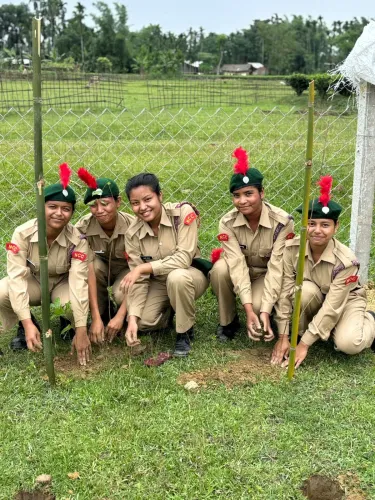
The Minister participated in a ceremonial tree plantation and endorsed the ETF's role in enhancing Assam's green cover .
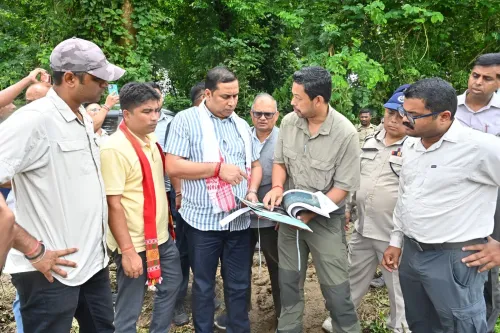
Assam's Minister of Environment and Forest, Jayanta Mallabaruah, on Saturday, 8 August visited the headquarters of the 134 Ecological Task Force (ETF) of the Indian Army's Eastern Command in Sonitpur district, lauding the unit's sustained work in afforestation, eco-restoration, and soil-water conservation across Northeastern India.
What the Minister Saw
During his visit to the ETF's base in Tezpur, Assam, Minister Mallabaruah acknowledged the unit's initiatives at Chattai Hill, where a large-scale plantation drive has resulted in the restoration of degraded green cover. He also participated in a ceremonial tree plantation, reaffirming, according to the Indian Army, a 'collective commitment towards eco-restoration and biodiversity conservation.'
The Indian Army shared details of the visit on social media platform X, noting that the Minister 'appreciated the 134 Ecological Task Force efforts towards restoring degraded forests and enhancing Assam green cover.'
What the 134 ETF Does
The 134 ETF is a Territorial Army Infantry Battalion specialised in environmental conservation. Based at Tezpur, its mandate spans fighting deforestation, restoring degraded landscapes, revitalising wildlife corridors, and protecting elephant and wildlife habitats across the Northeast.
The unit routinely plants thousands of native and fruit-bearing saplings in partnership with local communities, school children, regional NGOs, and environmental groups such as the Balinara Foundation. Recent drives have covered critical ecological zones including the Nameri Tiger Reserve and the Sonitpur-Biswanath areas.
Community-Led Conservation Model
A defining feature of the ETF's approach is long-term community engagement. Its teams work to transform wastelands into biodiverse green belts and agroforests, monitoring projects for years after initial plantation. This model blends military discipline with grassroots participation — a collaboration between local residents and uniformed personnel that officials say yields more durable ecological outcomes than conventional government drives.
Notably, this is the latest in a series of high-level acknowledgements the unit has received, underscoring growing institutional recognition for the Army's role in civilian environmental programmes in the Northeast.
Broader Significance
The Northeast's forest cover and biodiversity corridors face persistent pressure from encroachment, shifting cultivation, and infrastructure expansion. The ETF's work in the Sonitpur and Biswanath belts directly supports connectivity between protected areas, which wildlife experts consider critical for long-term species survival in the region. The Assam government's public endorsement signals potential for deeper state-Army coordination on ecological restoration going forward.
Point of View
Or remain a photo-opportunity. With the Northeast's wildlife corridors under sustained pressure, the difference between the two outcomes is consequential.
NationPress
9 Aug 2026
Frequently Asked Questions
What is the 134 Ecological Task Force of the Indian Army?
The 134 Ecological Task Force (ETF) is a Territorial Army Infantry Battalion based in Tezpur, Assam, specialised in environmental conservation. Its primary roles include fighting deforestation, restoring degraded landscapes, protecting wildlife corridors, and preserving biodiversity across Northeastern India.
Why did Assam's Forest Minister visit the 134 ETF?
Minister Jayanta Mallabaruah visited the ETF's headquarters in Sonitpur district on 8 August to acknowledge its afforestation, eco-restoration, and soil-water conservation work, particularly at Chattai Hill. He also participated in a ceremonial tree plantation during the visit.
Where does the 134 ETF carry out its conservation work?
The unit operates primarily in Assam's Sonitpur and Biswanath areas, and has conducted drives in ecologically sensitive zones including the Nameri Tiger Reserve and Chattai Hills. It also works to protect elephant and wildlife corridors across the broader Northeast region.
How does the 134 ETF engage local communities?
The ETF plants thousands of native and fruit-bearing saplings in collaboration with local communities, school children, regional NGOs, and environmental groups such as the Balinara Foundation. It monitors its projects for years, aiming to transform wastelands into biodiverse green belts and agroforests.
What is the significance of the Army's ecological work in Northeastern India?
The Northeast faces persistent threats to its forest cover and wildlife corridors from encroachment and infrastructure expansion. The ETF's restoration work in key zones supports connectivity between protected areas, which is critical for long-term biodiversity survival in the region.