Assam CMO: Army, Forest Dept plant 10,000 saplings ahead of WED
Synopsis
The Chief Minister's Office of Assam said the Indian Army, Assam Forest Department and local communities together planted 10,000 saplings ahead of World Environment Day 2026, with Chief Minister Himanta Biswa Sarma commending the joint drive as a shared mission for a greener Assam.
Key Takeaways
Joint drive planted 10,000 saplings across Assam ahead of World Environment Day 2026 .
Participants included the Indian Army , the Assam Forest Department and local communities.
Himanta Biswa Sarma commended the collective effort.
Effort aligns with the state's Amrit Brikshya Andolan launched in 2021 .
Feeds into India's Bonn Challenge pledge to restore 26 million hectares by 2030 .
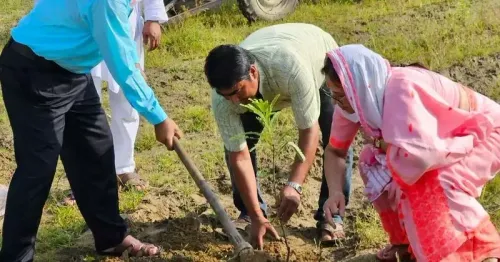
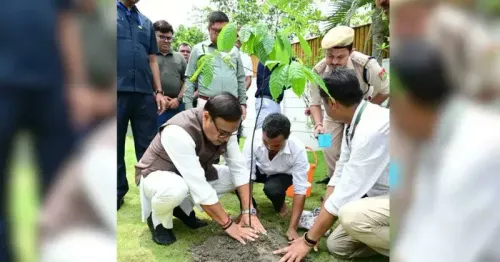
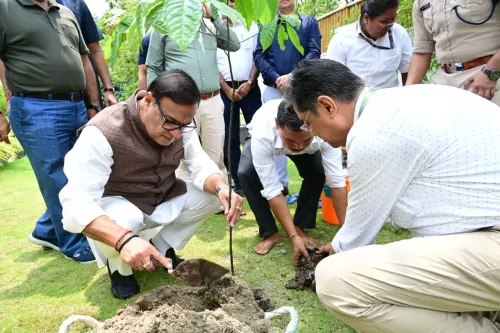
The Chief Minister's Office of Assam on 4 June 2026 highlighted a joint plantation drive in which the Indian Army, the Assam Forest Department and local communities planted 10,000 saplings across the state ahead of World Environment Day 2026. The post said Chief Minister Dr. Himanta Biswa Sarma commended the collective effort towards environmental conservation and a greener Assam.
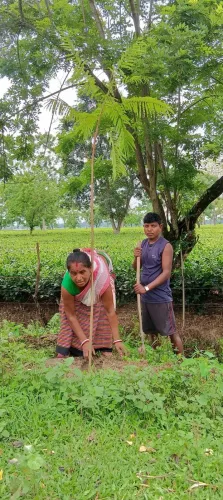
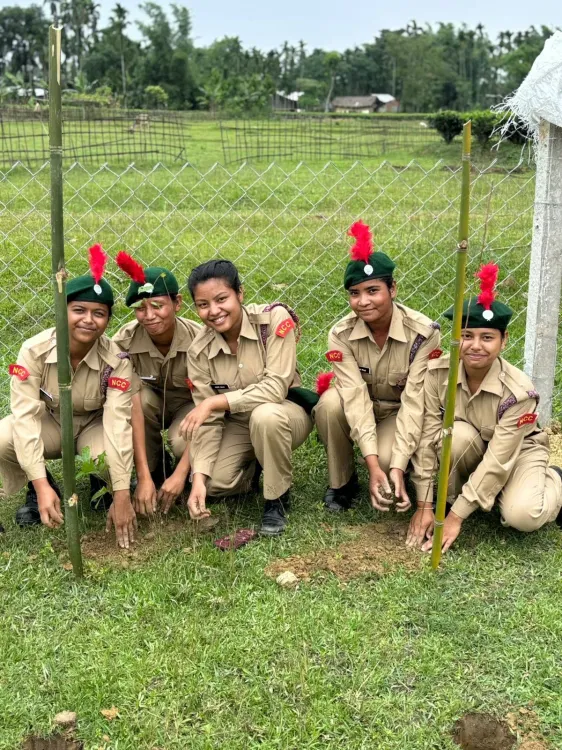
Framing the drive as a shared mission, the office wrote: '10,000 saplings. One shared mission. Ahead of World Environment Day 2026, the Indian Army joined hands with the Forest Department and local communities to strengthen Assam's green cover.' Two images accompanied the post showing the plantation activity on the ground.
Context
World Environment Day is observed annually on 5 June under the United Nations Environment Programme, and Indian states have used the occasion for mass plantation drives since the 2010s. Assam, which hosts some of the country's richest biodiversity, has stepped up such campaigns in recent years to push back against forest loss and improve climate resilience.
The participation of the Indian Army reflects a long-standing pattern of military involvement in civic-action work in the Northeast, often carried out under frameworks such as Sadbhavana (goodwill) and ecological task force projects. Coordinated drives that combine uniformed personnel, forest staff and village volunteers have become a recurring feature of the state's environmental calendar.
Policy backdrop
The latest effort sits within a broader policy architecture. The Assam government's flagship Amrit Brikshya Andolan, launched in 2021, aims to plant millions of saplings each year with citizen participation and digital tracking of survival rates. At the central level, the National Mission for a Green India, approved in 2014 under the National Action Plan on Climate Change, provides the umbrella for state-led afforestation.
India has also committed under the Bonn Challenge in 2015 to restore 26 million hectares of degraded land by 2030. Initiatives such as the one publicised by the Chief Minister's Office contribute incrementally to that pledge, particularly in ecologically sensitive border districts of Assam.
Stakeholders and impact
The drive brings together three distinct sets of actors. The Indian Army contributes logistics, manpower and access to remote terrain, including areas close to the international border. The Assam Forest Department supplies nursery-raised saplings, selects appropriate native species and is expected to monitor survival in subsequent seasons.
Local communities, the third pillar, are typically tasked with after-care, including watering and protection from grazing, which often determines whether plantation drives translate into lasting forest cover. The Chief Minister's Office framed the exercise as a demonstration of how inter-agency cooperation can scale up conservation outcomes.
What's next
Attention will turn to the formal observance of World Environment Day on 5 June 2026, when the state government is expected to roll out further plantation announcements and progress updates under the Amrit Brikshya Andolan. Survival audits in the months ahead will indicate whether the joint civil-military model can be replicated across other ecologically fragile districts of the Northeast, and possibly in neighbouring Himalayan states served by similar Eastern Command civic-action frameworks.
Point of View
Where the state government increasingly showcases inter-agency drives that fuse civilian conservation with military civic-action. By foregrounding the Indian Army's role, the Chief Minister's Office signals continuity with the Sadbhavana tradition while tying it to the state's flagship Amrit Brikshya Andolan. The real test, however, lies not in planting numbers but in sapling survival audits, which have historically been the weak link in such campaigns. Expect a louder communications push around 5 June.
NationPress
17 Sept 2026
Frequently Asked Questions
How many saplings were planted in the Assam drive?
The Chief Minister's Office of Assam said 10,000 saplings were planted in the joint drive ahead of World Environment Day 2026.
Who participated in the Assam plantation drive?
The Indian Army , the Assam Forest Department and local communities together carried out the plantation, according to the Chief Minister's Office.
When is World Environment Day 2026?
World Environment Day is observed on 5 June every year, and the 2026 edition falls on 5 June 2026.
What is the Amrit Brikshya Andolan in Assam?
It is a flagship plantation programme launched by the Assam government in 2021 to plant millions of saplings every year with community participation.
How does this drive link to India's climate commitments?
Plantation initiatives like this contribute to India's Bonn Challenge pledge made in 2015 to restore 26 million hectares of degraded land by 2030 .