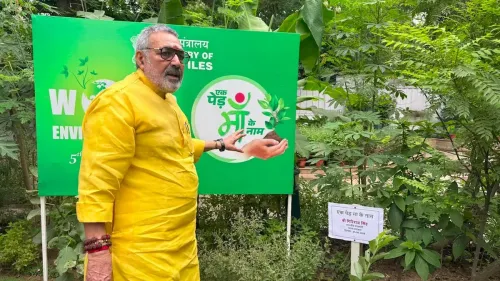
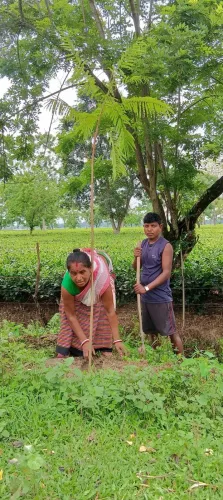
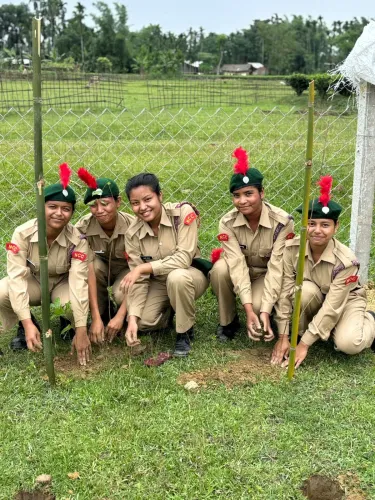
Giriraj Singh Hails Assam's 1.02 Crore Saplings Record on World Environment Day
Synopsis
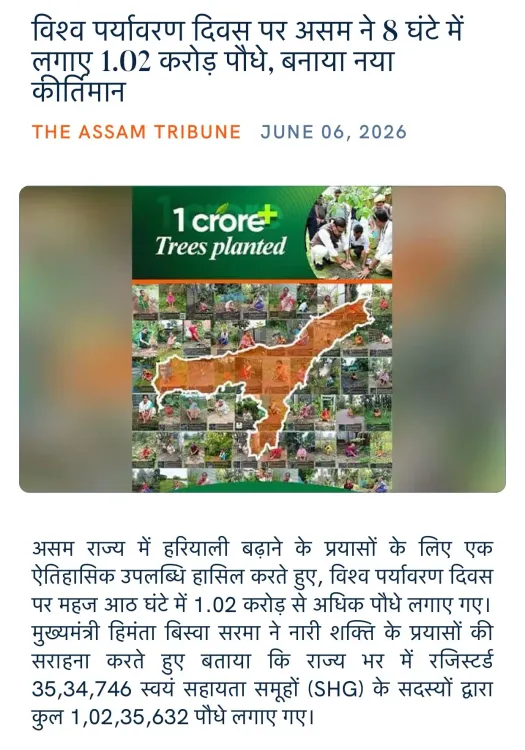
Union Textiles Minister Giriraj Singh on 6 June 2026 shared Assam's claim of planting 1.02 crore saplings in eight hours on World Environment Day, calling it a new record and underlining India's push to meet its Paris Agreement forest-cover commitments by 2030.
Key Takeaways
Assam reportedly planted 1.02 crore saplings in eight hours on World Environment Day, 5 June 2026 , claiming a new national record.
Union Textiles Minister Giriraj Singh amplified the achievement via the NaMo App on 6 June 2026 .
India has committed to adding a carbon sink of 2.5–3 billion tonnes CO2 equivalent through forest cover by 2030 under the Paris Agreement .
The Green India Mission (2014) and CAMPA funds underpin state-level afforestation drives of this kind.
Post-monsoon sapling survival rates and the next India State of Forest Report will determine the drive's real environmental impact.
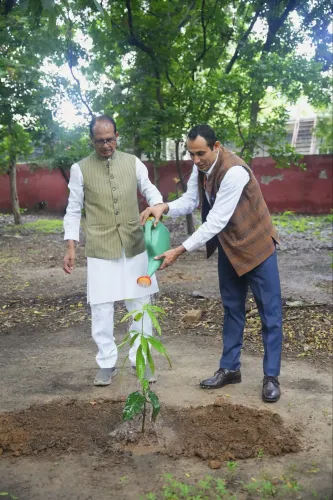
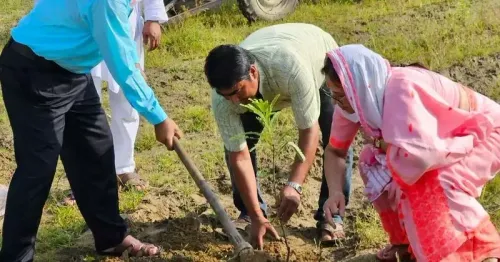
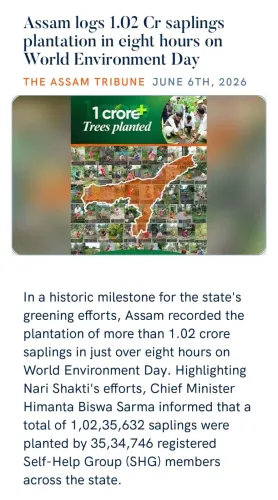
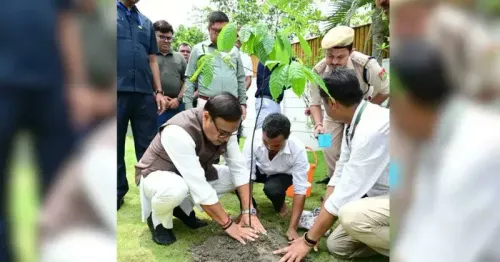
Union Textiles Minister Giriraj Singh on Saturday, 6 June 2026, shared a report highlighting that Assam planted 1.02 crore saplings in just eight hours on World Environment Day (5 June), describing the feat as a new national record in mass plantation drives.
Context
The post, shared via the NaMo App, amplifies Assam's claim of setting a benchmark by mobilising forestry personnel, local communities, and government machinery to plant over one crore saplings in a single day. World Environment Day, observed annually on 5 June under a United Nations mandate since 1974, has become a focal point for Indian states to stage large-scale afforestation events.
Giriraj Singh's post reads: 'Vishwa Paryavaran Divas par Assam ne 8 ghante mein lagaye 1.02 crore paudhe, banaya naya keertiman' ['On World Environment Day, Assam planted 1.02 crore saplings in 8 hours, setting a new record']. The Union Minister, a senior BJP leader and Lok Sabha MP from Begusarai, Bihar, regularly uses social media to spotlight state-level achievements aligned with the central government's environmental agenda.
Policy Backdrop
India's National Forest Policy of 1988 set a long-standing target of 33 percent forest and tree cover to safeguard ecological security. Building on that, the Green India Mission, launched in 2014 under the National Action Plan on Climate Change, aims to increase forest cover and improve ecosystem services across the country.
Under India's 2015 Nationally Determined Contribution to the Paris Agreement, the country committed to creating an additional carbon sink of 2.5 to 3 billion tonnes of CO2 equivalent through forest and tree cover by 2030. State plantation drives, particularly those timed with high-visibility occasions like World Environment Day, are seen as direct contributions to this international pledge. Funding through the Compensatory Afforestation Fund Management and Planning Authority (CAMPA) has further incentivised such state-level campaigns.
Stakeholders and Impact
Assam, a northeastern state with globally significant biodiversity assets including Kaziranga National Park and the Brahmaputra floodplains, faces persistent pressure on its green cover from agriculture expansion and development activity. A single-day drive of this scale, if the saplings achieve healthy survival rates, could meaningfully contribute to the state's forest-cover targets.
The Assam forestry department, local communities, and environmental civil society organisations are the primary stakeholders in ensuring these plantings translate into durable green cover. Large-scale drives have historically faced scrutiny over post-plantation survival rates, making follow-up monitoring through the monsoon season critical to assessing real-world impact.
What's Next
The long-term significance of Assam's record drive will be tested in post-monsoon survival audits and in the state's updated forest-cover data, expected to be reflected in the next India State of Forest Report published by the Forest Survey of India. Independent verification of the 1.02 crore figure and the methodology used to count plantings will also be closely watched by environmental researchers and civil society.
With India's 2030 climate targets drawing closer, state-level milestones of this kind are likely to feature prominently in national progress reports submitted to the UN Framework Convention on Climate Change, making Assam's claim a data point that policymakers and auditors alike will track carefully.
Point of View
Lending national visibility to state-level achievements. The timing — World Environment Day, less than four years before India's 2030 Paris Agreement deadline — is deliberate, framing a state event within a larger climate narrative. However, the credibility of mass plantation drives in India has long hinged on post-planting survival data, and the absence of independent verification means the record remains a claim rather than a confirmed milestone. If survival audits validate the numbers, Assam's drive could become a replicable model cited in India's international climate reporting.
NationPress
21 Oct 2026
Frequently Asked Questions
How many saplings did Assam plant on World Environment Day 2026?
Assam claimed to have planted 1.02 crore (10.2 million) saplings in eight hours on 5 June 2026 , World Environment Day, which it described as a new record.
Why did Union Minister Giriraj Singh share Assam's plantation news?
Giriraj Singh , a senior BJP leader and Union Textiles Minister, regularly highlights state government achievements on social media to underscore coordinated central-state action on national priorities, including afforestation and climate goals.
What is India's forest cover target under the Paris Agreement?
India committed under its 2015 Nationally Determined Contribution to create an additional carbon sink of 2.5 to 3 billion tonnes of CO2 equivalent through forest and tree cover by 2030 .
What is the Green India Mission?
The Green India Mission was launched in 2014 under India's National Action Plan on Climate Change to increase forest cover, improve ecosystem services, and enhance biodiversity across the country.
How will Assam's sapling plantation record be verified?
Independent verification will depend on post-monsoon survival audits conducted by the Assam forestry department and updated forest-cover data in the next India State of Forest Report published by the Forest Survey of India .