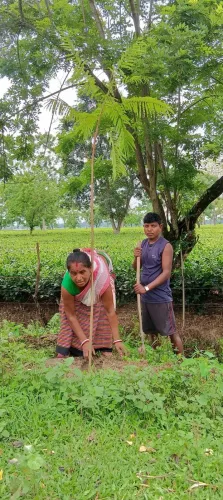
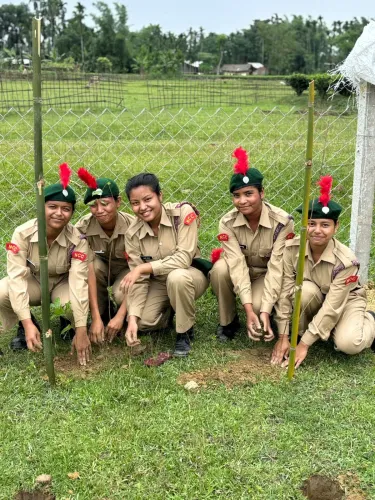
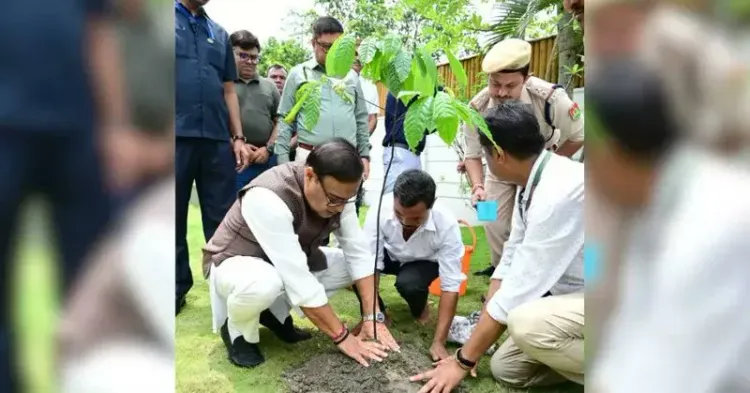
Assam logs 1.02 Cr saplings in 8 hrs on World Environment Day
Synopsis
The Chief Minister's Office of Assam announced that the state planted 1.02 crore saplings in eight hours on World Environment Day, 5 June 2026, in one of the largest single-day afforestation drives reported by any Indian state, involving forest department staff and community volunteers statewide.
Key Takeaways
1.02 crore saplings were reportedly planted across Assam in a single eight-hour window on World Environment Day, 5 June 2026 .
The drive was announced by the Chief Minister's Office of Assam and attributed to the state government under CM Himanta Biswa Sarma .
The exercise aligns with India's Paris Agreement target of adding a carbon sink of 2.5–3 billion tonnes of CO2 equivalent through afforestation by 2030 .
The Green India Mission (launched 2014 ) and Van Mahotsav tradition since the 1950s form the policy lineage behind Assam's annual plantation drives.
Post-monsoon survival rate audits and independent verification will be critical to assessing the lasting impact of the 2026 drive.
Indian states targeting 33 per cent forest and tree cover use such single-day high-volume drives as a key reporting instrument toward national benchmarks.
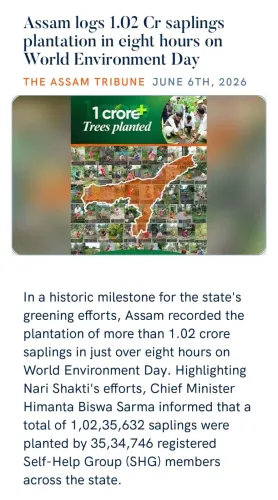
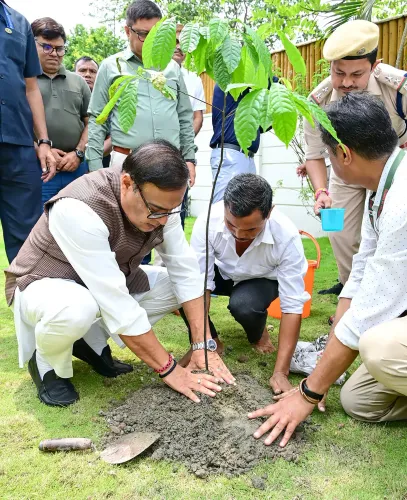
The Chief Minister's Office of Assam announced on Saturday, 6 June 2026 that the state recorded the plantation of 1.02 crore saplings in a single eight-hour drive on World Environment Day, marking one of the largest single-day afforestation efforts the state has reported.
Context
World Environment Day, observed every year on 5 June under the auspices of the United Nations, is the principal global platform for raising awareness on environmental protection and climate action. The Government of Assam has used the occasion to mount a state-wide plantation drive, with Chief Minister Himanta Biswa Sarma's administration mobilising forest department personnel and community volunteers across districts to achieve the reported figure.
The CMO's post stated plainly: 'Assam logs 1.02 Cr saplings plantation in eight hours on World Environment Day,' framing the exercise as a measurable milestone in the state's environmental calendar.
Policy Backdrop
India's commitment under the Paris Agreement, formalised in its 2015 Nationally Determined Contribution, includes the creation of an additional carbon sink of 2.5 to 3 billion tonnes of CO2 equivalent through afforestation and reforestation by 2030. State-level mass plantation drives are a primary instrument for moving toward that national goal.
The Green India Mission, launched in 2014 under the National Action Plan on Climate Change, set out to increase forest and tree cover while improving ecosystem services. Assam has participated in Van Mahotsav celebrations since the 1950s, with plantation targets scaled up significantly in the 2010s and beyond. Indian states have increasingly used single-day, high-volume drives around World Environment Day to demonstrate tangible progress toward the national benchmark of 33 per cent forest and tree cover.
Stakeholders and Impact
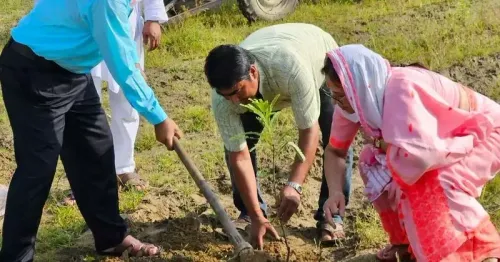
The drive involved Assam Forest Department staff alongside local communities and public volunteers spread across the state's districts. For local communities, participation in such drives carries both ecological and livelihood dimensions — saplings planted near habitation can eventually provide shade, fruit, timber, and watershed protection.
At the state level, the exercise contributes to Assam's reported green-cover data submitted to central agencies for tracking under national afforestation schemes. The scale of 1.02 crore saplings in eight hours — if independently verified and sustained through post-monsoon survival assessments — would represent a significant single-day contribution to the state's cumulative tree-cover effort.
What's Next
The credibility and lasting impact of mass plantation drives in India have historically hinged on post-monsoon survival audits and follow-up maintenance budgets. Independent assessments of sapling survival rates from previous drives have varied widely, making third-party verification of the 2026 exercise a key metric to watch in the months ahead.
Any follow-up allocation in the state budget for maintenance, community stewardship, and geo-tagged monitoring of the planted saplings will determine whether this record-scale drive translates into durable green cover for Assam. The state's performance on this front is also likely to inform its positioning in future central government rankings on forest cover expansion.
Point of View
Single-day afforestation events around World Environment Day to demonstrate climate action credentials. The announcement by the CMO, rather than the Forest Department, signals that the drive carries political as well as ecological intent — positioning CM Himanta Biswa Sarma's administration as proactive on environmental governance ahead of national forest-cover assessments. The real test, as with similar record drives in other states, will come with post-monsoon survival data: India's broader afforestation record shows a persistent gap between saplings planted and trees that survive to maturity. Until independent audits confirm survival rates, the figure functions as a headline milestone rather than a verified ecological outcome.
NationPress
19 Sept 2026
Frequently Asked Questions
How many saplings did Assam plant on World Environment Day 2026?
The Chief Minister's Office of Assam stated that the state planted 1.02 crore saplings in eight hours on World Environment Day, 5 June 2026.
Who organised the Assam sapling plantation drive on World Environment Day?
The drive was organised by the Government of Assam under Chief Minister Himanta Biswa Sarma , involving forest department staff and community volunteers across the state's districts.
What is India's afforestation target under the Paris Agreement?
India's 2015 Nationally Determined Contribution under the Paris Agreement commits the country to creating an additional carbon sink of 2.5 to 3 billion tonnes of CO2 equivalent through afforestation and reforestation by 2030 .
What is the Green India Mission?
The Green India Mission was launched in 2014 under India's National Action Plan on Climate Change to increase forest and tree cover and improve ecosystem services, forming a key policy framework for state plantation drives.
Will the Assam plantation figures be independently verified?
Independent verification through post-monsoon survival audits is standard practice for assessing such drives; no third-party confirmation of the 1.02 crore figure has been reported yet, making follow-up assessments a critical next step.