Assam CM Himanta announces 1 crore tree drive by 35 lakh SHG women

Synopsis
Assam Chief Minister Himanta Biswa Sarma has announced that 35 lakh women from Self Help Groups will plant 1 crore trees across the state on World Environment Day, 5 June 2026. He framed the drive as one of Assam's largest community-led plantation efforts, linking climate action with grassroots Nari Shakti.
Key Takeaways
Assam CM Himanta Biswa Sarma announced a 1 crore tree plantation drive for 5 June 2026 .
An estimated 35 lakh women from SHGs are to participate across the state.
The campaign coincides with World Environment Day and builds on Assam's annual Van Mahotsav push.
SHGs are mobilised through the Assam State Rural Livelihoods Mission , an offshoot of the National Rural Livelihoods Mission .
Outcomes will hinge on sapling survival rates and follow-up funding in the 2026-27 forest plan.
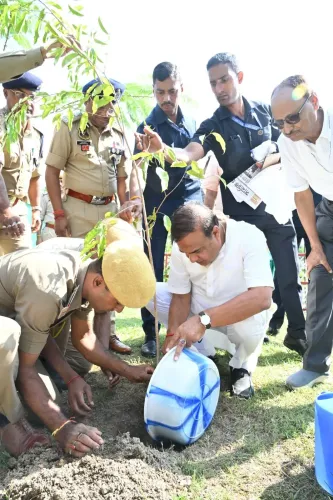
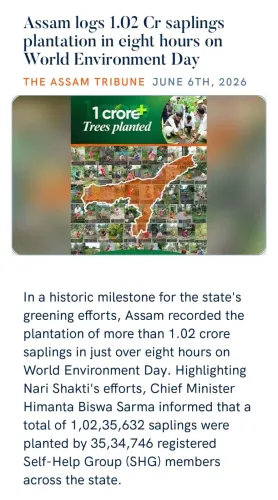
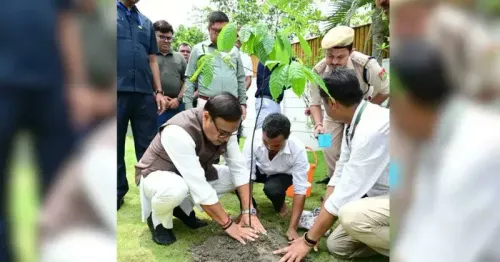
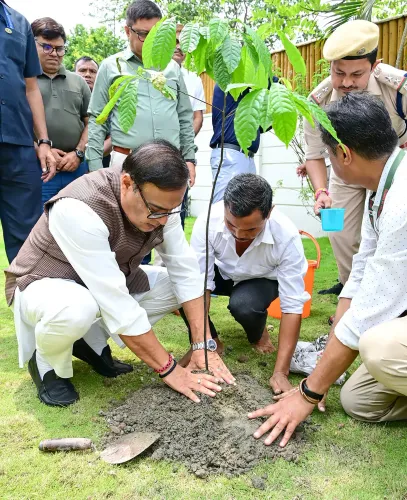
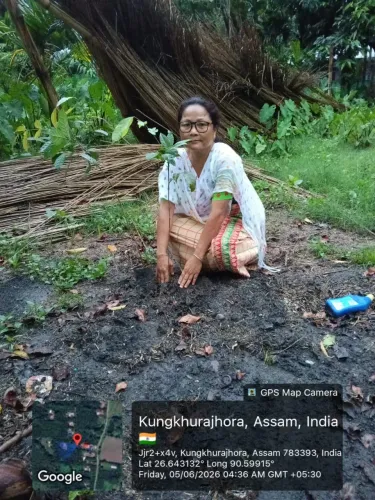
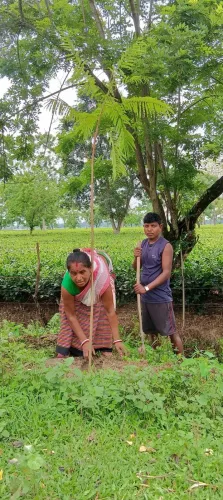
Assam Chief Minister Himanta Biswa Sarma on 3 June 2026 announced that 35 lakh women from Self Help Groups (SHGs) across the state will plant 1 crore trees on World Environment Day, 5 June, in what he described as one of the largest community-driven plantation drives ever attempted in Assam. The announcement, made on X, frames the initiative as a convergence of climate action and women-led rural empowerment.
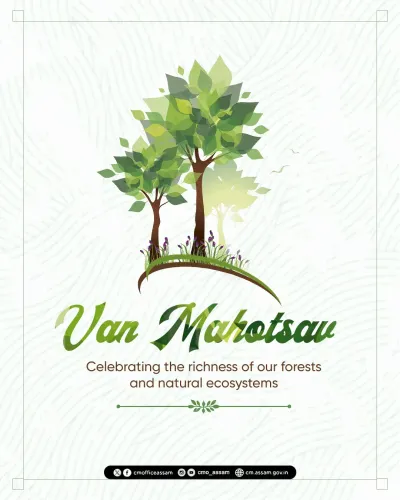
'1 crore trees. 35 lakh women. One shared commitment for Assam's future,' the Chief Minister wrote, adding that the drive would show 'how Assam's Nari Shakti (women power) are driving change at the grassroots.' The post was accompanied by a graphic underlining the scale of the planned mobilisation.
Context
World Environment Day, observed annually on 5 June under the United Nations framework, has in recent years been used by several Indian states to launch high-visibility afforestation campaigns. Assam, which faces recurring flood damage and pressure on its forest cover, has steadily expanded the scope of these drives since 2021, when the current government began folding women's SHGs into annual Van Mahotsav activities.
The state's SHG network, built up under the Assam State Rural Livelihoods Mission, is among the largest in the North-East. Originally designed around microfinance and small enterprise, its mandate has progressively widened to cover natural-resource activities such as nursery raising, sapling distribution and post-plantation upkeep.
Policy backdrop
The plantation push sits within a longer policy arc. The National Rural Livelihoods Mission, launched in 2011, provided the institutional scaffolding for SHG expansion. Assam's State Action Plan on Climate Change, first drawn up for the 2015-2020 period and subsequently updated, flagged community-driven afforestation as a priority response to deforestation and flood vulnerability.
At the national level, the Green India Mission has encouraged states to channel compensatory afforestation through local collectives. Assam's integration of women's groups into this framework reflects a dual emphasis: meeting forest-cover targets while routing wages and stipends through rural women.
Stakeholders and impact
The most direct stakeholders are the SHG members themselves, drawn largely from rural and flood-prone districts where seasonal displacement and agricultural distress are recurring concerns. For these households, participation in state-backed plantation drives typically comes with modest payments and training inputs from the Assam Forest Department.
The forest bureaucracy is the other principal stakeholder. District forest offices are expected to coordinate sapling supply, site selection and survival monitoring — areas where the gap between announced numbers and ground outcomes has historically been wide in plantation programmes across India. Similar SHG-anchored models in Odisha and Bihar have produced mixed results, with survival rates depending heavily on post-plantation maintenance.
What's next
Attention will turn to the execution on 5 June 2026 and, more importantly, to the months that follow. Key markers to watch include the actual number of saplings planted, the species mix, geographic spread across Assam's districts, and the survival rate reported in subsequent forest department reviews.
Budgetary follow-through in the 2026-27 forest department plan — particularly any earmarked allocation for maintenance and SHG remuneration — will signal whether the announcement marks a sustained programme or a one-day mobilisation. For the Sarma government, the drive also doubles as a political showcase of its Nari Shakti framing ahead of subsequent electoral cycles, tying environmental messaging directly to women voters.
Point of View
The government simultaneously claims credit for environmental action and reinforces its Nari Shakti branding in a state where women SHG members form a significant electoral bloc. The real test, however, is post-plantation survival and maintenance — historically the weak link in such mass campaigns across India. Whether the 2026-27 budget mirrors the ambition of the announcement will indicate if this is a structural shift or a single-day showcase.
NationPress
23 Sept 2026
Frequently Asked Questions
When is Assam's 1 crore tree plantation drive being held?
The drive is scheduled for 5 June 2026 , coinciding with World Environment Day, as announced by Assam Chief Minister Himanta Biswa Sarma.
How many women will participate in the Assam SHG plantation drive?
According to the Chief Minister's announcement, around 35 lakh women from Self Help Groups across Assam will take part in the plantation drive.
What is the target number of trees in the Assam 2026 plantation drive?
The state has set a target of planting 1 crore trees in a single coordinated drive on World Environment Day 2026.
Which scheme links Assam's women SHGs to environmental programmes?
Assam's SHGs operate under the Assam State Rural Livelihoods Mission , an extension of the National Rural Livelihoods Mission, and have progressively been integrated into Van Mahotsav and Green India Mission activities.
Why is Assam focusing on community-led afforestation?
Assam's State Action Plan on Climate Change identifies community-driven afforestation as a priority to counter deforestation and recurring flood damage, while also creating rural livelihood opportunities.