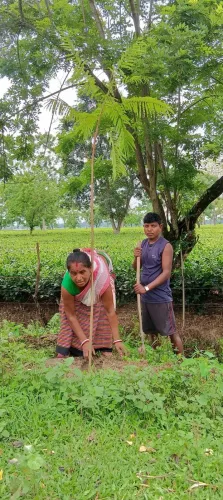
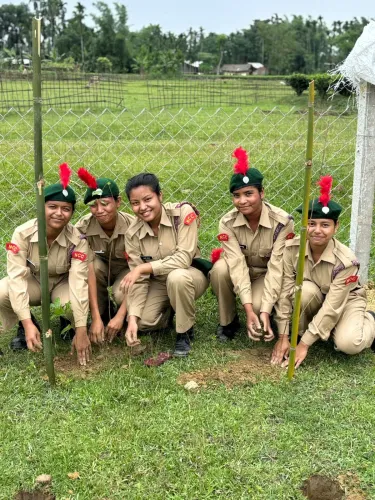
Assam plants 1.02 crore saplings in one day on World Environment Day
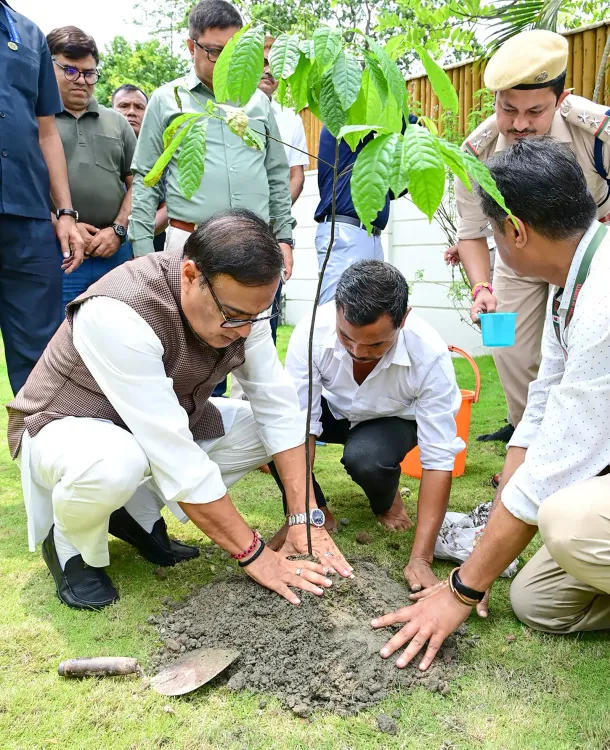
Synopsis
In just over eight hours on World Environment Day, Assam's women-led Self-Help Groups planted more than 1.02 crore saplings across the state — one of the largest single-day community plantation drives ever recorded in the Northeast. With over 35 lakh SHG members mobilised and Barpeta leading the district tally, the scale of the drive signals a significant shift toward grassroots-driven climate action in Assam.
Key Takeaways
Assam planted 1,02,35,632 saplings on 5 June 2025 — World Environment Day — in a single-day drive.
The campaign was led by 35,34,746 registered Self-Help Group (SHG) women members across the state.
Barpeta planted the most saplings ( 5,54,666 ); Nagaon recorded the highest SHG participation ( 2,35,478 members).
Chief Minister Himanta Biswa Sarma credited the state's 'Nari Shakti' for achieving the milestone in just over eight hours .
Plantation figures are to be independently verified and documented under Assam's ongoing green mission .
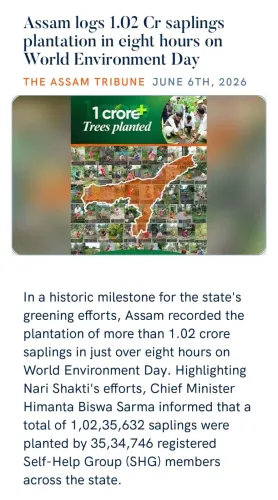
Assam set a new green benchmark on World Environment Day, 5 June, with over 1.02 crore saplings planted across the state in a single day, driven by women members of Self-Help Groups (SHGs), Chief Minister Himanta Biswa Sarma announced. The state-wide drive, completed in just over eight hours, stands as one of the largest community-led plantation campaigns in Assam's recorded history.
Official Figures and District-wise Breakdown
According to official data released after the drive, a total of 1,02,35,632 saplings were planted, with 35,34,746 registered SHG members participating. Barpeta district led all districts in total saplings planted at 5,54,666, followed by Golaghat with 5,36,590 and Biswanath with 5,36,000.
Nagaon recorded the highest SHG member participation, with 2,35,478 members planting 5,25,493 saplings. Dhubri contributed 5,12,193 saplings, Udalguri planted 4,61,500, Kamrup accounted for 4,46,968, and Kokrajhar added 4,06,778. Lakhimpur, Sonitpur, and Morigaon each reported contributions exceeding three lakh saplings.
What Chief Minister Sarma Said
Sarma shared the achievement on social media platform X, crediting Assam's women with making the milestone possible. 'Assam achieves a historic milestone! In just over eight hours, over 1.02 crore saplings have been planted by the people, in an effort led by Assam's enterprising Nari Shakti, setting a new record in our greening efforts. Compliments to all my sisters for achieving this feat,' the Chief Minister posted.
He specifically highlighted the role of the state's 'Nari Shakti' — women-led SHGs spanning both urban and rural areas — as the backbone of the drive.
Context and Significance
The plantation campaign was organised as part of the Assam government's broader green mission to expand forest and vegetation cover, promote ecological conservation, and embed climate action at the community level. This comes amid growing concern over deforestation and land degradation in the Northeast, where shifting cultivation and encroachment have historically pressured green cover.
Notably, the drive's scale — over one crore saplings in a single day — distinguishes it from routine annual plantation exercises, which typically span weeks. Officials said the figures are expected to be independently verified and documented as part of the state's ongoing environmental records.
What Happens Next
The government has indicated that the plantation data will be formally verified and incorporated into Assam's green mission records. Authorities believe the initiative will strengthen the state's ecological balance and build grassroots awareness around sustainable environmental practices. The survival and maintenance of the planted saplings over the coming months will be the true measure of the drive's long-term impact.
Point of View
But the real story is institutional: Assam has channelled its SHG network — built primarily for microfinance and livelihoods — into a large-scale environmental mobilisation. That is a meaningful governance innovation, not just optics. The caveat is survival rate: India's plantation drives have historically been plagued by poor post-planting maintenance, with independent audits often finding that a fraction of planted saplings survive beyond one season. Until the state publishes verified survival data, the 1.02 crore figure should be read as a participation milestone, not an ecological one. The Northeast's green cover pressures are real, and community-driven action is the right direction — but accountability on follow-through will determine whether this is a record or a result.
NationPress
20 Oct 2026
Frequently Asked Questions
How many saplings were planted in Assam on World Environment Day 2025?
A total of 1,02,35,632 saplings were planted across Assam on 5 June 2025, according to official figures released after the drive. The campaign was completed in just over eight hours.
Who led the plantation drive in Assam?
The drive was led by women members of Self-Help Groups (SHGs) across Assam, with 35,34,746 registered SHG members participating. Chief Minister Himanta Biswa Sarma credited the state's 'Nari Shakti' for the achievement.
Which district planted the most saplings in Assam's World Environment Day drive?
Barpeta district planted the highest number of saplings at 5,54,666, followed by Golaghat with 5,36,590 and Biswanath with 5,36,000. Nagaon recorded the highest SHG member participation with 2,35,478 members.
Why is Assam's plantation drive significant?
The drive is significant because it mobilised over 35 lakh women from Self-Help Groups to plant more than one crore saplings in a single day, making it one of the largest community-driven plantation campaigns in the Northeast. It also signals a broader push to address deforestation and ecological degradation in the region.
Will the plantation figures be officially verified?
Yes, according to officials, the plantation data is expected to be independently verified and documented as part of Assam's ongoing green mission records. The long-term success of the drive will depend on sapling survival and maintenance in the months ahead.