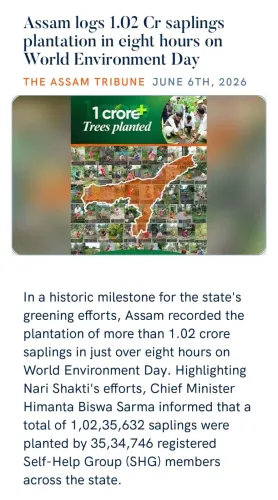
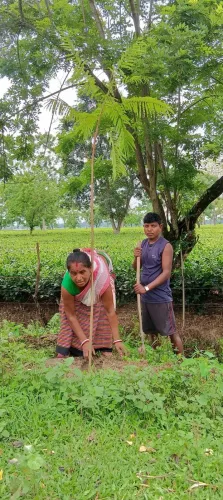
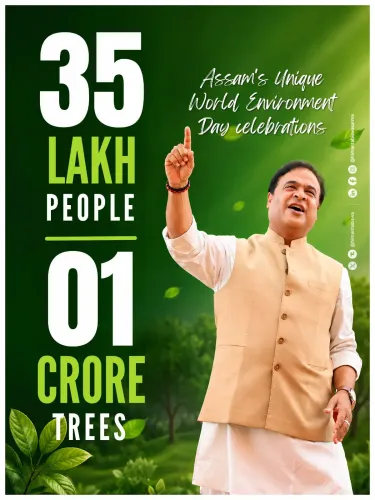
CM Himanta Biswa Sarma Calls Assam to Plant Trees on Van Mahotsav
Synopsis
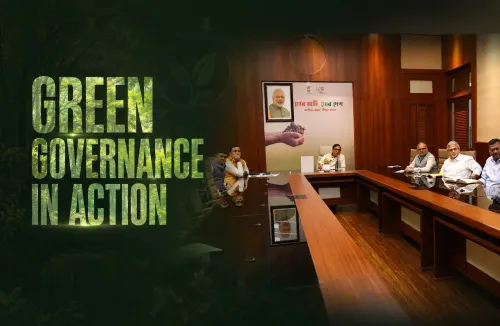
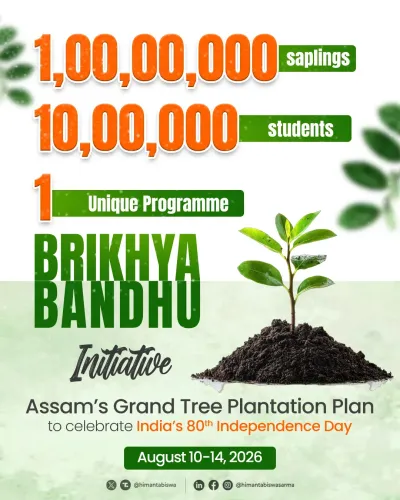
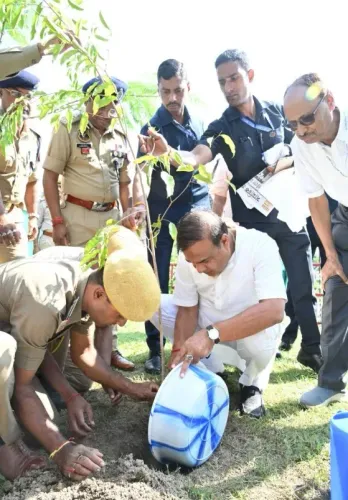
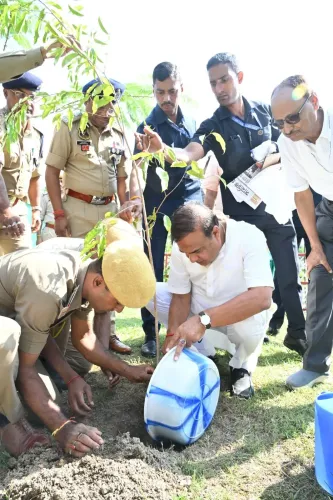
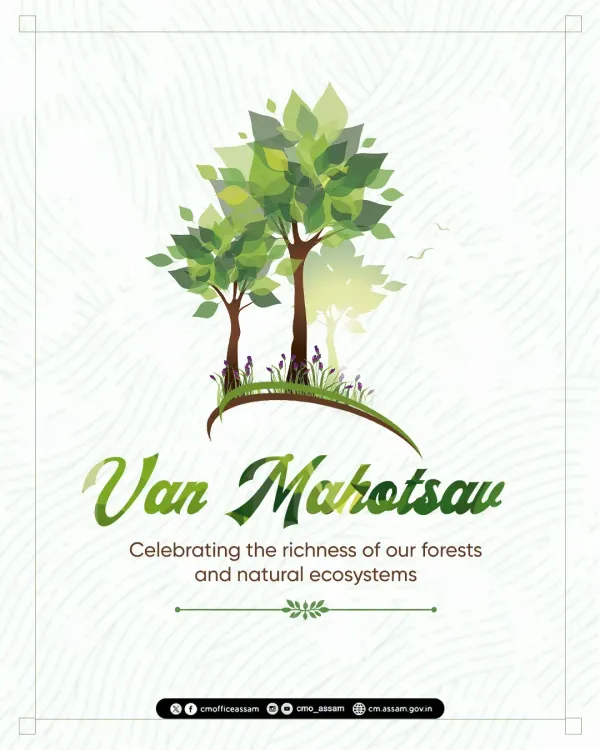
On Van Mahotsav, 1 July 2026, the Chief Minister's Office of Assam and CM Himanta Biswa Sarma called on every citizen to plant and protect a tree, reaffirming the state's commitment to expanding green cover and conserving its rich northeastern biodiversity as part of its core development agenda.
Key Takeaways
The Chief Minister's Office of Assam marked Van Mahotsav on 1 July 2026 with a public call to plant and protect trees.
Himanta Biswa Sarma personally appealed to every citizen of Assam to participate in the afforestation drive.
Van Mahotsav is a national tree-planting festival launched in 1950 by K.M.
Munshi to promote citizen-led afforestation.
Assam's forests cover roughly 35 per cent of the state's area, making conservation a high-stakes policy priority.
The state faces ongoing deforestation pressures from agriculture, flooding, and development in the Northeast region.
Follow-up metrics — sapling survival rates and new afforestation targets — will determine whether the campaign yields measurable green-cover gains.
The Chief Minister's Office of Assam, on Wednesday, 1 July 2026, invoked Van Mahotsav to urge every citizen of the state to plant and protect a tree, with Chief Minister Dr. Himanta Biswa Sarma personally leading the call for a greener Assam.
Context
The appeal was made on the occasion of Van Mahotsav, India's annual tree-planting festival observed every July since its inception in 1950. The festival was initiated by statesman K.M. Munshi under the Government of India to build a mass culture of afforestation across the country. Decades later, it remains one of the most widely observed environmental observances at both the state and national levels.
The Chief Minister's Office framed the message around intergenerational responsibility, stating: 'A greener Assam begins with every sapling we nurture today,' and calling upon citizens to plant a tree and 'protect it for generations to come.'
Policy Backdrop
Assam is among India's most biodiverse states, with forests covering roughly 35 per cent of its geographical area according to national surveys. The state's ecological wealth spans the Brahmaputra floodplains, reserved forests, and globally significant wildlife corridors in the Northeast.
Despite this natural endowment, the region has faced sustained deforestation pressures from agriculture expansion, annual flooding, and infrastructure development. State-level Van Mahotsav drives are aligned with the Forest Survey of India framework, which tracks forest and tree cover as part of India's broader land-use and climate reporting commitments. The Chief Minister's Office described environmental stewardship as 'a cornerstone of its development journey' for Assam.
Stakeholders and Impact
The primary audience for this call is Assam's general citizenry, including forest-adjacent communities whose livelihoods are directly tied to the health of local ecosystems. Participation in Van Mahotsav drives has historically involved schools, local bodies, and self-help groups, making it a broad-based civic exercise rather than a purely governmental one.
For forest communities in particular, sustained green cover translates into watershed protection, reduced flood vulnerability, and the preservation of biodiversity that supports traditional livelihoods. CM Sarma's appeal positions tree-planting not merely as a symbolic gesture but as a long-term civic commitment — each sapling planted and protected contributes to the state's aggregate green cover data reported to national and international bodies.
What's Next
Attention will now turn to the Assam state forestry department's follow-through — specifically, reports on sapling survival rates from this year's drive and any fresh afforestation targets that may be announced in the next budget session of the state legislature. Sustained political attention to Van Mahotsav outcomes, beyond the single day of planting, has historically been the critical variable separating symbolic campaigns from measurable gains in green cover.
As India's northeastern states continue to serve as a biodiversity frontier, Assam's commitment to expanding its forest cover carries implications that extend well beyond state boundaries — feeding into regional climate resilience and India's international environmental obligations.
Point of View
The Chief Minister's Office distributes ownership of outcomes across the citizenry, insulating the administration from accountability if survival rates disappoint. The move also slots neatly into India's broader national push to meet international forest-cover commitments, giving the state government a dual dividend: domestic goodwill and international climate credibility. The real test, as with most Van Mahotsav drives, will be whether institutional follow-through — monitoring, water, protection — matches the day's rhetoric.
NationPress
29 Sept 2026
Frequently Asked Questions
What is Van Mahotsav and when is it celebrated?
Van Mahotsav is India's annual tree-planting festival, celebrated every July since 1950 when it was launched by K.M. Munshi to encourage nationwide afforestation and citizen participation in protecting green cover.
What did CM Himanta Biswa Sarma say on Van Mahotsav 2026?
Through the Chief Minister's Office of Assam, CM Dr. Himanta Biswa Sarma called upon every citizen to plant a tree and protect it for generations to come, framing the act as a commitment to Assam's long-term environmental health.
How much forest cover does Assam have?
According to national surveys, forests cover roughly 35 per cent of Assam's geographical area, spanning Brahmaputra floodplains and reserved forests that form part of the Northeast's globally significant biodiversity corridor.
Why is afforestation important for Assam?
Assam faces persistent deforestation pressures from agriculture, annual flooding, and infrastructure development. Expanding green cover helps protect watersheds, reduce flood vulnerability, and preserve biodiversity that supports local livelihoods and India's climate commitments.
How does Van Mahotsav connect to India's climate goals?
State-level Van Mahotsav drives are tracked under the Forest Survey of India framework, and the data feeds into India's national and international reporting on land-use change and climate targets, making local tree-planting campaigns part of a larger accountability chain.