CM Assam Office Flags New Gecko, Dragonfly Finds in Northeast
Synopsis
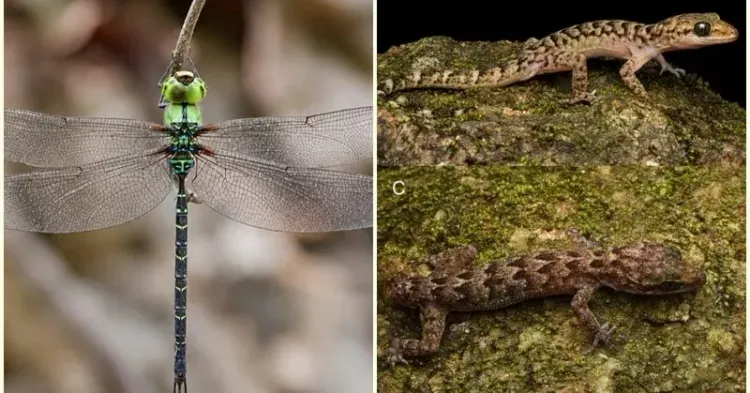
The Chief Minister's Office of Assam spotlighted two Northeast wildlife discoveries on 29 May 2026 — a gecko in Assam and a dragonfly in Arunachal Pradesh unseen for 110 years — highlighting the region's status as a biodiversity hotspot and ongoing conservation documentation efforts.
Key Takeaways
The Chief Minister's Office of Assam shared the discoveries on 29 May 2026 , amplifying scientific finds from the Northeast region.
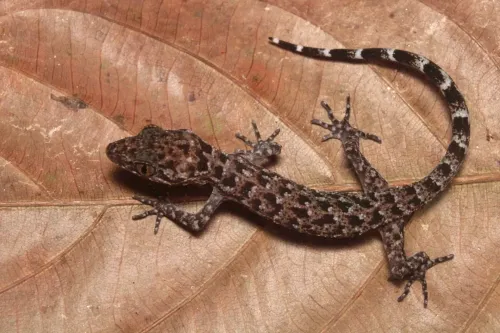
A gecko species was found in Assam , adding to the state's documented fauna.
A dragonfly species was recorded in Arunachal Pradesh after a gap of 110 years .
Northeast India sits across the Eastern Himalayas and Indo-Burma biodiversity hotspots, both globally recognised for high endemism.
India's National Biodiversity Action Plan (2008) designates the Northeast as a priority zone for species documentation.
The discoveries may inform updates to State Biodiversity Action Plans and protected-area decisions in both states.
The Chief Minister's Office of Assam on Friday, 29 May 2026 highlighted two significant wildlife discoveries from the Northeast — a gecko species found in Assam and a dragonfly recorded in Arunachal Pradesh — drawing attention to the region's ongoing biodiversity documentation efforts.
Context
The post, shared by the official handle of the Chief Minister's Office, flagged the discoveries under the headline: 'Gecko found in Assam, dragonfly in Arunachal: Northeast buzzing with discoveries.' The dragonfly species is reported to have returned to scientific record after 110 years, while the gecko represents a fresh find for the state.
Both discoveries underscore the ecological richness of a region that straddles two of the world's recognised biodiversity hotspots — the Eastern Himalayas and the Indo-Burma corridor — areas characterised by exceptionally high levels of endemism.
Policy Backdrop
Assam has long been a focal point for wildlife conservation in India. Kaziranga National Park, a UNESCO World Heritage Site since 1985, anchors the state's conservation identity, while successive governments have used biodiversity milestones to signal ecological stewardship.
India's National Biodiversity Action Plan (2008) identified the Northeast as a priority zone for species documentation and habitat conservation, creating a policy framework under which state governments and research institutions conduct periodic fauna surveys. These efforts are tied to India's obligations under the Convention on Biological Diversity.
Arunachal Pradesh, bordering China, Myanmar, and Bhutan, remains one of India's least-surveyed states in terms of species inventory, making rediscoveries and new records there particularly significant for the scientific community.
Stakeholders and Impact
Wildlife researchers and conservation agencies stand to benefit most immediately from these discoveries, as new species records strengthen the case for expanding protected-area networks and securing funding for biodiversity monitoring in the region.
Local communities in buffer zones around forested areas are also stakeholders — species documentation often precedes ecotourism development, which state governments in the Northeast have increasingly promoted as a revenue stream alongside infrastructure expansion.
The public amplification of such discoveries by the Chief Minister's Office of Assam, led by Chief Minister Himanta Biswa Sarma since May 2021, reflects a broader pattern of state governments coupling biodiversity news with regional development and conservation narratives.
What's Next
Attention will now turn to whether these discoveries prompt formal notifications — such as additions to protected-area boundaries or updates to the State Biodiversity Action Plans of Assam and Arunachal Pradesh. Central ministry responses, including potential announcements on funding for Northeast biodiversity monitoring programmes, will also be watched.
With scientific surveys of the Northeast intensifying, further species records are likely in coming months, reinforcing the region's profile as a living laboratory for India's conservation commitments on the global stage.
Point of View
Often in parallel with infrastructure pushes that draw environmental scrutiny. A dragonfly unseen for 110 years and a fresh gecko record are scientifically significant, but their political utility lies in reinforcing Assam's and Arunachal's green credentials at a moment when the region faces intense developmental pressure. This pattern of coupling species news with governance optics is now a recognisable feature of Northeast political communication. The real test will be whether these discoveries translate into concrete conservation actions — protected-area expansions, survey funding, or updated biodiversity action plans — rather than remaining at the level of social-media signalling.
NationPress
14 Oct 2026
Frequently Asked Questions
What gecko was discovered in Assam in 2026?
A gecko species was found in Assam and highlighted by the Chief Minister's Office on 29 May 2026, though specific species details from the underlying scientific report have not been independently verified in established public records available to this report.
Which dragonfly was rediscovered in Arunachal Pradesh after 110 years?
A dragonfly species was reported to have returned to scientific record in Arunachal Pradesh after 110 years, as flagged by the Chief Minister's Office of Assam on 29 May 2026; the precise species name requires confirmation from the primary scientific publication.
Why is Northeast India important for biodiversity?
Northeast India spans the Eastern Himalayas and Indo-Burma biodiversity hotspots, two of the world's most species-rich zones with high levels of endemism, making it a priority area under India's National Biodiversity Action Plan since 2008.
Who is the Chief Minister of Assam?
Himanta Biswa Sarma has been the Chief Minister of Assam since May 2021 and is the head of government whose office shared the wildlife discovery post.
What happens after a new species is discovered in India?
New species records in India typically feed into State Biodiversity Action Plans, can support proposals for protected-area expansions, and may attract central government funding for further biodiversity monitoring under the Convention on Biological Diversity framework.