CM Yogi Proposes Sardar Patel Industrial Zones in All 75 UP Districts
Synopsis
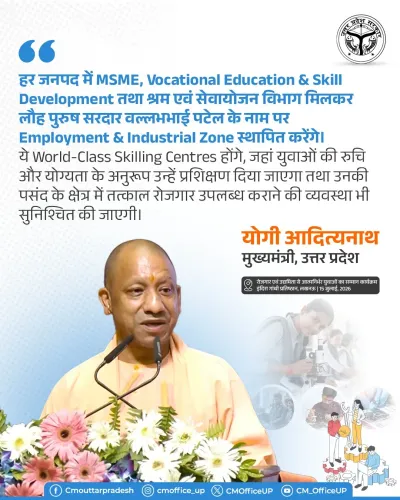
CM Yogi Adityanath has proposed 'Employment and Industrial Zones' named after Sardar Vallabhbhai Patel in all 75 Uttar Pradesh districts, extending the state's decentralised industrialisation drive and honouring the Iron Man of India.
Key Takeaways
CM Yogi Adityanath announced on 15 July 2026 plans to establish district-level 'Employment and Industrial Zones' across all 75 districts of Uttar Pradesh.
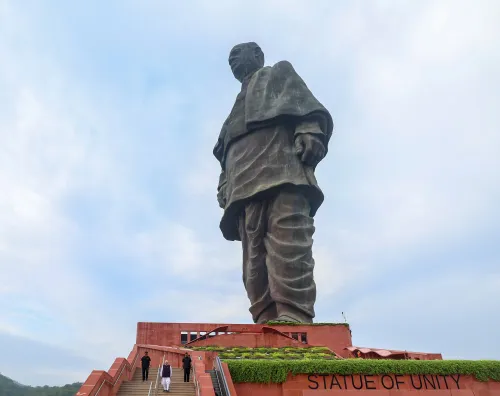
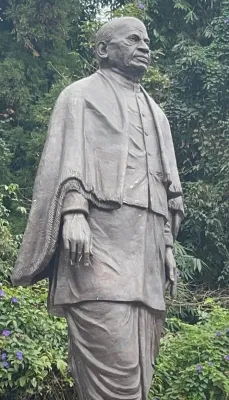
The zones will be named after Sardar Vallabhbhai Patel , India's first Deputy Prime Minister, known as the Iron Man for integrating princely states post-1947.
The proposal extends the state's existing One District One Product scheme launched in 2018 , moving from product promotion to full industrial park infrastructure.
Key beneficiaries include district youth, MSME entrepreneurs , and local administrations across semi-urban and rural Uttar Pradesh.
Implementation milestones to watch include state budget 2027-28 allocations, land-acquisition notifications, and possible linkage with central PM Gati Shakti corridors.
Uttar Pradesh Chief Minister Yogi Adityanath on Wednesday, 15 July 2026 announced a proposal to establish 'Employment and Industrial Zones' named after Sardar Vallabhbhai Patel — revered as the Lauha Purush (Iron Man of India) — in every district of the state, signalling a major push to decentralise industrial growth across all 75 districts of Uttar Pradesh.
Context
In his post on X, CM Yogi Adityanath announced the intent to set up district-level 'Employment and Industrial Zones' bearing the name of Sardar Vallabhbhai Patel, India's first Deputy Prime Minister and Home Minister, who is widely credited with integrating the country's princely states after independence in 1947. The move pairs an economic policy push with a tribute to a towering freedom-era leader, a combination that carries strong symbolic weight in the current political climate.
The post, written in Hindi, states the government's intent to establish these zones 'हर जिले में' — meaning 'in every district' — underscoring the scale and ambition of the initiative. By naming the zones after Patel, the administration also plants a national-unity symbol at the heart of a state-level economic programme.
Policy Backdrop
The proposal builds on a series of industrial policy reforms that Uttar Pradesh has pursued since 2018, when the state launched the One District One Product (ODOP) scheme to promote district-specific manufacturing and export clusters. A follow-up Industrial Investment and Employment Promotion Policy unveiled in 2021-22 extended incentives to greenfield industrial estates across the state.
The new Employment and Industrial Zones, if implemented, would represent the next logical step: moving from product-centric promotion to full-fledged industrial park infrastructure at the district level. The approach also aligns with the central government's PM Gati Shakti master plan, which aims to integrate infrastructure corridors with manufacturing clusters outside major metros.
Uttar Pradesh, India's most populous state, has historically seen industrial activity concentrated in a handful of cities. District-level zones would spread manufacturing capacity — and employment — to regions that have so far remained on the periphery of the state's growth story.
Stakeholders and Impact
The primary beneficiaries of the proposed zones would be district youth seeking local employment, MSME entrepreneurs looking for affordable industrial land and shared infrastructure, and local administrations that stand to gain revenue and reduce out-migration pressure. With 75 districts in scope, the initiative could potentially create a network of manufacturing hubs spread across the length and breadth of the state.
For small and medium enterprises, district-level industrial zones typically lower logistics costs and reduce dependence on distant urban centres for raw materials, labour, and markets. The Sardar Patel branding may also help attract investors who associate the name with national integration and administrative resolve — qualities that resonate in industrial planning circles.
Broader communities in semi-urban and rural districts stand to benefit if the zones generate ancillary economic activity — from transport and warehousing to retail and housing — around each new industrial cluster.
What's Next
The immediate milestones to watch include state budget 2027-28 allocations for the scheme, land-acquisition notifications for the first batch of zones, and the release of district selection criteria by the state industrial development authority. A formal policy notification or cabinet approval would be the next concrete step following the Chief Minister's announcement.
Whether the zones are linked to existing central schemes such as PM Gati Shakti corridors or Production-Linked Incentive clusters will determine the speed and scale of implementation. Analysts will also track whether the proposal translates into enforceable timelines before the next state electoral cycle.
Point of View
The proposal deepens Uttar Pradesh's pivot from Lucknow-centric growth to a distributed manufacturing model, a shift that has been building since the 2018 ODOP launch. If implemented at scale, 75 simultaneous industrial zones would be one of the largest state-driven industrial decentralisation exercises in India's recent history. The real test will be whether land, capital, and administrative bandwidth can match the political ambition before the next electoral cycle arrives.
NationPress
15 Jul 2026
Frequently Asked Questions
What are the Employment and Industrial Zones announced by CM Yogi?
They are proposed district-level industrial parks to be established in all 75 districts of Uttar Pradesh, named after Sardar Vallabhbhai Patel, aimed at generating local employment and boosting manufacturing capacity outside major cities.
Why are the zones named after Sardar Vallabhbhai Patel?
Sardar Patel, known as the Iron Man of India, was India's first Deputy Prime Minister and is revered for integrating the country's princely states after 1947. Naming the zones after him carries both patriotic symbolism and cross-party appeal.
How many districts in Uttar Pradesh will get these industrial zones?
CM Yogi's announcement covers all 75 districts of Uttar Pradesh, making it a state-wide initiative rather than a targeted pilot programme.
How does this relate to the One District One Product scheme?
The One District One Product scheme, launched in 2018, promoted district-specific manufacturing and exports. The new Employment and Industrial Zones proposal takes that further by creating physical industrial park infrastructure in every district.
What will happen next after CM Yogi's announcement?
The next steps include a formal policy notification or cabinet approval, state budget 2027-28 allocations for the scheme, land-acquisition notifications, and the release of district selection criteria by the state industrial development authority.