CM Yogi Reviews SVBPEIZ Project, Orders Faster Construction
Synopsis
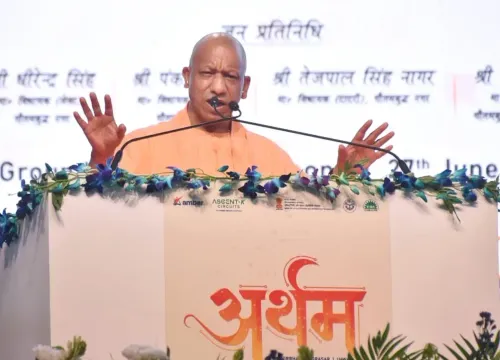
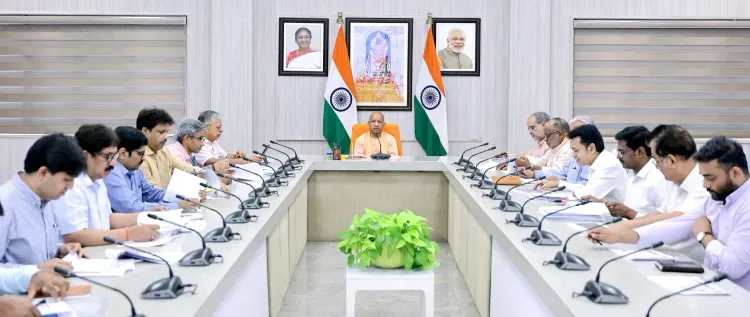
Chief Minister Yogi Adityanath reviewed the Sardar Vallabhbhai Patel Employment and Industrial Zone (SVBPEIZ) on 9 June 2026, directing officials to accelerate construction and develop it as a unified hub for employment, industry, and entrepreneurship — not merely a training centre.
Key Takeaways
Chief Minister Yogi Adityanath held a review of the SVBPEIZ project on 9 June 2026 .
He directed that construction work on the zone be expedited immediately .
The project must be developed as an integrated ecosystem of employment, industry, and entrepreneurship — not just a training centre.
The zone is named after Sardar Vallabhbhai Patel , India's first Deputy Prime Minister, connecting it to self-reliance themes.
Primary beneficiaries are youth, MSMEs, and entrepreneurs in Uttar Pradesh.
The initiative aligns with UP's broader strategy of building sector-specific industrial corridors since 2017.
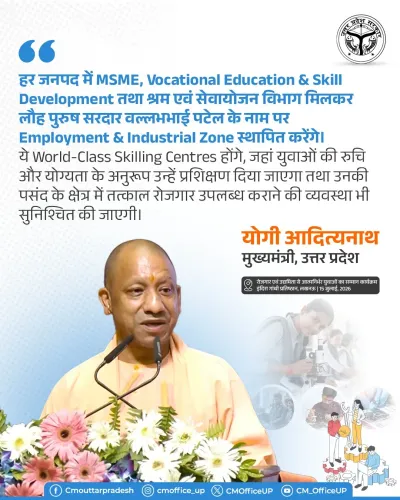
The Chief Minister's Office of Uttar Pradesh announced on Tuesday, 9 June 2026 that Chief Minister Yogi Adityanath reviewed the Sardar Vallabhbhai Patel Employment and Industrial Zone (SVBPEIZ) project and directed authorities to accelerate construction work and develop it as a comprehensive ecosystem for employment, industry, and entrepreneurship.
Context
The Chief Minister's Office posted that CM Yogi 'SVBPEIZ ke nirman karya mein tezi layi jaye' ['construction work on SVBPEIZ should be expedited']. He further directed that the project must not be developed merely as a training centre, but as an 'sameklit ecosystem' ['integrated ecosystem'] combining employment, industry, and entrepreneurship.
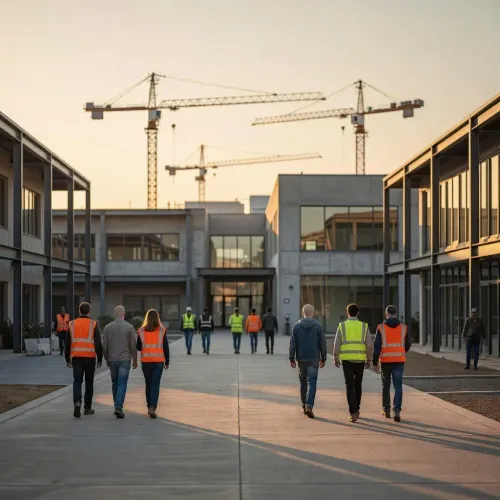
The review signals that the project has entered an active implementation phase, with the Chief Minister personally monitoring construction timelines and the scope of the zone's mandate.
Policy Backdrop
The SVBPEIZ is named after Sardar Vallabhbhai Patel, India's first Deputy Prime Minister, linking the initiative to themes of national integration and self-reliant economic growth. The project is conceived as an integrated hub that brings together skill training, manufacturing units, and startup support under one umbrella.
The zone aligns with the Uttar Pradesh Industrial Investment and Employment Promotion Policy, which outlined the creation of dedicated industrial zones and employment clusters to attract investment and generate jobs. Since 2017, Uttar Pradesh has pursued a consistent strategy of developing sector-specific industrial corridors to shift the state economy toward manufacturing and services.
Stakeholders and Impact
The primary beneficiaries of the SVBPEIZ are expected to be youth, entrepreneurs, and MSMEs in Uttar Pradesh. By integrating skill development with actual production facilities and entrepreneurship support, the zone aims to create formal employment pathways and reduce regional economic disparities.
CM Yogi's directive to move beyond a standalone training-centre model reflects a broader state-level recognition that skilling programmes deliver better outcomes when co-located with real industrial activity and market access. This approach mirrors similar integrated industrial zone models pursued in other high-growth states.
What's Next
Following the Chief Minister's review, state departments are expected to submit revised construction schedules and project milestones. Progress on investment commitments, job-placement targets, and infrastructure completion is likely to feature in upcoming state budget presentations or quarterly CM-level reviews.
The emphasis on an 'integrated ecosystem' suggests future announcements may detail specific manufacturing clusters, incubation facilities, or industry partnerships to be housed within the SVBPEIZ. Stakeholders in the MSME and startup space will be watching for policy notifications that formalise the zone's expanded mandate.
Point of View
Linking state industrial ambition to a national icon of unity and self-reliance. The directive fits a pattern of the Yogi administration using high-visibility CM reviews to push bureaucratic momentum on flagship infrastructure projects. The emphasis on an 'integrated ecosystem' also suggests the government is aware of past criticism that skill-development schemes in India have not translated into actual job placements.
NationPress
24 Oct 2026
Frequently Asked Questions
What is SVBPEIZ in Uttar Pradesh?
SVBPEIZ stands for Sardar Vallabhbhai Patel Employment and Industrial Zone, an Uttar Pradesh government project designed to function as an integrated hub combining skill training, manufacturing, and entrepreneurship support.
What did CM Yogi Adityanath say about SVBPEIZ?
CM Yogi Adityanath directed that construction of SVBPEIZ be expedited and that the project be developed as a comprehensive ecosystem for employment, industry, and entrepreneurship — not merely as a training centre.
Who is SVBPEIZ named after and why?
The zone is named after Sardar Vallabhbhai Patel, India's first Deputy Prime Minister, to associate the initiative with themes of national integration and self-reliant economic growth.
Who will benefit from the SVBPEIZ project?
The primary beneficiaries are expected to be youth seeking employment, MSMEs looking for industrial infrastructure, and entrepreneurs requiring incubation and market support in Uttar Pradesh.
What is the UP government's broader industrial zone strategy?
Since 2017, Uttar Pradesh has been developing sector-specific industrial corridors and employment clusters under its Industrial Investment and Employment Promotion Policy, aiming to shift the state economy toward manufacturing and services.