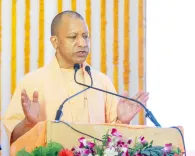
CM Yogi's Office Unveils Integrated SVBPEIZ Industrial Zone Plan
Synopsis
The Chief Minister's Office of Uttar Pradesh has announced the SVBPEIZ project, which will co-locate skill development, plug-and-play industrial infrastructure, foreign language training, digital literacy, and entrepreneurship support in a single integrated campus, offering youth a seamless path from training to employment or self-employment.
Key Takeaways
The Chief Minister's Office of Uttar Pradesh announced the SVBPEIZ (Sardar Vallabhbhai Patel Employment and Industrial Zone) project on 9 June 2026 .
The project will integrate skill development centres, industrial plots, plug-and-play facilities, common facility centres, foreign language training, digital literacy programmes , and entrepreneurship support in a single campus.
The stated goal is to provide youth with an end-to-end pathway — from training through employment to establishing their own enterprise — within one integrated system.
The initiative aligns with Uttar Pradesh's Industrial Investment and Employment Promotion Policy 2017 and the national Skill India Mission .
Key stakeholders include youth, MSMEs , and local entrepreneurs across Uttar Pradesh.
Budget allocations, land identification, and potential linkages with central schemes like PM Gati Shakti remain to be announced.
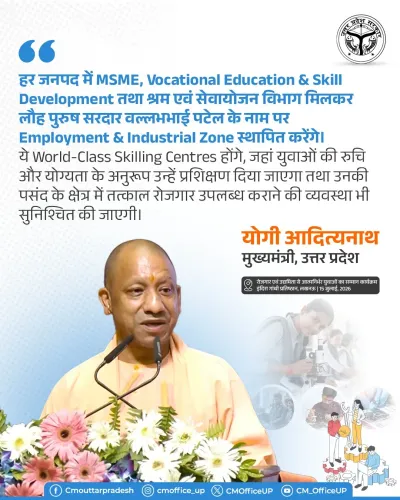
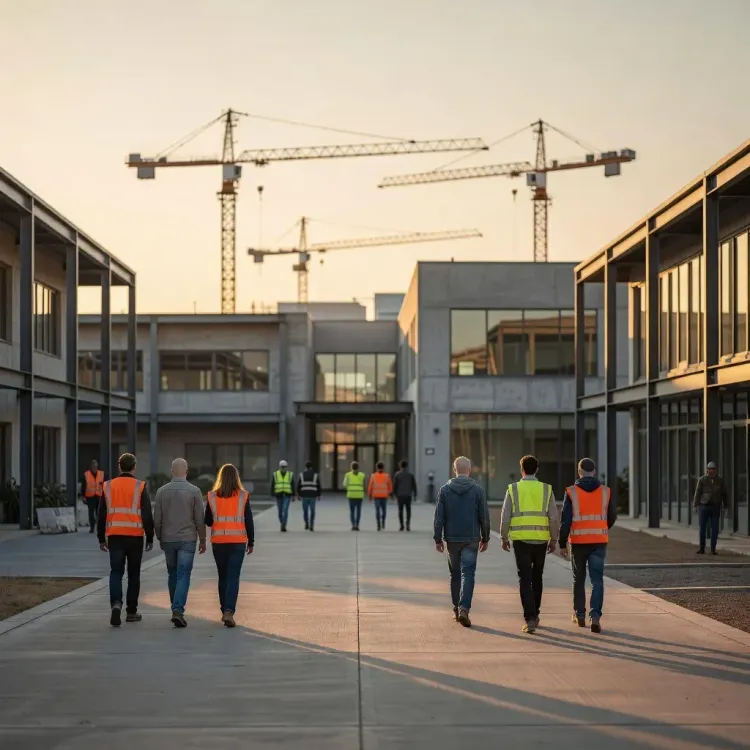
The Chief Minister's Office of Uttar Pradesh announced on Tuesday, 9 June 2026 that a comprehensive integrated campus will be developed under the Sardar Vallabhbhai Patel Employment and Industrial Zone (SVBPEIZ) project, bringing together skill development, industrial plots, plug-and-play facilities, and entrepreneurship support under a single roof.
Context
The post states that under the SVBPEIZ project, facilities including a skill development centre, industrial plots, plug-and-play industrial infrastructure, a common facility centre, employment assistance mechanisms, professional services, foreign language training, digital literacy programmes, and entrepreneurship support will all be co-located in one campus. The announcement describes this as an ekikrit vyavastha [integrated arrangement] covering the full journey from training to employment or self-employment for youth.
The official post reads: 'From training to obtaining employment and establishing one's own enterprise — a complete integrated arrangement will be available for the entire process.'
Policy Backdrop
Uttar Pradesh, India's most populous state, has pursued industrialisation and formal-sector job creation through dedicated investment zones since the UP Industrial Investment and Employment Promotion Policy of 2017. That policy introduced single-window clearances and zone-based incentives to attract manufacturing and services investment to the state.
The SVBPEIZ project is named after Sardar Vallabhbhai Patel, India's first Deputy Prime Minister and the architect of national integration after independence — a symbolic framing that ties the initiative to nation-building. The project's integrated model also aligns with the broader Skill India Mission launched in 2015, which sought to create industry-linked training pipelines for millions of young Indians annually.
Across Indian states, integrated industrial campuses that bundle land allotment, plug-and-play sheds, skilling infrastructure, and enterprise support have emerged as a preferred model to compress the timeline from training to productive employment, reducing friction for both investors and job-seekers.
Stakeholders and Impact
The primary beneficiaries identified are youth seeking employment or entrepreneurial pathways, MSMEs that can use shared and plug-and-play facilities without heavy upfront capital expenditure, and local entrepreneurs who gain access to professional services and foreign language training within the same campus.
The inclusion of foreign language training and digital literacy alongside conventional industrial infrastructure signals an intent to prepare workers not only for domestic manufacturing but also for export-oriented and services-sector roles. Common facility centres typically provide shared machinery, testing labs, and design support that individual small enterprises cannot afford independently.
What's Next
State budget allocations, land identification, and tendering timelines for the SVBPEIZ campus will be closely watched as indicators of implementation pace. Analysts will also look for any formal linkage with central government frameworks such as PM Gati Shakti or sector-specific Production-Linked Incentive schemes, which could unlock additional funding and infrastructure support.
If executed at scale, the SVBPEIZ model could serve as a template for similar integrated zones across Uttar Pradesh and influence other large states seeking to replicate the one-campus, end-to-end employment ecosystem approach.
Point of View
Job placement, and enterprise creation — gaps that have historically slowed youth absorption into the formal economy. By anchoring the project in the name of Sardar Vallabhbhai Patel, the state government is invoking a politically resonant symbol of national unity while pursuing an economic agenda. The inclusion of foreign language training and digital literacy alongside conventional industrial plots suggests an ambition to position UP workers for export-linked and services sectors, not just domestic manufacturing. Whether the model delivers at scale will depend heavily on execution timelines, private-sector participation, and integration with central scheme funding.
NationPress
26 Oct 2026
Frequently Asked Questions
What is the SVBPEIZ project in Uttar Pradesh?
SVBPEIZ stands for Sardar Vallabhbhai Patel Employment and Industrial Zone. It is a project announced by the Uttar Pradesh government to develop an integrated campus offering skill development, industrial plots, plug-and-play facilities, common facility centres, foreign language training, digital literacy, and entrepreneurship support all in one location.
Who will benefit from the SVBPEIZ project?
The primary beneficiaries are youth seeking employment or self-employment, MSMEs requiring affordable shared infrastructure, and local entrepreneurs who need access to professional and business support services.
What is a plug-and-play industrial facility?
A plug-and-play industrial facility is a ready-to-use factory or workspace where basic infrastructure such as power, water, and connectivity is pre-installed, allowing businesses to begin operations immediately without investing in civil construction.
How does SVBPEIZ relate to Skill India Mission?
The SVBPEIZ project's skill development and employment assistance components align with the objectives of the central government's Skill India Mission launched in 2015, which aims to provide industry-linked training to millions of young Indians annually.
What is a common facility centre in an industrial zone?
A common facility centre is a shared infrastructure hub within an industrial zone that provides small enterprises access to machinery, testing laboratories, design support, and other services that individual units cannot afford on their own.