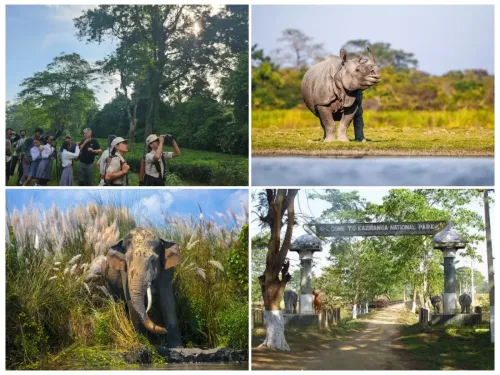
Kaziranga logs record 4.68 lakh visitors in 2025-26

Synopsis
Kaziranga National Park in Assam has set a new annual record with 4.68 lakh visitors in 2025-26, the Chief Minister's Office announced. The milestone reflects Assam's sustained push to develop eco-tourism at the UNESCO World Heritage Site while maintaining conservation standards.
Key Takeaways
Kaziranga National Park recorded 4.68 lakh visitors in 2025-26 , its highest-ever annual footfall.
The announcement was made by the Chief Minister's Office of Assam on 30 May 2026 .
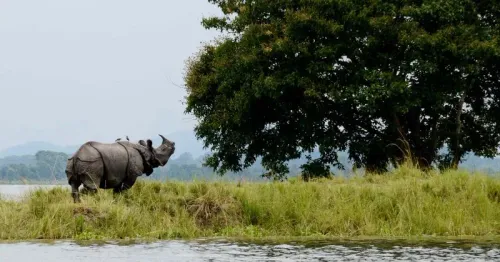
Kaziranga is a UNESCO World Heritage Site (designated 1985 ) and home to the world's largest population of the greater one-horned rhinoceros .
The record continues a sustained upward trend in annual visitor numbers that began in the early 2010s .
The Government of Assam has expanded eco-tourism infrastructure while maintaining strict anti-poaching and conservation protocols.
Local communities, tourism operators, and park management funds all benefit directly from increased visitor revenue.
The Chief Minister's Office of Assam announced on Saturday, 30 May 2026 that Kaziranga National Park has set a new tourism record, welcoming 4.68 lakh visitors during the 2025-26 season — the highest annual footfall in the park's history.
Context
Kaziranga National Park, located in Assam, is a UNESCO World Heritage Site designated in 1985 for its outstanding contribution to biodiversity conservation. The park is globally recognised as home to the world's largest population of the greater one-horned rhinoceros, and draws wildlife enthusiasts, researchers, and eco-tourists from across India and abroad.
The record figure of 4.68 lakh visitors in 2025-26 surpasses previous annual counts, continuing a sustained upward trend in footfall that the park has seen over the past decade.
Policy Backdrop
The Government of Assam has steadily expanded eco-tourism infrastructure at Kaziranga, improving road connectivity, safari facilities, and visitor amenities while maintaining strict conservation and anti-poaching protocols. This approach positions wildlife tourism as a non-extractive economic activity that simultaneously generates revenue for park management and incentivises habitat protection.
Since the early 2010s, Assam has pursued a broader state strategy of leveraging natural heritage assets — particularly flagship sites such as Kaziranga — as drivers of regional economic growth. Rising visitor numbers are seen as a direct outcome of that sustained investment in both conservation and tourism infrastructure.
Stakeholders and Impact
The record footfall has tangible benefits for multiple stakeholders. Local communities around the park's buffer zones depend on tourism-linked livelihoods, including hospitality, guiding services, and handicrafts. A higher visitor count translates into greater revenue flows to these communities as well as to the state's park management fund.
Conservation organisations and wildlife managers, however, also monitor visitor growth carefully. Sustained increases in footfall require proportionate investment in crowd management, waste disposal, and habitat monitoring to ensure that tourism does not place undue pressure on the park's fragile ecosystems and its resident wildlife populations.
What's Next
Attention will now turn to whether the Government of Assam announces new measures to manage the growing influx — including possible expansion of safari zones, regulated visitor caps, or upgraded accommodation facilities in the park's buffer areas. The release of the next fiscal year's visitor data will be a key indicator of whether this record trajectory continues.
For Kaziranga, the milestone underscores Assam's growing profile as a wildlife tourism destination, but it also raises the stakes for ensuring that conservation remains the foundation on which that reputation rests.
Point of View
And successive record seasons strengthen the political case for continued investment in wildlife-based tourism. However, the same trajectory raises a governance challenge: at what threshold does visitor growth begin to strain the very ecosystem that makes Kaziranga valuable? How the administration responds to that tension — through carrying-capacity studies, infrastructure expansion, or visitor regulation — will define the next chapter of this policy story.
NationPress
19 Sept 2026
Frequently Asked Questions
How many visitors did Kaziranga National Park receive in 2025-26?
Kaziranga National Park received 4.68 lakh visitors in 2025-26 , according to an announcement by the Chief Minister's Office of Assam — the highest annual figure on record for the park.
Why is Kaziranga National Park famous?
Kaziranga National Park in Assam is a UNESCO World Heritage Site designated in 1985 . It is globally renowned for hosting the world's largest population of the greater one-horned rhinoceros and for its rich biodiversity.
Where is Kaziranga National Park located?
Kaziranga National Park is located in the state of Assam , in northeastern India. It stretches across the floodplains of the Brahmaputra River and falls within the districts of Golaghat and Nagaon.
Is Kaziranga open for tourists and what can visitors do there?
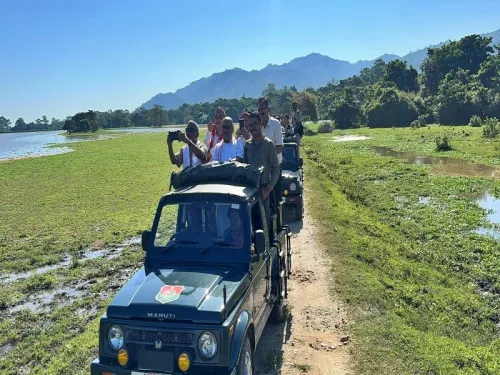
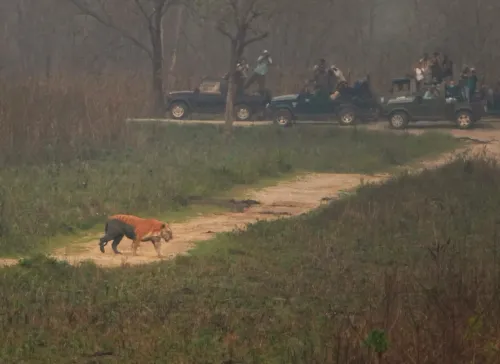
Yes, Kaziranga is open to tourists during its season, typically from November to April . Visitors can experience jeep safaris and elephant safaris across multiple ranges to spot rhinos, tigers, elephants, and a wide variety of bird species.
What is the Assam government doing to promote tourism at Kaziranga?
The Government of Assam has expanded eco-tourism infrastructure at Kaziranga, improving road connectivity, safari facilities, and visitor amenities, while maintaining strict conservation and anti-poaching measures to protect the park's wildlife.