CM Himanta Highlights Kaziranga's 5.48 Lakh Visitor Surge
Synopsis
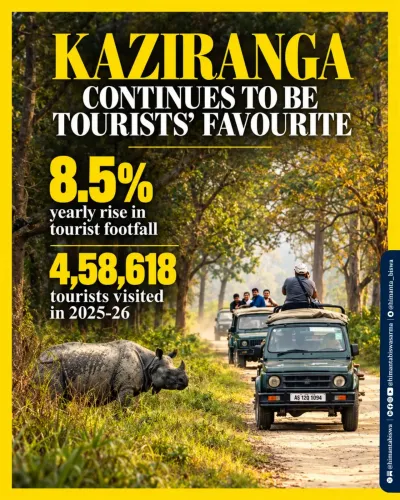
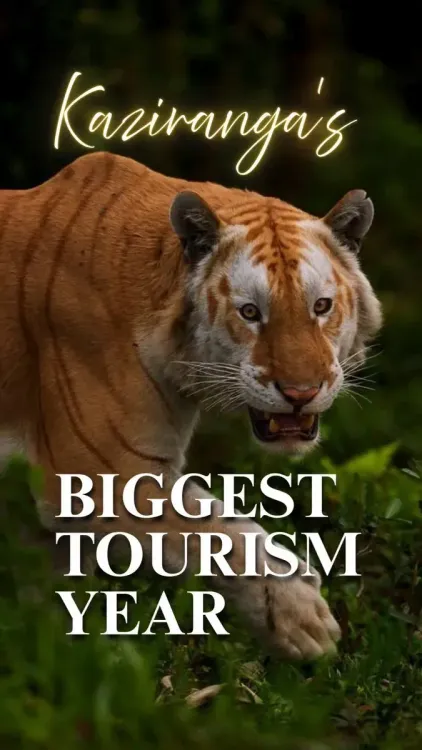
Assam CM Himanta Biswa Sarma has cited a record 5.48 lakh visitors at Kaziranga National Park since April 2025 to argue that conservation, far from constraining development, can actively drive tourism-led economic growth in the state.
Key Takeaways
Kaziranga National Park recorded a landmark 5.48 lakh visitors since April 2025 , the highest in recent memory.
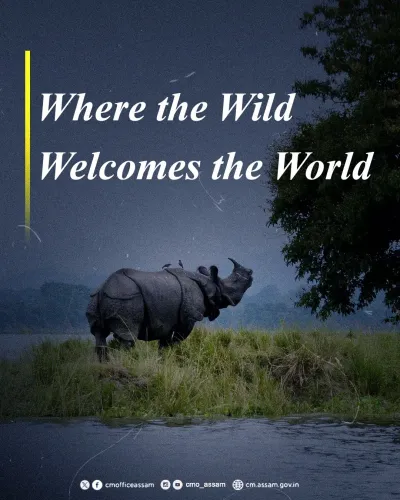
CM Himanta Biswa Sarma framed the figures as evidence that conservation and economic growth are complementary, not conflicting.
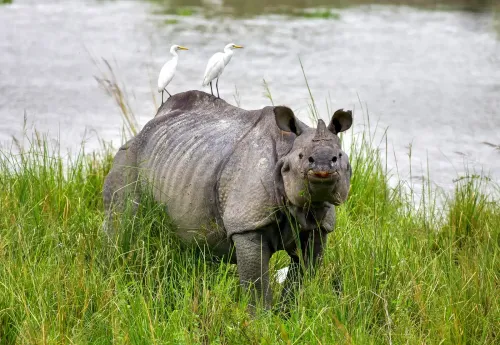
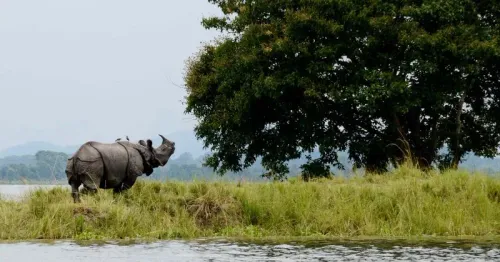
Kaziranga is a UNESCO World Heritage Site established in 1908 and declared a national park in 1974 to protect the greater one-horned rhinoceros.
The visitor surge benefits local communities in Golaghat and Nagaon districts through hospitality, transport, and guide employment.
The Assam model reflects a broader northeastern India trend of using flagship protected areas as sustainable tourism revenue drivers.
Official 2026-27 visitor data and new eco-tourism infrastructure tenders around Kaziranga are the next key indicators to watch.
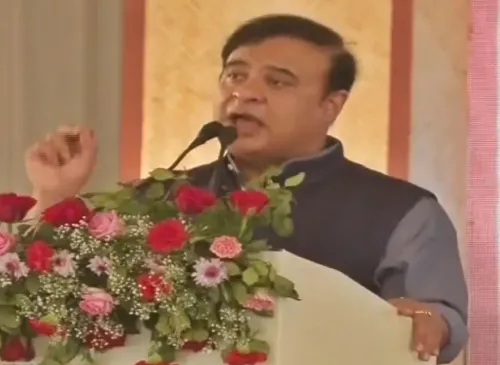
Assam Chief Minister Himanta Biswa Sarma on Friday, 29 May 2026, pointed to Kaziranga National Park as a model for conservation-led growth, citing a record 5.48 lakh visitors since April 2025 as evidence that protecting biodiversity and driving tourism revenue are not competing goals.
Context
Posting on X, CM Sarma framed the question sharply: 'What happens when conservation is treated not as a constraint on development, but as a catalyst for growth?' His answer pointed squarely at Kaziranga, calling it 'one of India's most compelling tourism' destinations — a sentence the post left deliberately open, accompanied by a video.
The record visitor figure signals that Kaziranga, long celebrated for its population of the greater one-horned rhinoceros, is drawing unprecedented footfall under the current state administration's push to monetise biodiversity assets through regulated eco-tourism.
Policy Backdrop
Kaziranga was first declared a wildlife sanctuary in 1908 and elevated to a national park in 1974, primarily to shield rhinoceros habitat from encroachment and poaching. Its inscription as a UNESCO World Heritage Site in 1985 cemented its global conservation stature.
The Assam government, under CM Sarma since 2021, has consistently argued that flagship protected areas can anchor state-level economic activity without expanding their physical footprint. This fits a wider pattern across northeastern India, where tiger reserves and national parks are positioned as sustainable revenue generators through visitor fees, hospitality clusters, and local employment.
Indian states have increasingly moved away from treating conservation zones as purely restrictive designations. Regulated visitor access — with caps, buffer-zone infrastructure, and community benefit-sharing — has emerged as the operative model, and Kaziranga is now being held up as proof of concept by the state's top leadership.
Stakeholders and Impact
The 5.48 lakh visitor milestone has direct implications for local communities around Kaziranga in Golaghat and Nagaon districts, where hospitality, transport, and guide services are primary sources of income. Higher footfall translates into greater household earnings without requiring fresh land conversion.
For the tourism industry, the numbers validate investment in eco-resort and wildlife-safari infrastructure in the region. Conservation organisations will watch closely whether the visitor surge is accompanied by robust anti-poaching enforcement and habitat monitoring, ensuring that commercial success does not erode the ecological baseline that makes the park attractive in the first place.
What's Next
The Assam tourism department's official releases for 2026-27 visitor arrivals will be the next data checkpoint, and any new eco-tourism infrastructure tenders around Kaziranga are expected to follow if the current trajectory holds.
More broadly, CM Sarma's framing positions Assam as a potential template for other biodiversity-rich states seeking to reconcile conservation mandates with economic development — a political and policy argument that is likely to gain traction ahead of state budget discussions and potential central government reviews of protected-area tourism policy.
Point of View
He is making an economic argument dressed in ecological language — a politically durable position that is harder to oppose than either pure environmentalism or pure development advocacy. The Kaziranga example, if sustained, could become a template that other BJP-governed states cite when defending protected-area policies under scrutiny. The real test will be whether visitor growth is matched by measurable conservation outcomes, such as rhinoceros population stability and reduced poaching incidents, which would complete the narrative arc the Chief Minister is constructing.
NationPress
13 Oct 2026
Frequently Asked Questions
How many visitors has Kaziranga National Park received since April 2025?
According to Assam Chief Minister Himanta Biswa Sarma, Kaziranga National Park has received a record 5.48 lakh visitors since April 2025 .
Why is Kaziranga National Park famous?
Kaziranga National Park in Assam is a UNESCO World Heritage Site renowned for hosting the world's largest population of the greater one-horned rhinoceros. It was established as a wildlife sanctuary in 1908 and declared a national park in 1974 .
What is CM Himanta Biswa Sarma's conservation policy for Assam?
CM Himanta Biswa Sarma has positioned conservation as a driver of economic growth, arguing that regulated eco-tourism in protected areas like Kaziranga generates tourism revenue and local employment without expanding the protected footprint.
Is Kaziranga a UNESCO World Heritage Site?
Yes. Kaziranga National Park was inscribed as a UNESCO World Heritage Site in 1985 for its unique floodplain ecosystem and its critical role in rhinoceros conservation.
How does eco-tourism benefit local communities near Kaziranga?
Higher visitor footfall at Kaziranga supports livelihoods in Golaghat and Nagaon districts through jobs in hospitality, transport, and wildlife guiding, providing income without requiring additional land conversion.