Kaziranga Sees 15% Tourist Footfall Rise in FY26: CM Sarma
Synopsis
Kaziranga National Park in Assam recorded a 15 per cent jump in tourist footfall in FY 2025-26, the Chief Minister's Office announced. The UNESCO World Heritage Site and Tiger Reserve is a flagship destination of Assam's dual conservation-and-tourism strategy under CM Himanta Biswa Sarma.
Key Takeaways
Kaziranga National Park saw a 15 per cent rise in tourist footfall in FY 2025-26 , according to the Chief Minister's Office of Assam.
Kaziranga was declared a national park in 1974 and inscribed as a UNESCO World Heritage Site in 1985 .
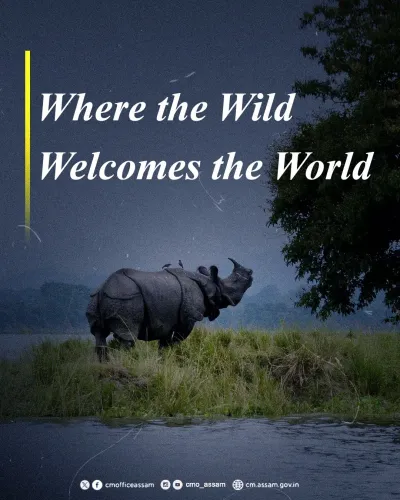
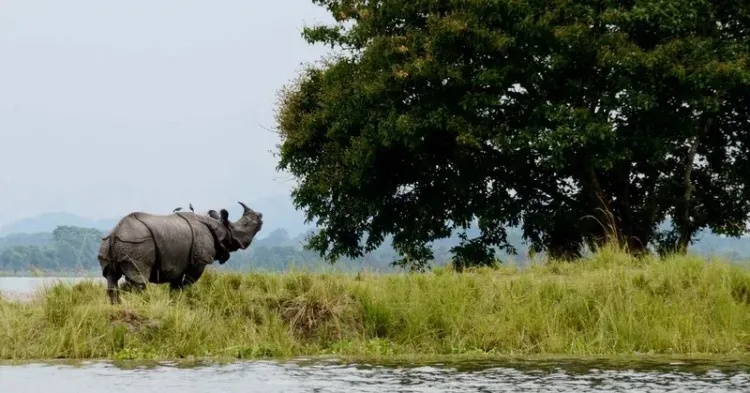
The park is home to the world's largest population of the greater one-horned rhinoceros and is a designated Tiger Reserve .
The Assam government under CM Himanta Biswa Sarma has pursued parallel goals of wildlife conservation and eco-tourism expansion since 2021 .
Local communities, tourism operators, and conservation agencies are the primary stakeholders affected by the footfall increase.
FY 2026-27 data and new tourism infrastructure tenders are the next key developments to watch.
The Chief Minister's Office of Assam on Sunday, 31 May 2026 shared that Kaziranga National Park recorded a 15 per cent rise in tourist footfall in FY 2025-26, citing the figure as a marker of the park's growing appeal as a conservation-linked tourism destination.
Context
Kaziranga National Park, located in Assam, is one of India's most celebrated wildlife sanctuaries. Declared a national park in 1974 under the Assam National Park Act, it gained global recognition when it was inscribed as a UNESCO World Heritage Site in 1985. The park is best known for sheltering the world's largest population of the greater one-horned rhinoceros and is also a designated Tiger Reserve.
The 15 per cent footfall increase in FY26 signals a continued post-pandemic recovery in wildlife tourism across India, with Kaziranga emerging as a flagship destination in the country's north-east.
Policy Backdrop
The Government of Assam under Chief Minister Himanta Biswa Sarma, who has held office since 2021, has pursued a dual strategy of strengthening wildlife protection while expanding eco-tourism infrastructure around protected areas. This approach mirrors a broader national pattern that treats biodiversity hotspots as economic assets without diluting their core conservation mandates under central wildlife laws.
Assam's eco-tourism push has included investments in park-access roads, forest lodges, and visitor-experience facilities in and around Kaziranga, aimed at increasing both domestic and international arrivals while channelling revenue into local communities and conservation funds.
Stakeholders and Impact
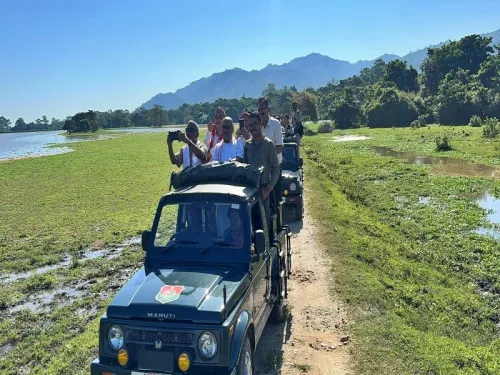
The footfall surge has direct implications for local communities — including forest-fringe villages and tribal settlements — who depend on tourism-linked livelihoods such as hospitality, guiding, and handicrafts. Tourism operators running safari packages and resorts in the Kohora, Bagori, and Agaratoli range zones stand to benefit from higher visitor volumes.
Conservation agencies, however, will need to monitor whether rising visitor numbers strain the park's carrying capacity, particularly in core rhino-habitat zones. Balancing access with ecological integrity remains a central challenge for park management.
What's Next
Attention will now turn to the release of FY 2026-27 tourist data and any new Assam tourism policy announcements or infrastructure tenders for park-access upgrades. The state government is expected to use the FY26 figures to make a case for increased budgetary allocation toward eco-tourism development in the north-east's protected-area network.
If the upward trend holds, Kaziranga could consolidate its position as one of India's top-five wildlife tourism destinations, with potential spillover benefits for neighbouring reserves such as Manas National Park and Dibru-Saikhowa.
Point of View
The real test lies in whether rising visitor numbers translate into measurable gains for forest-fringe communities and whether the park's ecological carrying capacity is being formally reviewed. States that fail to institutionalise visitor-load assessments risk undermining the very conservation credentials that make these destinations attractive.
NationPress
21 Sept 2026
Frequently Asked Questions
By how much did tourist footfall increase at Kaziranga National Park in FY26?
Kaziranga National Park recorded a 15 per cent rise in tourist footfall in FY 2025-26, according to the Chief Minister's Office of Assam.
Why is Kaziranga National Park famous?
Kaziranga is a UNESCO World Heritage Site and Tiger Reserve in Assam, best known for sheltering the world's largest population of the greater one-horned rhinoceros. It was declared a national park in 1974.
Who is the Chief Minister of Assam in 2026?
Himanta Biswa Sarma is the Chief Minister of Assam, a post he has held since 2021. His office announced the Kaziranga footfall data on 31 May 2026.
What is Assam's tourism policy for national parks?
The Government of Assam has pursued a dual strategy of wildlife conservation and eco-tourism development, investing in park infrastructure such as access roads and forest lodges to increase domestic and international visitor arrivals.
When was Kaziranga declared a UNESCO World Heritage Site?
Kaziranga National Park was inscribed as a UNESCO World Heritage Site in 1985, more than a decade after being declared a national park in 1974.