CM Himanta Highlights Assam's Rhino Conservation Win
Synopsis
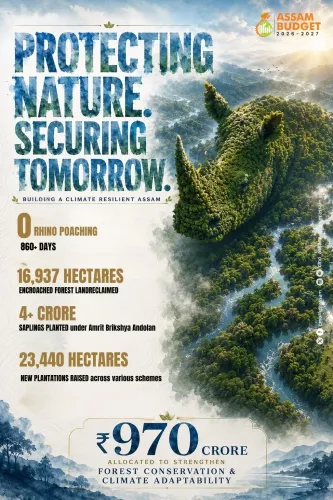
Assam CM Himanta Biswa Sarma on 25 May 2026 shared photographs of one-horned rhinos from the state's national parks, attributing the magnificent sightings to zero poaching. The post spotlights decades of conservation policy anchored by Kaziranga, Manas, and the Indian Rhino Vision 2020 programme.
Key Takeaways
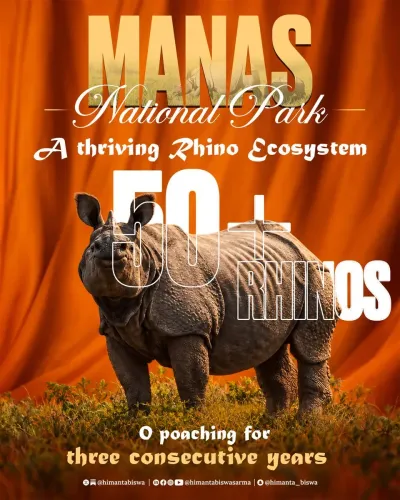
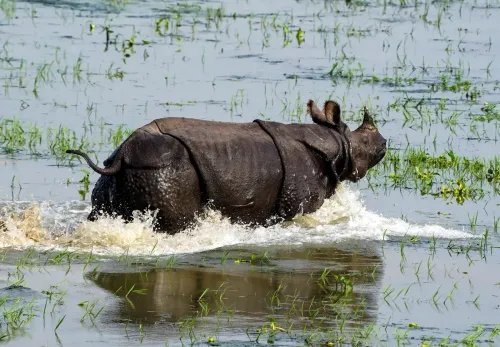
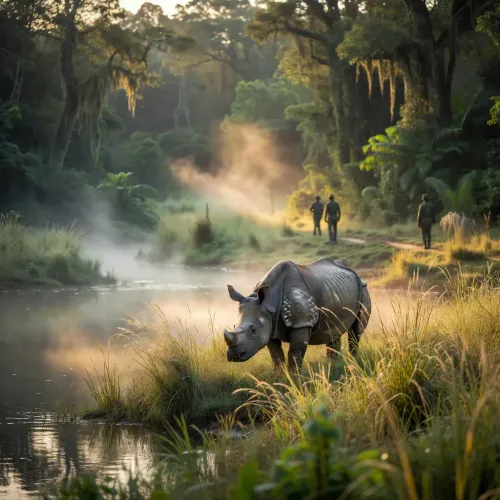
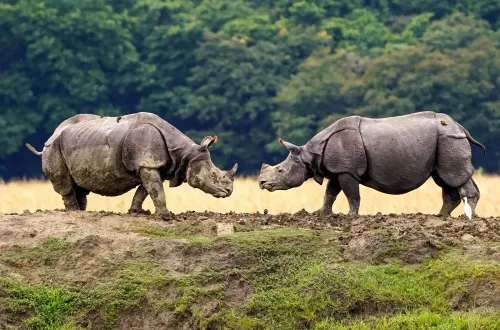
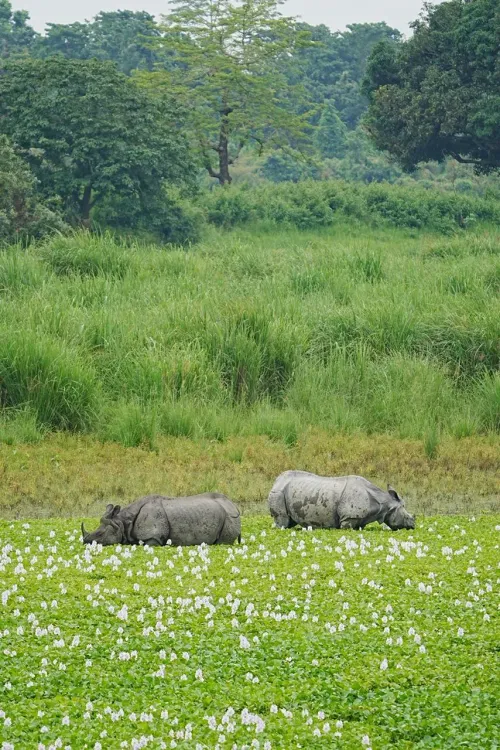
CM Himanta Biswa Sarma shared three photographs of one-horned rhinos on 25 May 2026 , citing zero poaching in Assam's national parks.
Kaziranga National Park and Manas National Park , both UNESCO World Heritage Sites, are the primary habitats for Assam's rhino population.
Kaziranga was notified as a national park in 1974 specifically to protect the greater one-horned rhinoceros under the Wildlife Protection Act .
The Indian Rhino Vision 2020 programme, launched in 2005 with WWF and US Fish and Wildlife Service support, targeted 3,000 rhinos across Assam through protection and translocation.
The next official rhino population census by the Assam Forest Department will provide independently verifiable figures to assess conservation progress.
Improved rhino sightings benefit eco-tourism operators and surrounding communities dependent on wildlife tourism revenue.
Assam Chief Minister Himanta Biswa Sarma on Monday, 25 May 2026, shared striking images of the greater one-horned rhinoceros from the state's national parks, citing what he described as zero poaching as the reason visitors are now regularly witnessing the animal in its natural habitat.
Context
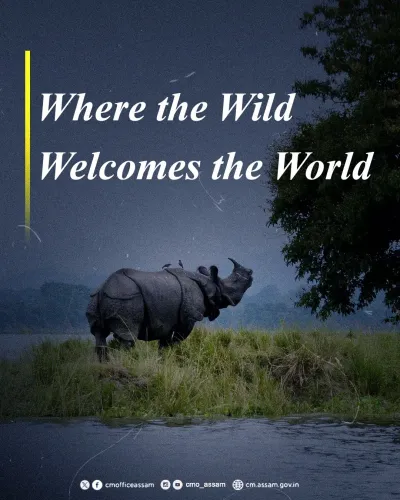
The Chief Minister posted three photographs of rhinos basking in the open, writing: 'With ZERO poaching, every visit to Assam's national parks throws up such magnificent visuals of the one-horned rhino, basking in all its glory.' The post underscores the Assam government's longstanding effort to position the state as a global benchmark in large-mammal conservation.
Kaziranga National Park, a UNESCO World Heritage Site on the banks of the Brahmaputra, holds the largest concentration of greater one-horned rhinoceroses anywhere on earth. A second UNESCO-listed park, Manas National Park, has served as a key destination for rhino translocation drives aimed at distributing the population across multiple habitats.
Policy Backdrop
Assam's rhino protection framework stretches back decades. Kaziranga was notified as a national park in 1974 under the Assam National Parks Act, with the explicit mandate to protect the one-horned rhinoceros from hunting and habitat loss. The park's Schedule-I status under the Wildlife Protection Act imposes the strictest penalties for poaching.
In 2005, the state government, alongside WWF and the US Fish and Wildlife Service, formally launched the Indian Rhino Vision 2020 programme, which set a target of reaching 3,000 rhinos across Assam through sustained protection and periodic translocation. Successive administrations have expanded ranger infrastructure and deployed technology — including drones and camera traps — to monitor the parks around the clock.
Under CM Sarma's tenure since 2021, anti-poaching enforcement has been projected as both an ecological imperative and a marker of the state's international standing, with conservation outcomes frequently highlighted in official communication.
Stakeholders and Impact
The most immediate beneficiaries of improved rhino safety are the animals themselves: a stable, growing population signals that habitat and enforcement conditions are meeting conservation thresholds. For Assam's forest department staff and field rangers, the zero-poaching claim, if sustained, represents a significant operational achievement given the difficult terrain of the Brahmaputra floodplains.
Eco-tourism operators across Kaziranga and Manas stand to gain directly. Higher rhino sightings per visit improve the tourism product, supporting livelihoods in surrounding communities. The state's conservation image also strengthens its case for international funding and partnerships in wildlife protection.
What's Next
The Assam Forest Department is expected to release its next official rhino population census, which will provide independently verifiable numbers to set alongside the government's claims. Any new budget allocations for park infrastructure are also anticipated in the upcoming state assembly session.
If the zero-poaching status is confirmed over a sustained period, it would mark a watershed moment for Indian wildlife conservation and could inform anti-poaching strategies in other rhino-range states. The international conservation community will be watching the census figures closely.
Point of View
Particularly ahead of potential electoral cycles. By foregrounding 'zero poaching' as the causal driver of rhino sightings, the Chief Minister frames a long-running, multi-administration conservation effort as a current-government achievement. The claim carries weight only if backed by the forthcoming official census, making the release of that data politically as well as ecologically significant. More broadly, the post fits a national pattern of BJP-governed states amplifying wildlife success stories as proof of development that is compatible with environmental stewardship.
NationPress
10 Oct 2026
Frequently Asked Questions
How many one-horned rhinos are in Kaziranga National Park?
Kaziranga National Park holds the largest single concentration of greater one-horned rhinoceroses in the world. The most recent official census figures from the Assam Forest Department are the authoritative source; the next census release will update the current count.
What is the Indian Rhino Vision 2020 programme?
Indian Rhino Vision 2020 is a conservation programme launched in 2005 by the Assam government with support from WWF and the US Fish and Wildlife Service. It aimed to grow Assam's rhino population to 3,000 individuals through strict protection and translocation to parks including Manas.
Is Kaziranga National Park a UNESCO World Heritage Site?
Yes. Kaziranga National Park is a UNESCO World Heritage Site and is protected under India's Wildlife Protection Act as a Schedule-I habitat, meaning the one-horned rhinoceros receives the highest level of legal protection against poaching.
What has Assam done to stop rhino poaching?
Assam has expanded forest ranger infrastructure, deployed drones and camera traps for surveillance, and conducted periodic translocations to spread the rhino population across multiple parks. These measures sit within India's Wildlife Protection Act framework and have been continued and publicised under CM Himanta Biswa Sarma since 2021.
What is the significance of zero poaching for Assam's rhinos?
A sustained zero-poaching record would indicate that enforcement and habitat conditions are sufficient to allow the rhino population to grow undisturbed. It would also strengthen Assam's eco-tourism appeal and its standing in international conservation partnerships, though the claim requires verification through the official census.