CM Himanta Highlights Assam Wildlife Tourism Milestone
Synopsis
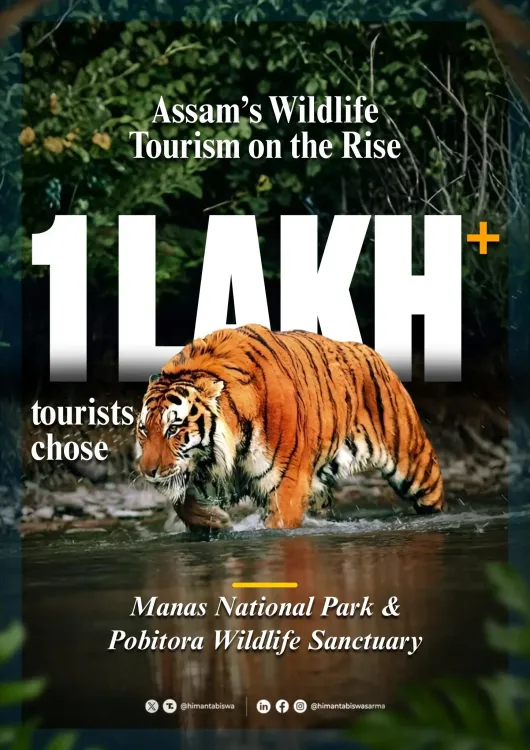
Assam Chief Minister Himanta Biswa Sarma has flagged a landmark in state wildlife tourism, with over 1 lakh visitors recorded at Manas National Park and Pobitora Wildlife Sanctuary. The CM linked the milestone to sustained conservation work and highlighted the economic ecosystem — from jeep safaris to eco-resorts — now supporting local livelihoods across both protected areas.
Key Takeaways
Over 1 lakh visitors were recorded at Manas National Park and Pobitora Wildlife Sanctuary combined, according to CM Himanta Biswa Sarma.
Manas is a UNESCO World Heritage Site and Tiger Reserve that recovered from insurgency-era damage and was removed from the Danger List in 2011 .
Pobitora holds the world's highest density of the one-horned rhinoceros and has developed a robust jeep-safari economy.
Community-based eco-tourism around both parks expanded after the 2003 Bodoland peace accords , turning former conflict zones into livelihood hubs.
The visitor milestone supports local enterprises, guides, and forest-dependent households alongside the conservation mission.
Rhino and tiger census results expected in late 2026 will be a key test of whether ecological health is keeping pace with tourism growth.
Assam Chief Minister Himanta Biswa Sarma on Saturday, 30 May 2026, highlighted a surge in wildlife tourism across the state, pointing to over 1 lakh visitors at Manas National Park and Pobitora Wildlife Sanctuary as evidence of a thriving conservation-linked economy.
Context
In his post, CM Sarma noted that the visitor milestone — covering both Manas and Pobitora — has generated a broader economic ecosystem ranging from jeep safaris to eco-resorts. He credited 'sustained conservation efforts' for making the numbers possible and framed the growth as a demonstration of Assam's natural heritage on the world stage.
The post signals the state government's intent to position wildlife tourism as a pillar of local livelihood generation, not merely an environmental achievement.
Policy Backdrop
Manas National Park, a UNESCO World Heritage Site inscribed in 1985, was placed on the List of World Heritage in Danger for years due to insurgency-related damage before being removed in 2011 following a sustained recovery. It is also a designated Tiger Reserve under Project Tiger.
Pobitora Wildlife Sanctuary, located east of Guwahati, is globally recognised for having the world's highest density of the one-horned rhinoceros and has built a growing jeep-safari economy around that distinction. Community-based eco-tourism initiatives around both sites gained momentum after the 2003 peace accords that reduced militancy in the Bodoland region, allowing the Assam Forest Department to expand infrastructure and anti-poaching operations.
The broader national context is relevant: several Indian states have leveraged stabilised tiger and rhino populations post-2010 to drive domestic tourism revenue, with the emphasis on eco-resorts outside core zones to minimise habitat disruption while maximising local employment.
Stakeholders and Impact
The primary beneficiaries of the tourism uptick are forest-dependent households, local guides, jeep-safari operators, and community-managed resort enterprises around both protected areas. The Assam Forest Department plays a central role in regulating this economy while maintaining conservation standards.
For local communities in the Bodoland Territorial Region — historically affected by conflict — wildlife tourism represents an alternative livelihood stream tied directly to the health of the ecosystem. Eco-resort operators and small enterprises supplying food, transport, and hospitality services also stand to gain from sustained visitor growth.
What's Next
The next annual visitor data release by Assam Tourism will be closely watched to confirm whether the 1 lakh+ figure represents a single season or a cumulative trend. Any new eco-tourism policy or dedicated budget allocation in the 2026-27 Assam state budget could signal how aggressively the government plans to scale this model.
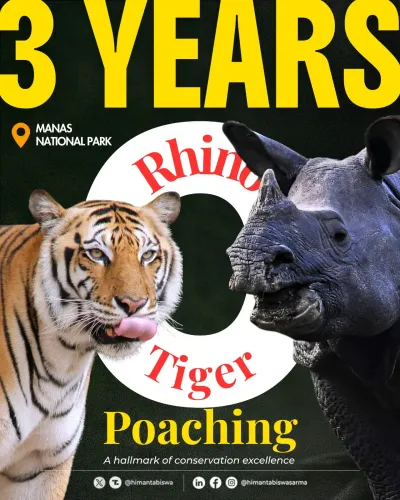
Rhino and tiger census results expected in late 2026 will also be a key indicator of whether conservation outcomes are keeping pace with the tourism boom — a balance that will ultimately determine the long-term viability of Assam's wildlife economy.
Point of View
Insurgency, and the NRC — as a conservation success story and tourism destination. Highlighting a lakh-plus visitor count at two flagship protected areas serves a dual political purpose: crediting BJP governance for ecological recovery and demonstrating tangible rural livelihoods in areas once destabilised by Bodoland militancy. The framing of wildlife tourism as an 'economy' rather than a niche activity mirrors a wider NDA-era push to link environmental outcomes to GDP and employment metrics. Whether the momentum translates into concrete budget commitments in the 2026-27 cycle will be the real test of policy intent versus political messaging.
NationPress
21 Sept 2026
Frequently Asked Questions
How many visitors went to Manas and Pobitora in 2026?
Assam Chief Minister Himanta Biswa Sarma stated that over 1 lakh visitors chose Manas National Park and Pobitora Wildlife Sanctuary, though the exact period covered by this figure has not been officially specified.
Why is Manas National Park famous?
Manas National Park is a UNESCO World Heritage Site inscribed in 1985 and a designated Tiger Reserve. It is home to tigers, elephants, and rhinos, and recovered from severe insurgency-related damage before being removed from the UNESCO Danger List in 2011 .
What is special about Pobitora Wildlife Sanctuary?
Pobitora Wildlife Sanctuary , located east of Guwahati , is recognised for having the world's highest density of the one-horned rhinoceros and has built a significant jeep-safari and eco-tourism economy around that distinction.
How does wildlife tourism support local communities in Assam?
Tourism at both parks supports forest-dependent households , jeep-safari operators, local guides, and community-managed eco-resorts, particularly in the Bodoland region where livelihoods were disrupted by years of insurgency before the 2003 peace accords .
What is Assam's eco-tourism policy?
Assam has promoted community-based eco-tourism since the post-2003 peace period, with the Assam Forest Department overseeing protected-area infrastructure and encouraging private eco-resorts outside core zones to generate employment without expanding footprint inside sensitive habitats.