CM Himanta Flags 3 Years of Zero Poaching at Manas Park

Synopsis
Assam Chief Minister Himanta Biswa Sarma has announced that Manas National Park — a UNESCO World Heritage Site once plagued by insurgency-linked poaching — has recorded zero rhino and tiger poaching for three consecutive years, marking a significant conservation turnaround for the state.
Key Takeaways
Manas National Park has reported zero rhino and tiger poaching for three consecutive years , according to CM Himanta Biswa Sarma.
Manas is a UNESCO World Heritage Site in western Assam that was placed on the 'In Danger' list in 1992 due to poaching and conflict, and removed in 2011 .
The park has been a Project Tiger reserve since the programme's launch in 1973 , benefiting from central anti-poaching funding.
The Assam Forest Department , forest guards, and local Bodo communities are central to the park's conservation success.
Assam is positioning its zero-poaching record as a driver of eco-tourism and broader biodiversity goals.
The next All-India Tiger Estimation and rhino census will be key tests of whether population numbers match the enforcement gains.
Assam Chief Minister Himanta Biswa Sarma announced on Tuesday, June 16, 2026, that Manas National Park has recorded zero rhino and tiger poaching for three consecutive years, describing the milestone as a testament to the state's sustained conservation drive.
Context
Manas National Park, a UNESCO World Heritage Site in western Assam, was once synonymous with poaching and ethnic conflict. Through the 1990s and early 2000s, insurgency-linked violence devastated its wildlife populations to the point where UNESCO placed it on its 'World Heritage in Danger' list in 1992. The park was removed from that list only in 2011, following years of painstaking recovery work by the state and central governments.
Sarma's post declared: 'From an era where poaching dominated news headlines to now when zero poaching is the new normal — this feat signifies the relentless efforts Assam has undertaken to preserve our faunal diversity.' The statement positions the three-year streak as a structural shift rather than a one-off achievement.
Policy Backdrop
Manas was first designated a wildlife sanctuary in 1928 and elevated to a national park in 1990. It became one of the original reserves under Project Tiger, the national programme launched in 1973 that has channelled central funding into anti-poaching infrastructure, camera-trap networks, and forest-guard deployment across India's tiger habitats.
The Assam Forest Department manages the park's day-to-day protection, coordinating with central agencies on wildlife monitoring and habitat security. Successive state governments have framed improved law-and-order as a prerequisite for conservation gains, and the current administration has continued that approach by linking wildlife outcomes to broader governance priorities.
Assam's conservation record at Kaziranga National Park — home to the world's largest population of one-horned rhinos — has drawn similar attention in recent years, reflecting a wider pattern in northeast India of linking anti-poaching success to improved security conditions and sustained state investment.
Stakeholders and Impact
The beneficiaries of this milestone extend well beyond the park's boundaries. Forest guards who patrol Manas bear the frontline risk, often operating in difficult terrain. Local Bodo communities living around the park have historically been both affected by and involved in conservation efforts; their cooperation is widely seen as central to the park's recovery since the early 2000s.
Eco-tourism operators stand to gain from the park's improved safety profile, as a poaching-free environment supports visitor confidence and wildlife sighting frequency. Assam has increasingly positioned eco-tourism as an economic asset, and a sustained zero-poaching record strengthens that pitch to domestic and international travellers.
What's Next
The next All-India Tiger Estimation and the upcoming rhino census for Manas will be closely watched to see whether population numbers reflect the protection gains implied by the zero-poaching claim. Independent verification of wildlife counts typically provides the most concrete measure of whether enforcement success has translated into actual species recovery.
State budget allocations for the Assam Forest Department and any new community-reserve notifications will also signal how much institutional weight the government intends to put behind sustaining this trajectory. Conservation advocates note that zero-poaching streaks require continuous investment to maintain, making future funding decisions as important as the current milestone.
Point of View
Making it a well-timed marker that will either be validated or complicated by independent wildlife counts. For northeast India more broadly, sustained zero-poaching claims at flagship parks signal that the region's conservation trajectory has shifted, though maintaining that record will require unbroken institutional commitment.
NationPress
15 Sept 2026
Frequently Asked Questions
Has Manas National Park really had zero poaching for 3 years?
Assam Chief Minister Himanta Biswa Sarma stated on June 16, 2026, that Manas National Park has recorded zero rhino and tiger poaching for three consecutive years. Independent verification through the next national wildlife census will provide further confirmation.
Why was Manas National Park on the UNESCO danger list?
Manas was placed on UNESCO's 'World Heritage in Danger' list in 1992 because ethnic insurgency in Assam led to severe poaching and habitat destruction. It was removed from the danger list in 2011 after significant recovery efforts by state and central agencies.
What animals are protected in Manas National Park?
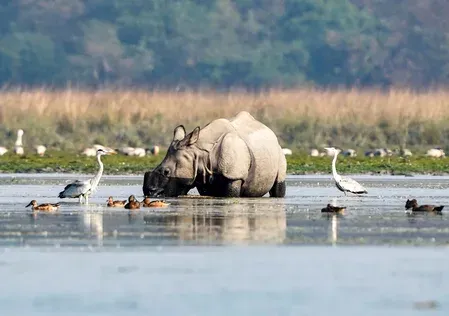
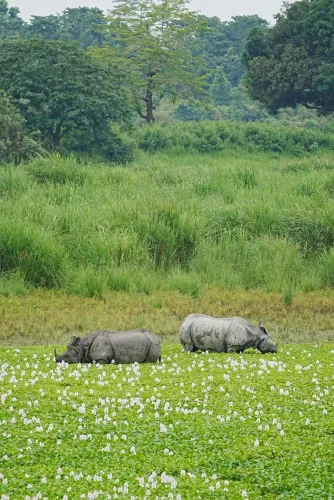
Manas National Park is a critical habitat for one-horned rhinos, tigers, and elephants, among other species. It is one of India's original Project Tiger reserves and a UNESCO World Heritage Site.
What is Project Tiger and how does it help Manas?
Project Tiger is a national wildlife programme launched in 1973 to protect tiger habitats across India. Manas was one of its original reserves and has received central funding for anti-poaching operations, forest-guard deployment, and habitat monitoring under the scheme.
How do local Bodo communities contribute to conservation in Manas?
Bodo communities living around Manas National Park have played a key role in the park's recovery, particularly after the insurgency period of the 1990s and early 2000s. Their cooperation with the Assam Forest Department is widely regarded as essential to the sustained improvement in wildlife protection.