CM Himanta Claims Zero Rhino Poaching, Targets Congress Record
Synopsis
Assam Chief Minister Himanta Biswa Sarma on 24 September 2026 claimed zero rhino poaching in Assam, calling it a globally unmatched conservation achievement, while accusing the Congress of concealing the true poaching toll during their years in power.
Key Takeaways
Assam CM Himanta Biswa Sarma declared zero rhino poaching in Assam, describing it as a conservation achievement with no global parallel.
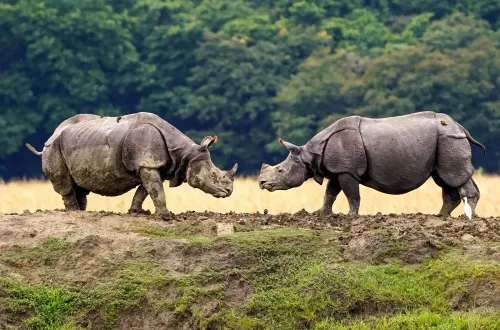
Kaziranga National Park , a UNESCO World Heritage Site, holds the world's largest population of greater one-horned rhinos and has long been the focus of anti-poaching efforts.
Sarma accused the Indian National Congress of not only allowing poaching during their tenure but of concealing the real figures — claims that remain independently unverified.
Since the BJP took power in Assam in 2016 , the state expanded anti-poaching infrastructure and community policing around Kaziranga.
The IUCN and the National Tiger Conservation Authority are expected to assess the poaching data when the next Assam Forest Department rhino census is released.
The greater one-horned rhino population has recovered from fewer than 200 individuals historically to over 3,000 today, largely anchored at Kaziranga.
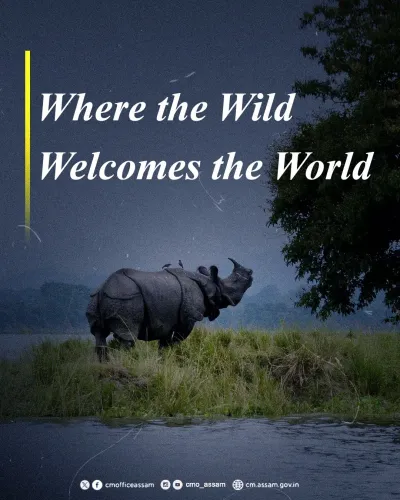
A conservation milestone that no other rhino habitat on earth can match — that is the claim Assam Chief Minister Himanta Biswa Sarma made on Thursday, 24 September 2026, declaring zero rhino poaching in the state and framing it as a direct repudiation of his predecessors' stewardship of the animal.
Zero poaching and the Kaziranga turnaround
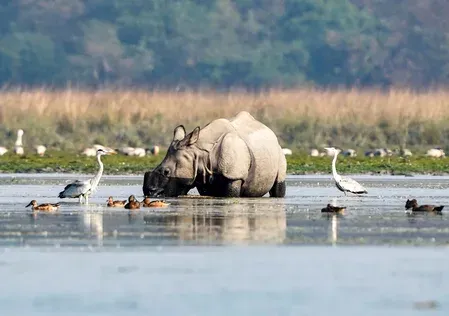
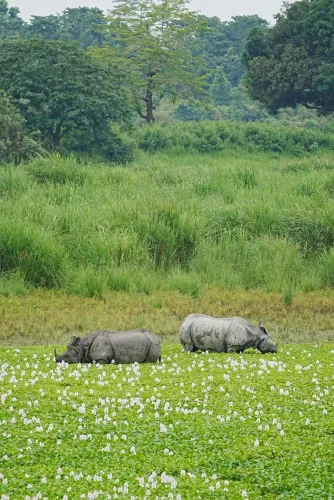
Kaziranga National Park, a UNESCO World Heritage Site straddling the floodplains of the Brahmaputra in central Assam, holds the world's single largest population of the greater one-horned rhinoceros. For decades, the park was also synonymous with poaching crises that drew international condemnation. Sarma's post claims that chapter is now closed — and that the turnaround has no global parallel in rhino conservation.
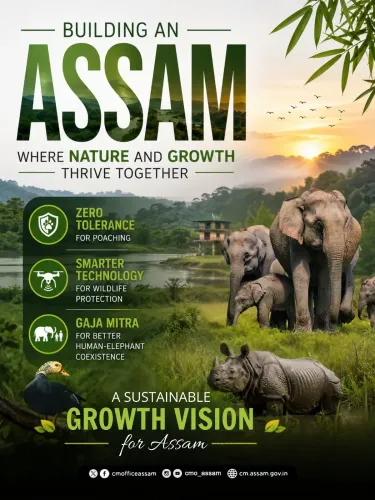
Since the BJP formed the Assam government in 2016, state authorities expanded anti-poaching infrastructure around Kaziranga, strengthened community policing in buffer zones, and intensified forest-guard deployment. The Chief Minister has repeatedly cited these measures as cornerstones of what he calls a governance reset in the Northeast.
The political charge against Congress-era figures
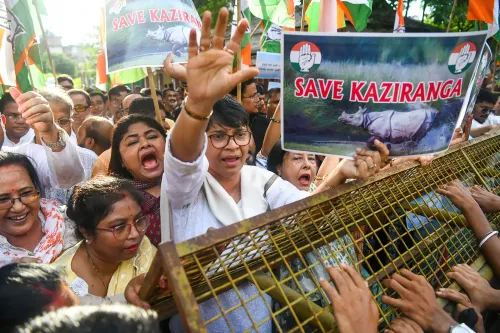
Sarma did not stop at celebrating the milestone. He used the post to level a pointed accusation at the Indian National Congress, which headed Assam's government for multiple terms before 2016: not only that rhinos were poached under their watch, but that the 'real toll was hidden from the books.' The allegation of under-reported figures is politically charged. The research available does not allow independent confirmation of the specific poaching numbers or any alleged concealment — those claims remain contested.
What is documented is that Kaziranga faced severe poaching pressure across several decades, and that the transition of power in 2016 coincided with a stated policy shift toward more aggressive anti-poaching enforcement. Whether governance alone explains the trend — or whether factors such as international horn-trade dynamics, staffing levels, and flood cycles also played a role — is a question conservationists and wildlife bodies continue to examine.
Why the claim matters beyond Assam
If sustained and independently verified, zero poaching at Kaziranga would be a landmark in global wildlife conservation. The greater one-horned rhino was once pushed to fewer than 200 individuals; the population has since recovered to over 3,000, making Kaziranga's protection record a live test case for anti-poaching models worldwide. Groups such as the IUCN and the National Tiger Conservation Authority are expected to weigh in when the next Assam Forest Department rhino census is released.
Sarma's post, combining a genuine conservation claim with an electoral broadside, encapsulates the BJP's broader Northeast narrative: that security, governance, and environmental outcomes have all improved since 2016 — and that the contrast with Congress rule is the proof. The opposition's response and any independent audit of the poaching data will determine how much of that narrative holds up to scrutiny.
The rhinos of Kaziranga have survived colonial-era hunting, partition-era instability, and decades of organised poaching syndicates. Whether the zero-poaching milestone marks a permanent inflection point — or a number that needs the rigour of independent verification — the world's conservation community is watching.
Point of View
If independently verified by the next Forest Department census or IUCN assessment, would carry real conservation weight and significant electoral value ahead of any state cycle. However, the allegation of under-reporting under Congress rule shifts the post from conservation communication into disputed political territory, and without documentary evidence, it risks muddying a story that could otherwise stand on its own merits. The broader arc here is the BJP's sustained effort to reframe the Northeast as a region transformed by its administration — and Kaziranga's rhinos have become an unexpectedly powerful symbol in that argument.
NationPress
24 Sept 2026
Frequently Asked Questions
Has Assam really achieved zero rhino poaching?
Assam Chief Minister Himanta Biswa Sarma claimed zero rhino poaching in a post on 24 September 2026. Independent verification from the Assam Forest Department census and international wildlife bodies such as the IUCN is awaited to confirm the figure.
How many one-horned rhinos are in Kaziranga?
Kaziranga National Park is home to the world's largest population of greater one-horned rhinos, estimated at over 3,000 individuals, after recovering from a historic low of fewer than 200.
What did Himanta Biswa Sarma say about Congress and rhino poaching?
Sarma alleged that during Congress-led Assam governments, rhinos were poached and the real toll was 'hidden from the books.' These allegations have not been independently confirmed from established public records.
What anti-poaching steps has the Assam government taken since 2016?
Since the BJP came to power in Assam in 2016, the state has expanded anti-poaching infrastructure, increased forest-guard deployment, and strengthened community policing in buffer zones around Kaziranga National Park.
Why is Kaziranga important for global rhino conservation?
Kaziranga is a UNESCO World Heritage Site and hosts the single largest concentration of greater one-horned rhinos on earth, making its protection record a globally watched benchmark for anti-poaching strategies.