Assam CM Office Flags Zero-Poaching Record, Eyes Ecotourism

Synopsis
Assam's Chief Minister's Office declared the state's zero-poaching record intact and announced intent to develop Kaziranga and its rhino habitat into a sustainable, community-benefiting ecotourism hub, blending strict conservation with responsible visitor access.
Key Takeaways
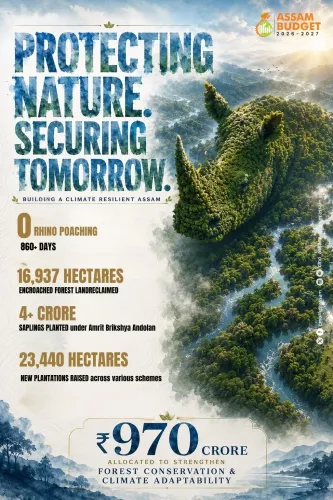
The Chief Minister's Office of Assam reaffirmed a 'steadfast zero-poaching record' for the state's rhino habitats on September 25, 2026 .
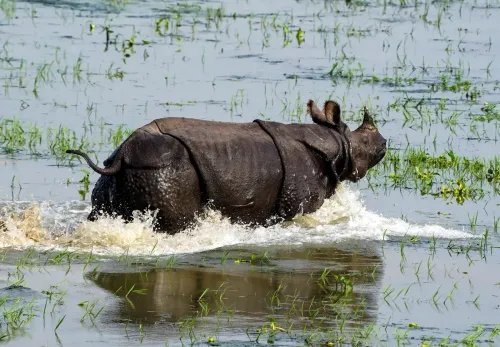
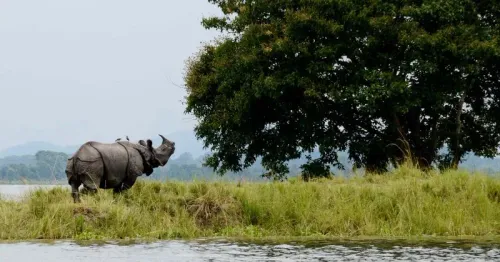
Kaziranga National Park , a UNESCO World Heritage Site , hosts the world's largest population of the Indian one-horned rhinoceros .
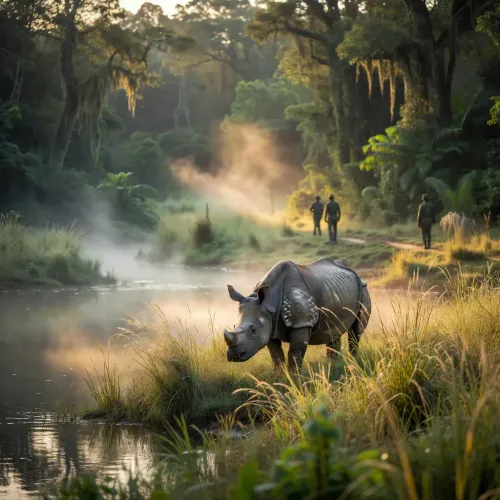
Assam's stated goal is to transform the rhino habitat into a 'sustainable, responsible ecotourism hub' that generates benefits for local communities and nature.
State policy has long pursued a dual track of strict anti-poaching enforcement paired with gradual, low-impact tourism development.
Ecotourism revenue is framed as a mechanism to fund ongoing conservation and provide alternative livelihoods for border communities.
A zero-poaching record and a bold pivot toward sustainable tourism — Assam's Chief Minister's Office signalled on Friday, September 25, 2026 that the state is ready to convert its hard-won wildlife gains into an ecotourism economy that works for both nature and local communities.
The zero-poaching milestone anchoring the push
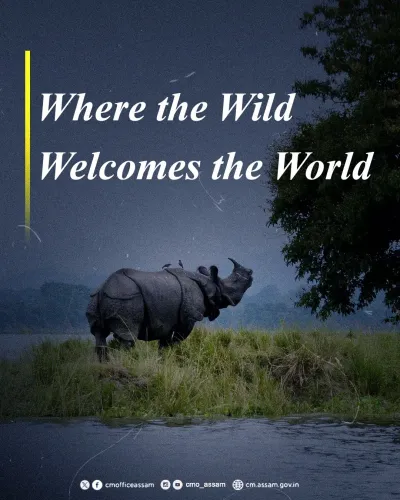
The post was direct: 'With Assam's steadfast zero-poaching record, our focus remains on transforming this iconic rhino habitat into a sustainable, responsible ecotourism hub that benefits nature.' The phrase 'steadfast zero-poaching record' is significant — it signals not a single clean year but a sustained streak, the kind that reframes a wildlife reserve from a crisis zone into a destination.
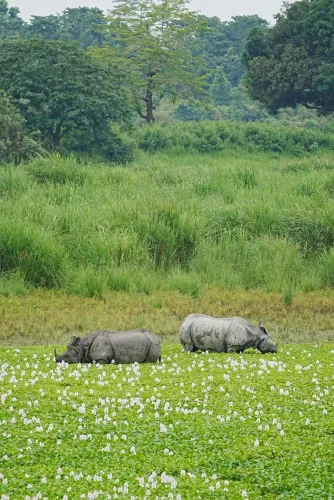
Kaziranga National Park, a UNESCO World Heritage Site in Assam, holds the world's largest population of the Indian one-horned rhinoceros. For decades, the park was synonymous with poaching emergencies. The shift to a reported zero-poaching baseline, built through intensified anti-poaching operations across the 2010s and early 2020s, is the foundation on which the ecotourism argument now rests.
Why ecotourism and why now
Assam has pursued a deliberate dual track: lock down the wildlife, then gradually open the landscape to low-impact, revenue-generating tourism. State policy documents have repeatedly framed responsible ecotourism as a way to fund conservation itself — creating a financial feedback loop where visitor spending pays for the rangers and infrastructure that keep poaching at bay.
The other calculation is livelihoods. Communities bordering rhino reserves have historically faced the sharpest trade-offs — sacrificing land use for wildlife corridors, sometimes losing crops to elephant or rhino incursions. A community revenue-sharing model built around ecotourism offers an answer to that tension. Tourism operators, local guides, homestay owners, and artisans all sit in the value chain. Conservation stops being an imposition and starts being an industry.
What a 'responsible ecotourism hub' actually means for Kaziranga
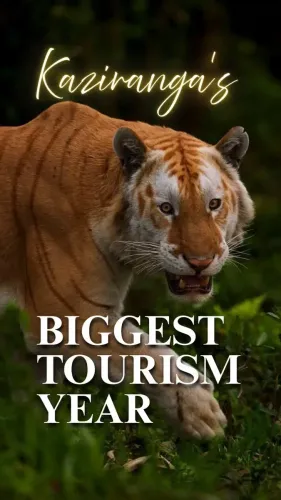
The language in the post — 'sustainable, responsible ecotourism hub' — gestures toward a regulated, curated model rather than a mass-tourism free-for-all. Kaziranga already draws tens of thousands of visitors annually for its jeep safaris and elephant rides. The policy direction now appears to be deepening that offer: better infrastructure, tighter visitor-management frameworks, and a sharper community dividend, without crowding or degrading the habitat that makes the destination worth visiting in the first place.
Watch for state-level announcements on new ecotourism infrastructure projects, formal community revenue-sharing frameworks, and any regulatory updates on visitor access limits inside rhino-bearing park zones. Those are the concrete moves that will test whether the vision lands.
Point of View
But a proven safety record turns a protected area into a marketable asset. By linking the zero-poaching streak to a tourism economy, the state is essentially monetising good governance, creating a self-reinforcing incentive to keep the record intact. The deeper political logic is community buy-in: as long as border villages see ecotourism jobs and revenue, the social cost of living alongside mega-fauna stays manageable. The risk, as always, is that 'responsible' tourism remains a well-intentioned phrase until hard visitor caps, transparent revenue-sharing mechanisms, and habitat-impact benchmarks are legislated into place.
NationPress
25 Sept 2026
Frequently Asked Questions
What is Assam's zero-poaching record for rhinos?
Assam has reported sustained stretches of zero rhino poaching in Kaziranga as part of intensified anti-poaching operations carried out across the 2010s and into the 2020s, a record the Chief Minister's Office described as 'steadfast' in September 2026.
Where is India's largest population of one-horned rhinos?
The Indian one-horned rhinoceros is found in its largest numbers in Kaziranga National Park in Assam, a UNESCO World Heritage Site in northeastern India.
What does Assam's ecotourism plan for Kaziranga involve?
The plan aims to develop the rhino habitat into a sustainable, responsible ecotourism hub, with tourism revenue intended to fund conservation efforts and provide alternative livelihoods for local communities living around the park.
How does ecotourism help rhino conservation in Assam?
Ecotourism generates revenue that can be channelled back into anti-poaching operations, park management, and community income — making conservation economically self-sustaining rather than purely dependent on government grants.
Is Kaziranga National Park open to tourists?
Yes, Kaziranga National Park is open to visitors and already attracts significant tourist footfall through jeep safaris and wildlife experiences. The state is now focused on deepening and regulating that access under a more structured ecotourism framework.