CM Himanta's Assam logs zero rhino killings with tech-led wildlife push
Synopsis
The Chief Minister's Office of Assam announced on 24 May 2026 that rhino killings in the state have been reduced to zero under CM Dr. Himanta Biswa Sarma, crediting technology-driven anti-poaching measures and human-elephant coexistence initiatives as part of a broader sustainable development push.
Key Takeaways
The Chief Minister's Office of Assam announced on 24 May 2026 that rhino poaching in the state has been brought down to zero .
Himanta Biswa Sarma's zero-tolerance stance against poaching is credited for the achievement.
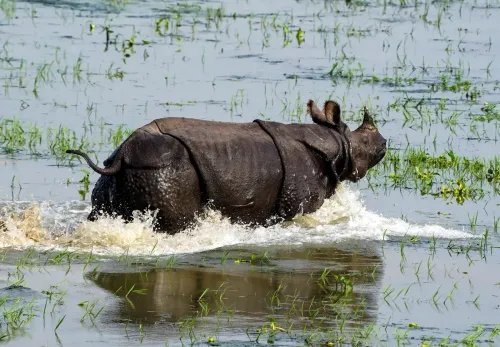
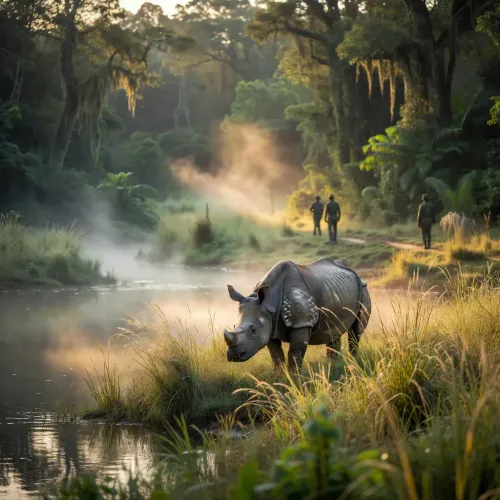
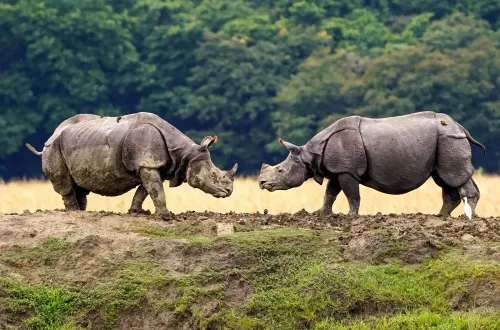
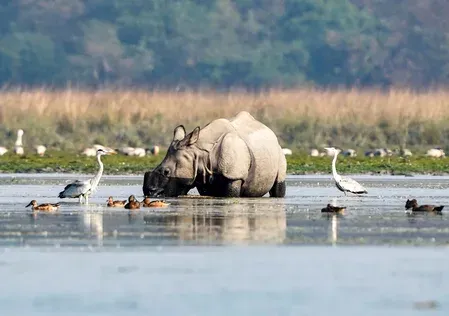
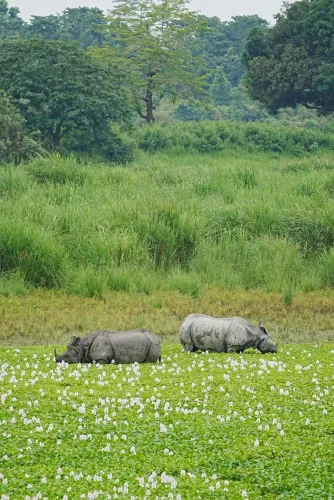
Assam is home to Kaziranga National Park , a UNESCO World Heritage Site holding the world's largest population of the greater one-horned rhinoceros.
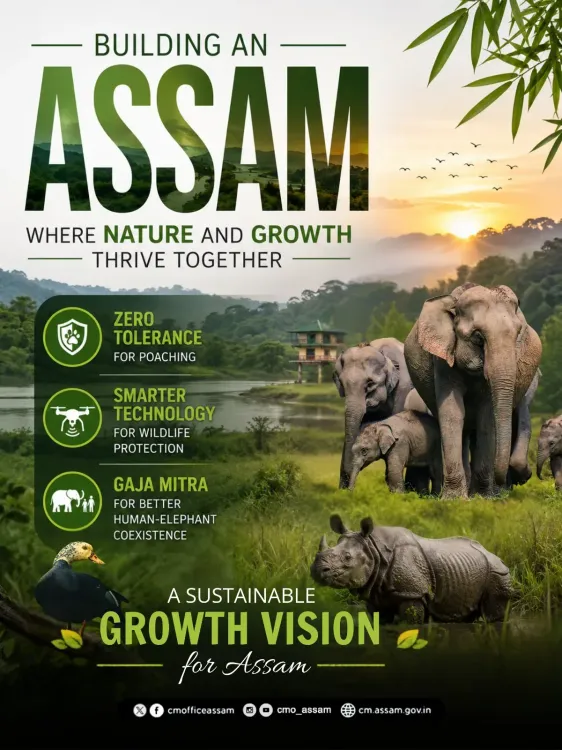
The state is deploying technology-driven wildlife protection alongside measures to improve human-elephant coexistence.
The Indian Rhino Vision 2020 programme, launched in 2005 , set a target of 3,000 wild rhinos and laid the policy groundwork for current conservation efforts.
The next state-wide rhino census and new wildlife corridor proposals are expected to be key indicators of progress.
The Chief Minister's Office of Assam on Sunday, 24 May 2026, highlighted that Assam has brought rhinoceros poaching down to zero under the leadership of Chief Minister Dr. Himanta Biswa Sarma, citing technology-driven wildlife protection and improved human-elephant coexistence as cornerstones of the state's push toward sustainable development.
Context
The official post from the Chief Minister's Office framed the achievement around three pillars: 'People, nature and development.' It credited CM Dr. Himanta Biswa Sarma's zero-tolerance stand against poaching for eliminating rhino killings in the state. The announcement signals Assam's intent to position conservation outcomes as central to its governance narrative.
Policy Backdrop
Assam is home to Kaziranga National Park, a UNESCO World Heritage Site that holds the world's largest population of the greater one-horned rhinoceros. The state has pursued anti-poaching efforts over successive administrations, backed by the Indian Rhino Vision 2020 programme — launched in 2005 in partnership with conservation bodies — which set a target of 3,000 wild rhinos through habitat expansion and stricter enforcement.
Central funding increases and amendments to wildlife protection laws after 2010 enabled deployment of additional forest staff and surveillance technology across Kaziranga and Manas, another UNESCO-listed park in the state. The current administration has built on this foundation, adding technology-driven monitoring to the enforcement toolkit.
Stakeholders and Impact
Forest-edge communities, wildlife tourism operators, and conservation organisations are the primary stakeholders in Assam's conservation model. A reduction in poaching to zero strengthens the case for eco-tourism investment and provides forest communities with a more stable natural environment. The push for human-elephant coexistence addresses a persistent tension: habitat fragmentation caused by infrastructure expansion has historically driven elephants into agricultural land, leading to crop loss and casualties on both sides.
The government's stated approach — pairing industrial and road infrastructure growth with tighter wildlife law enforcement and community incentives — reflects a dual-track strategy that successive Assam administrations have pursued, though the current emphasis on technology marks a sharper focus on surveillance-based deterrence.
What's Next
Observers will watch for the release of the next state-wide rhino census, which will independently validate the zero-poaching claim. Proposals for new wildlife corridors and compensation schemes under the Assam Human-Elephant Conflict Mitigation project are also expected to shape the next phase of the state's conservation agenda. How Assam balances accelerating infrastructure development with protecting biodiversity corridors will be a key test of whether the 'people, nature and development' framework translates into durable policy outcomes.
Point of View
Positioning CM Himanta Biswa Sarma as a leader who can reconcile rapid development with ecological responsibility — a balance that has eluded many Indian states. The 'people, nature and development' framing echoes a broader BJP-ruled state playbook of wrapping infrastructure ambition in sustainability rhetoric. Independent validation through the next rhino census will be critical: if the zero-poaching figure holds, it would represent a genuine milestone in a decades-long conservation effort. The human-elephant conflict dimension is the harder test, as habitat fragmentation driven by road and industrial projects — many championed by the same administration — remains a structural challenge that community incentives alone cannot resolve.
NationPress
10 Oct 2026
Frequently Asked Questions
Has Assam really achieved zero rhino poaching?
The Chief Minister's Office of Assam stated on 24 May 2026 that rhino killings have been brought down to zero, attributing this to CM Dr. Himanta Biswa Sarma's zero-tolerance policy and technology-driven wildlife protection. Independent confirmation will come from the next state-wide rhino census.
How many rhinos are in Kaziranga National Park?
Kaziranga National Park in Assam holds the world's largest population of the greater one-horned rhinoceros and is a UNESCO World Heritage Site. The Indian Rhino Vision 2020 programme, launched in 2005, set a target of 3,000 wild rhinos across Assam through habitat expansion and stricter protection.
What is the human-elephant conflict situation in Assam?
Assam faces significant human-elephant conflict driven by habitat fragmentation, which pushes elephants into agricultural areas, causing crop loss and casualties. The current administration has announced technology-driven coexistence measures as part of its wildlife protection framework.
What is Indian Rhino Vision 2020?
Indian Rhino Vision 2020 was a programme launched in 2005 by the Assam government in partnership with conservation organisations, aiming to increase the wild rhino population to 3,000 through habitat expansion, stricter enforcement, and translocation of rhinos to new areas within the state.
What technology is Assam using to protect wildlife?
The Chief Minister's Office has referenced technology-driven wildlife protection as a key part of Assam's anti-poaching strategy, though specific systems and tools deployed have not been detailed in the official announcement.