Gharial spotted at Kaziranga National Park in major conservation win
Synopsis
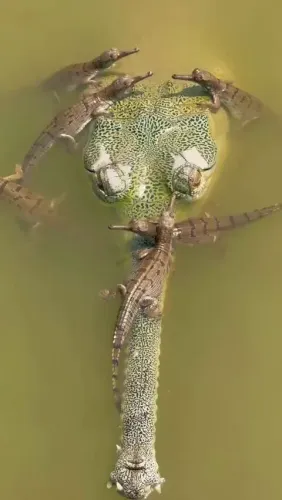
Once considered locally extinct in Assam, the critically endangered gharial has returned to Kaziranga National Park — spotted multiple times since 26 April 2025 along the Brahmaputra confluence. With only 650–1,000 mature individuals left in the wild globally, this sighting signals a quiet but powerful ecological recovery in one of India's most biodiverse protected areas.
Key Takeaways
A gharial (Gavialis gangeticus) was first spotted on 26 April 2025 at Kaziranga National Park 's Burapahar Range, near the Difolu–Brahmaputra confluence.
Multiple sightings with photographic proof followed; the latest was on 8 May 2025 by tourist guide Shishukanta Nath .
The gharial is listed as critically endangered, with an estimated 650–1,000 mature individuals remaining in the wild after a historical 98% population decline.
The species was considered locally extinct in Assam after the 1950s , when records spanned 16 rivers in the Northeast.
Recent surveys by KNPTR in collaboration with WII , WWF , and TSAFI — including a January 2026 survey covering 160 km of river — have documented a lone female gharial and prompted reintroduction proposals from the Chambal Conservation Breeding Centre .
Madhya Pradesh government has expressed willingness to support a gharial reintroduction programme in the Brahmaputra system.
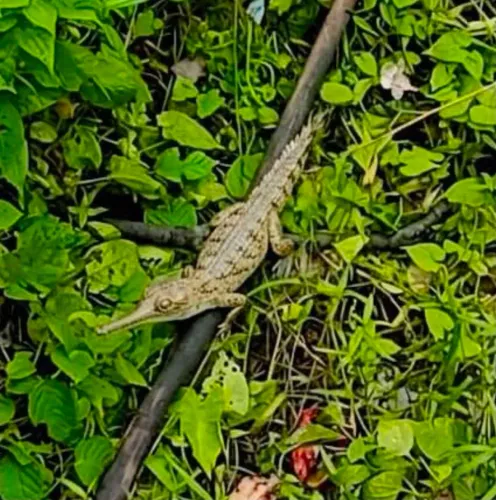
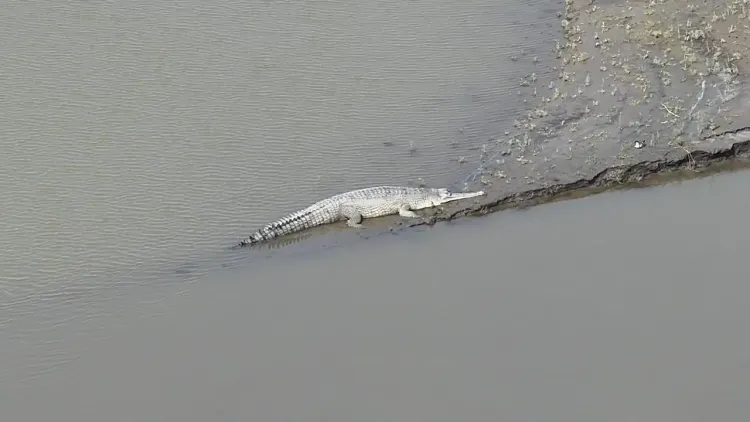
The critically endangered gharial (Gavialis gangeticus) has been sighted at Kaziranga National Park and Tiger Reserve (KNPTR) in Assam, marking a significant milestone for wildlife conservation in the region. The reptile, once considered locally extinct in the state's river systems, was first spotted on 26 April 2025 basking on a sandbar near the Maite anti-poaching camp area of the Burapahar Range, officials confirmed on Sunday.
Key Sightings and Photographic Evidence
KNPTR Director Sonali Ghosh, a senior Indian Forest Service officer, said the first sighting was reported by a forest staff patrol team along the confluence of the Difolu and Brahmaputra rivers. Multiple subsequent sightings with photographic proof were recorded from the same location in the following days. The most recent confirmed sighting was on 8 May 2025, from the Burapahar Range, reported by tourist guide Shishukanta Nath, which was widely welcomed on social media.
The Assam Chief Minister's Office (CMO) acknowledged the development on social media, posting:
Point of View
In a river system that once held the species across 16 tributaries, is a fragile foothold, not a recovery. The real test lies in whether reintroduction proposals from the Chambal breeding programme translate into a viable, monitored population. India has a creditable record with the one-horned rhino at Kaziranga; it has a far patchier one with gharial reintroduction along the Chambal. The Brahmaputra's low human disturbance in protected stretches is a genuine asset — the question is whether institutional coordination between Assam, Madhya Pradesh, and central wildlife bodies can match the ecological opportunity before it closes.
NationPress
24 Sept 2026
Frequently Asked Questions
Where was the gharial spotted in Kaziranga National Park?
The gharial was spotted basking on a sandbar near the Maite anti-poaching camp area of the Burapahar Range, along the confluence of the Difolu and Brahmaputra rivers. Multiple sightings with photographic evidence were recorded from the same location between 26 April and 8 May 2025.
Why is the gharial considered critically endangered?
The gharial has suffered a historical population decline of approximately 98%, leaving an estimated 650–1,000 mature breeding individuals in the wild globally. Habitat degradation, changing river dynamics, and human pressures have been the primary drivers of its decline.
Was the gharial previously found in Assam?
Yes. Gharials historically inhabited the Brahmaputra river system across 16 rivers in Northeast India, with records dating to the 1950s. The species was considered locally extinct in Assam after that decade due to habitat loss, though unconfirmed sightings of single individuals were occasionally reported.
What conservation efforts are underway to protect the gharial in Assam?
Kaziranga Park Authority has conducted surveys in collaboration with the Wildlife Institute of India (WII), WWF, and Turtle Survival Alliance Foundation India (TSAFI), including a 160 km river survey in January 2026. Reintroduction proposals sourced from the Chambal Conservation Breeding Centre are under consideration, with Madhya Pradesh expressing willingness to support the effort.
What role does the gharial play in river ecosystems?
As an apex predator and keystone species, the gharial regulates fish populations and helps maintain the balance of freshwater ecosystems. Its presence is considered a reliable indicator of overall river health, making its return to the Brahmaputra system ecologically significant.