Modi in Jamnagar: Gujarat's semiconductor rise, BJP's 700+ unopposed wins
Synopsis
From salt flats to semiconductor fabs — Modi's Jamnagar address recast Gujarat's two-decade BJP run as an industrial miracle, backed by a local body sweep of 700+ unopposed seats. With a Somnath visit next and West Bengal squarely in his sights, the speech blended development optics with sharp political messaging.
Key Takeaways
PM Modi addressed a late-night 'Abhivadan' crowd in Jamnagar on Sunday, 11 May 2025 as part of his Gujarat visit.
The BJP secured more than 700 seats unopposed in recent Gujarat local body elections, which Modi called a "historic" mandate.
Modi highlighted Gujarat's industrial shift — from salt production to semiconductor chips, metro coaches, railway engines , and upcoming aircraft manufacturing .
Gujarat was described as the first state in India to establish a Climate Change Department and a global pioneer in dedicated climate governance.
Modi claimed more than 300 BJP workers had lost their lives to political violence in West Bengal , reaffirming the party's commitment to the state.
He is scheduled to visit Somnath on Monday ahead of the temple's 75th 'pran pratishtha' anniversary.
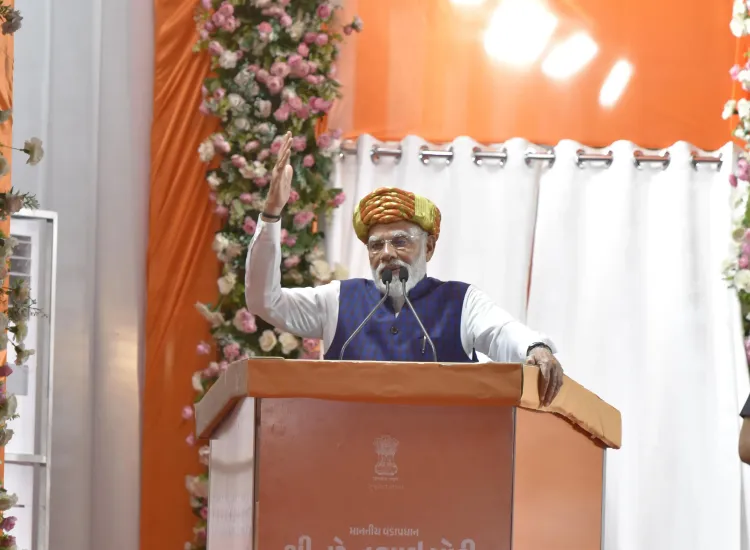
Prime Minister Narendra Modi on Sunday night addressed a large crowd at an 'Abhivadan' programme in Jamnagar, Gujarat, projecting the state as a model of industrial transformation and political continuity, while also invoking themes of national unity, cultural heritage, and the political situation in West Bengal. The event forms part of his ongoing Gujarat visit ahead of a scheduled trip to Somnath on Monday.
BJP's Electoral Dominance in Gujarat
Modi opened his address by asking Bharatiya Janata Party (BJP) supporters whether their post-election fatigue had faded, remarking that a grand victory leaves no room for tiredness. He was referring to the BJP's sweeping performance in recent Gujarat local body elections, where the party secured more than 700 seats unopposed across local self-government institutions — a result he described as "historic".
"The latest local body results had surpassed previous electoral records set during Assembly elections and I credit BJP workers for sustaining the party's dominance in Gujarat across three to four generations of voters," Modi said. He attributed the sustained mandate to the party's development record over the past 20–25 years.
From Salt to Semiconductors: Gujarat's Industrial Journey
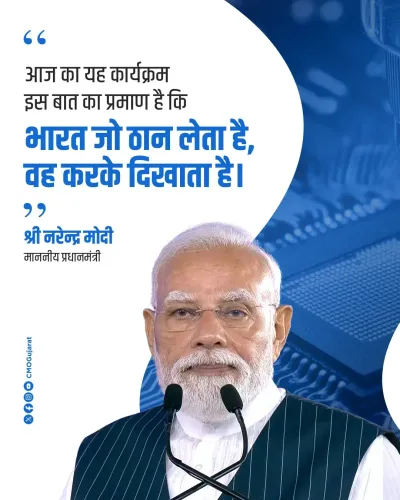
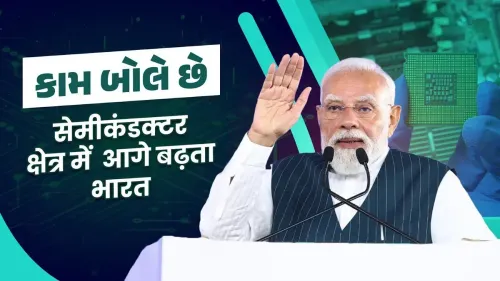
Highlighting the state's industrial transformation, Modi drew a sharp contrast between Gujarat's past and present economic profile. "There was a time when we did nothing, or rather, could do nothing except produce salt. Today, that same Gujarat is manufacturing semiconductor chips. Gujarat is building metro coaches today. Gujarat is producing modern railway engines. Gujarat is now preparing to manufacture aircraft," he said.
He added that these achievements were a testament to what Gujaratis could accomplish when given opportunity and infrastructure. "These glorious stories have been written over the last 20–25 years. This is a testament to how the hard work of Gujaratis can reach incredible heights when given the opportunity," he said. The remarks position Gujarat's diversified industrial base — spanning semiconductors, rail, and aerospace — as a national template.
Green Energy and Climate Leadership
Modi also pointed to Gujarat's environmental record, asserting that the state was the first in India to establish a Climate Change Department and among the first governments globally to create a dedicated ministry on the subject. He said Gujarat had emerged as a major contributor in solar and renewable energy production, taking a leading role in India's green energy expansion.
West Bengal and BJP Workers' Sacrifices
Turning to the political situation in West Bengal, Modi said developments there resonated deeply across the country. "If Bengal experiences pain, the ache is felt by the people of Gujarat," he said. He claimed that more than 300 BJP workers had sacrificed their lives due to political violence in the state, and asserted that the BJP was committed to restoring development in Bengal. He also criticised opposition parties for what he described as a "lack of vision" for younger generations.
Somnath Anniversary and Historical Tributes
Ahead of his visit to Somnath, Modi spoke about the upcoming 75th anniversary of the Somnath Temple's 'pran pratishtha' ceremony. He paid tribute to Sardar Vallabhbhai Patel for leading efforts to rebuild the shrine after Independence, and remembered India's first President, Dr. Rajendra Prasad, for attending the original consecration despite political opposition at the time. He also noted that 10 May marked the anniversary of the 1857 uprising, which he described as India's First War of Independence.
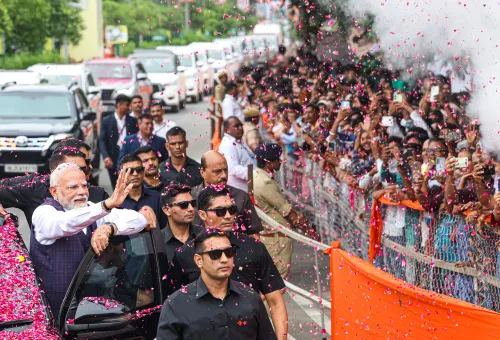
Before the address, Modi received a traditional welcome in Jamnagar — locally referred to as "Chhoti Kashi" — with BJP leaders including district in-charge minister Arjun Modhwadia, Jamnagar North MLA Rivaba Jadeja, and MP Poonam Madam presenting him with traditional Halari turbans, Bandhani scarves, and religious mementoes. Thousands lined the roads to the venue, chanting patriotic slogans as the Prime Minister arrived. The BJP's next challenge will be translating this local body momentum into Assembly and national election outcomes in the years ahead.
Point of View
While a show of organisational strength, also reflect a consolidation of local power that opposition parties have struggled to contest rather than a genuine competitive mandate. The pivot to West Bengal, invoking 300 worker deaths, signals that the BJP is already in campaign mode for that state. And the Gujarat-as-template narrative — from salt to semiconductors — is a well-rehearsed frame that papers over questions about job quality, private investment sustainability, and whether Gujarat's model is replicable in states without its geography, ports, or decades of industrial head-start.
NationPress
24 Sept 2026
Frequently Asked Questions
What did PM Modi say at the Jamnagar Abhivadan programme?
PM Modi praised Gujarat's industrial transformation — from salt production to semiconductor manufacturing — and credited BJP workers for the party's dominance across three to four generations of voters in the state. He also addressed political violence in West Bengal and spoke about the upcoming Somnath Temple anniversary.
How many seats did the BJP win unopposed in Gujarat local body elections?
The BJP secured more than 700 seats unopposed across local self-government institutions in Gujarat, a result PM Modi described as surpassing previous electoral records set during Assembly elections.
What industries did Modi highlight in Gujarat's development story?
Modi cited semiconductor chip manufacturing, metro coach production, modern railway engines, and upcoming aircraft manufacturing as examples of Gujarat's industrial rise, contrasting them with the state's earlier dependence on salt production.
Why did Modi mention West Bengal at a Gujarat event?
Modi said developments in Bengal resonate deeply across the country, claiming more than 300 BJP workers had lost their lives to political violence there. He reaffirmed the BJP's commitment to restoring development in West Bengal, signalling the party's continued political focus on the state.
What is the significance of Modi's Somnath visit?
Modi was scheduled to visit Somnath on Monday ahead of the 75th anniversary of the Somnath Temple's 'pran pratishtha' ceremony. He paid tribute to Sardar Vallabhbhai Patel for leading the temple's reconstruction after Independence and to Dr. Rajendra Prasad for attending the original consecration.