CM Yogi Pledges Health Aid to Self-Reliant Daughter
Synopsis
Uttar Pradesh Chief Minister Yogi Adityanath on 15 July 2026 publicly praised a young woman earning ₹27,000 who single-handedly manages her household and mother's treatment, and pledged that the state government will contribute to her mother's medical care — framing the case as a model of self-reliance backed by targeted state support.
Key Takeaways
Uttar Pradesh Chief Minister Yogi Adityanath shared the account of a young woman earning ₹27,000 per month on her own.
The woman is independently funding her mother's medical treatment and running her household.
The Chief Minister publicly pledged that the Uttar Pradesh state government will support the mother's medical treatment costs.
The post invoked the concept of swavalamban (self-reliance), consistent with the state's Atmanirbhar welfare messaging.
The announcement aligns with existing mechanisms including Ayushman Bharat top-up coverage and the Chief Minister's discretionary relief fund.
The case may be taken up in the next Uttar Pradesh state budget or assembly session as part of broader health support formalisation.
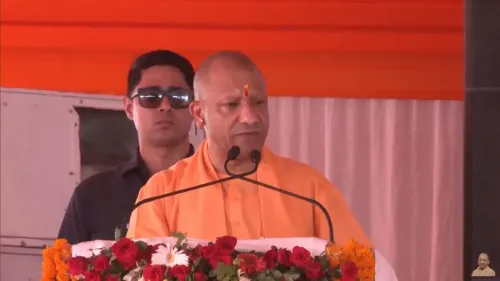
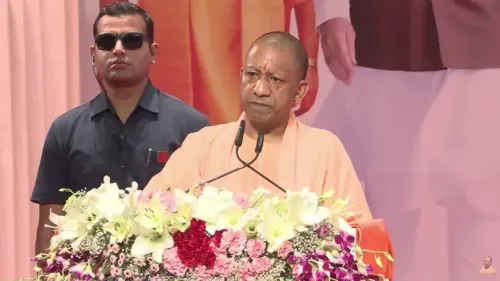
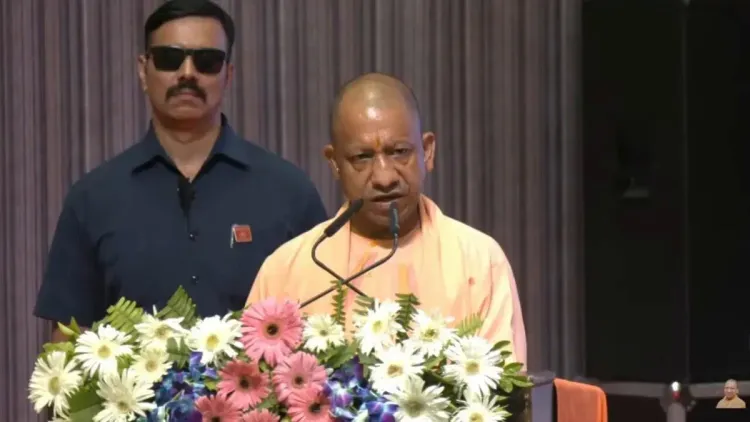
Uttar Pradesh Chief Minister Yogi Adityanath on Wednesday, 15 July 2026, shared a personal account of a young woman who earns ₹27,000 on her own, manages her household, and is funding her mother's medical treatment — pledging that the Uttar Pradesh state government will step in to support that mother's care.
In the post, written in Hindi, the Chief Minister quoted the woman directly: '₹27,000 apne dam par kamati hoon, apni maan ka upchaar bhi karwa rahi hoon aur ghar ki vyavastha ka sanchalan bhi kar rahi hoon' — ('I earn ₹27,000 on my own, I am also getting my mother treated and I am also running the household'). He captioned the account with a single word of praise: swavalamban — self-reliance.
Context
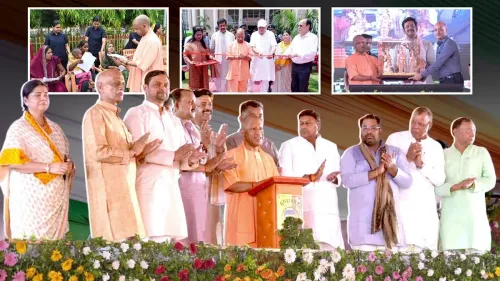
The post appears to have emerged from a public interaction — likely a government programme or outreach event — where the Chief Minister heard the woman's account in person. Such direct exchanges between the Chief Minister's office and beneficiaries have become a recurring feature of the Uttar Pradesh government's public communication, used to put a human face on welfare delivery and economic participation by women.
The woman's situation — earning a modest income while bearing dual responsibility for healthcare and household management — reflects a lived reality for millions of working women in Uttar Pradesh, India's most populous state. The Chief Minister's decision to publicly acknowledge her story and announce government support signals both the symbolic and material dimensions of the administration's approach.
Policy Backdrop
The Uttar Pradesh government has since 2017 expanded several schemes aimed at women's economic empowerment and healthcare access. The Mukhya Mantri Kanya Sumangala Yojana, broadened in 2019, provides financial support and skill linkages for girls and women from economically weaker sections of society.
On the health side, the state extended coverage under Ayushman Bharat after its 2018 launch, supplemented by the Chief Minister's discretionary relief mechanisms, which have been used to cover treatment costs for low-income households that fall outside standard scheme eligibility. The pledge made in Wednesday's post appears consistent with this residual-support model, where individual cases flagged through official outreach can be routed to targeted government assistance.
The framing also aligns with the broader Atmanirbhar Bharat — self-reliant India — narrative championed at both the central and state level by the BJP-led administration: the state does not replace individual effort but steps in where that effort encounters an unavoidable gap, such as a parent's medical emergency.
Stakeholders and Impact
The immediate beneficiary is the woman's mother, whose treatment costs the state government has now publicly committed to support. More broadly, the announcement carries significance for working women in low-income households across Uttar Pradesh who bear simultaneous caregiving and livelihood burdens.
Civil society groups working on women's labour rights and health access have long argued that the gap between scheme eligibility on paper and actual benefit delivery remains a persistent challenge in the state. A public commitment by the Chief Minister, made on a widely followed social-media platform, creates a degree of accountability that formal policy announcements sometimes lack.
What's Next
It remains to be seen whether Wednesday's pledge leads to a formal order from the Uttar Pradesh health department or the Chief Minister's relief fund, or whether it is processed through existing discretionary mechanisms. Observers will watch for any references to such cases in the upcoming state budget or in the winter session of the Uttar Pradesh Legislative Assembly, which could signal a move toward formalising additional treatment support for individuals highlighted through official social-media outreach.
The episode underscores a governance pattern in which the Chief Minister's personal social-media presence functions as both a policy signal and a real-time accountability tool — one that beneficiaries, bureaucrats, and political opponents alike are watching closely.
Point of View
The Chief Minister's office creates immediate political goodwill while retaining administrative flexibility on how the support is actually delivered. The episode also illustrates how personal social-media outreach has become a parallel policy channel in Uttar Pradesh, one that bypasses conventional bureaucratic announcement cycles and speaks directly to aspirational, working-class voters.
NationPress
15 Jul 2026
Frequently Asked Questions
What did CM Yogi Adityanath announce for the woman earning ₹27,000?
CM Yogi Adityanath announced that the Uttar Pradesh state government will provide support for the medical treatment of the mother of a young woman who shared her story of earning ₹27,000 independently and managing her household on her own.
What does swavalamban mean in CM Yogi's post?
Swavalamban is a Hindi word meaning self-reliance or self-sufficiency. CM Yogi used it to describe the young woman's ability to earn independently, manage her home, and fund her mother's healthcare without external support.
Which UP government schemes cover medical treatment for low-income families?
Uttar Pradesh residents can access treatment support through Ayushman Bharat, which the state expanded after 2018, as well as through the Chief Minister's discretionary relief fund, which can cover costs for cases that fall outside standard scheme eligibility.
What is the Mukhya Mantri Kanya Sumangala Yojana?
The Mukhya Mantri Kanya Sumangala Yojana is a Uttar Pradesh government scheme expanded in 2019 that offers financial support and skill-development linkages to girls and women from economically weaker sections of society.
How does CM Yogi use social media for welfare announcements?
CM Yogi Adityanath regularly uses his social-media platforms to highlight individual beneficiary stories and make real-time pledges of government support, effectively turning his accounts into a parallel policy-announcement channel alongside formal government orders.