Spain launches document checks on Italy passengers until Sept 7
Synopsis
What began as a migration emergency in Ceuta has spiralled into a full-blown border standoff between two EU heavyweights. Spain has deployed 100 police officers to screen Italy-bound flights after Rome unilaterally reimposed checks without notice — and Italy is refusing to back down, insisting it won't accept 'ultimatums' on national security. The row is the sharpest Schengen friction between major EU states in years.
Key Takeaways
Spain launched document checks on passengers from Italy on 8 August , valid until 7 September .
Around 100 National Police Corps officers are deployed at ports and airports, screening 5–10% of travellers per flight.
Checks began at Madrid-Barajas and Barcelona-El Prat , extending to six more airports and the island territories.
Italy reintroduced border checks on travellers from Spain on 1 August without prior notification, citing national security concerns.
The crisis was triggered by roughly 80,000 migrants entering the Spanish enclave of Ceuta in late July; between 3,000 and 5,000 remain.
Rome says it will not accept 'ultimatums,' while Madrid has demanded Italy withdraw the measures immediately.
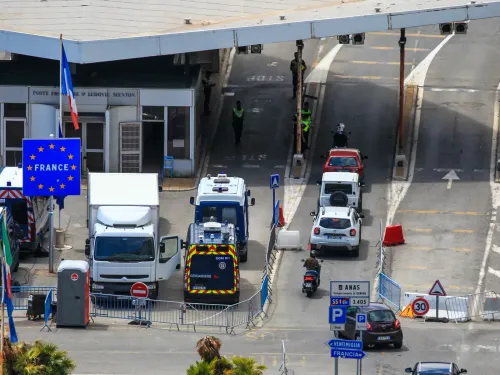
Spain on 8 August initiated document checks on all passengers arriving from Italy, with the measures set to remain in force until 7 September, according to local media reports. The move is a direct reciprocal response to Italy's unilateral reintroduction of border checks on travellers arriving from Spain, which Madrid has condemned as unjustified and contrary to European Union (EU) interests.
How the Checks Are Being Conducted
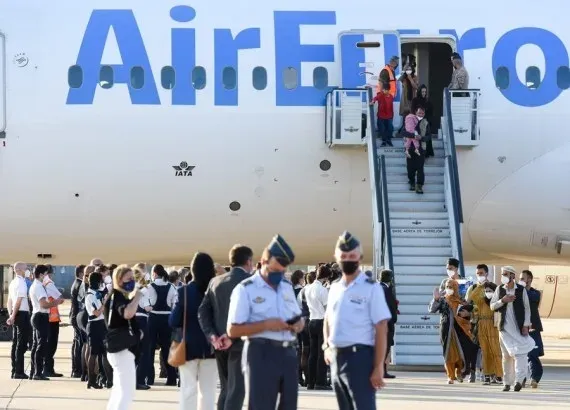
Approximately 100 National Police Corps officers have been deployed across ports and airports, according to Spanish daily El País. Each arriving flight is screened by two to four agents, who randomly verify between 5 and 10 per cent of travellers — roughly 15 people on medium-sized aircraft and around 25 on larger ones.
Operations began after midnight at Madrid-Barajas and Barcelona-El Prat airports before extending to Seville, Málaga, Bilbao, Alicante, and Valencia. The Balearic and Canary Islands are also expected to be brought under the checks within hours. On the Italian side, the airports most affected include Fiumicino, Ciampino, Malpensa, Naples, Venice, and Florence.
What Spain and Italy Have Said
The Spanish government stated that Italy reintroduced border checks on travellers from Spain on 1 August without prior notification, calling the measures 'unjustified, discriminatory and contrary to the interests of the European Union.' Madrid has formally called on Rome to withdraw the checks immediately.
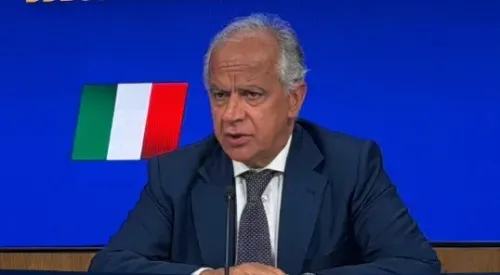
Rome, however, said it 'does not accept ultimatums or external pressure' on matters concerning national security and border management. The Italian government confirmed on Friday that it would maintain temporary checks on third-country nationals arriving from Spain until at least 15 August, citing national security and border-management concerns. Italian authorities stressed that the controls do not apply to Spanish or other EU citizens travelling by air or sea.
The Ceuta Migration Crisis That Triggered the Standoff
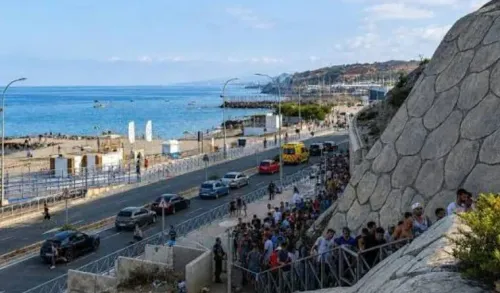
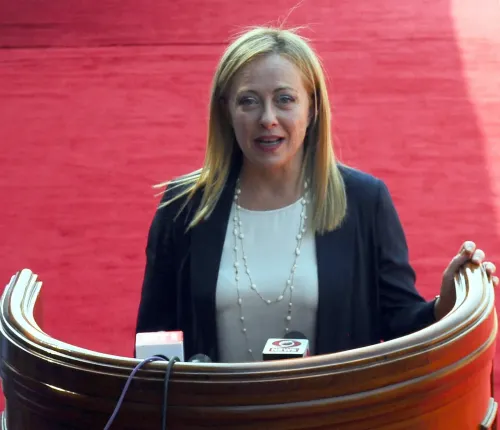
Italian Prime Minister Giorgia Meloni announced the border control measures on 31 July following a massive influx of migrants into Ceuta, the Spanish enclave on the northern tip of Africa. Approximately 80,000 people entered Ceuta at the end of July, with nearly 75,000 subsequently returning voluntarily.
Between 3,000 and 5,000 migrants remain in the enclave, overwhelming reception facilities and creating what Ceuta President Juan Jesus Vivas described on Thursday as a 'severe humanitarian emergency.' The scale of the influx has reignited tensions among EU member states over border controls and the potential onward movement of migrants within the Schengen area.
Broader EU Implications
The tit-for-tat border measures between two of the EU's largest economies underscore deepening fault lines over migration management within the bloc. Notably, this is not the first time Schengen-area states have resorted to unilateral checks — several member states temporarily suspended free movement during the 2015–16 migration crisis. With both sides digging in, the dispute risks escalating into a broader EU-level confrontation over Schengen rules and burden-sharing obligations. All eyes are now on whether Brussels will step in to mediate before the situation deteriorates further.
Point of View
As Madrid stresses — sets a troubling precedent for how the EU's largest economies handle disagreements. The real question Brussels must answer is whether the Schengen framework can survive repeated ad-hoc suspensions by member states acting on domestic political calculus rather than shared rules. If it cannot, the free-movement architecture that underpins European integration is more fragile than officials admit.
NationPress
9 Aug 2026
Frequently Asked Questions
Why has Spain started document checks on passengers from Italy?
Spain launched document checks on Italy-bound travellers on 8 August as a direct reciprocal response to Italy's unilateral reintroduction of border checks on passengers arriving from Spain, which began on 1 August without prior notification. Madrid has described Italy's measures as unjustified and contrary to EU interests.
How long will Spain's document checks on Italy passengers last?
The checks are in force from 8 August until 7 September 2025. Spain has also called on Italy to withdraw its own measures immediately.
What triggered the Italy–Spain border dispute?
Italian Prime Minister Giorgia Meloni announced border controls on 31 July following a massive influx of approximately 80,000 migrants into the Spanish enclave of Ceuta at the end of July. Between 3,000 and 5,000 migrants remain in Ceuta, overwhelming local facilities.
Do Italy's border checks apply to Spanish or EU citizens?
No. Italy has clarified that its temporary checks apply only to third-country nationals arriving from Spain, not to Spanish or other EU citizens travelling by air or sea.
Which airports are affected by Spain's checks on Italian passengers?
Checks began at Madrid-Barajas and Barcelona-El Prat, then extended to Seville, Málaga, Bilbao, Alicante, and Valencia, with the Balearic and Canary Islands also expected to be included. Italian airports most involved include Fiumicino, Ciampino, Malpensa, Naples, Venice, and Florence.