Italy refuses to lift Schengen curbs on Spain arrivals until August 15
Synopsis
Italy is standing firm on its temporary Schengen suspension for third-country nationals arriving from Spain, refusing to bow to Madrid's objections. With Spanish officials themselves warning of a potential new migrant surge at Ceuta around 15 August, Rome says the measure stays until every security risk is ruled out — a test that could prove difficult to clear on deadline.
Key Takeaways
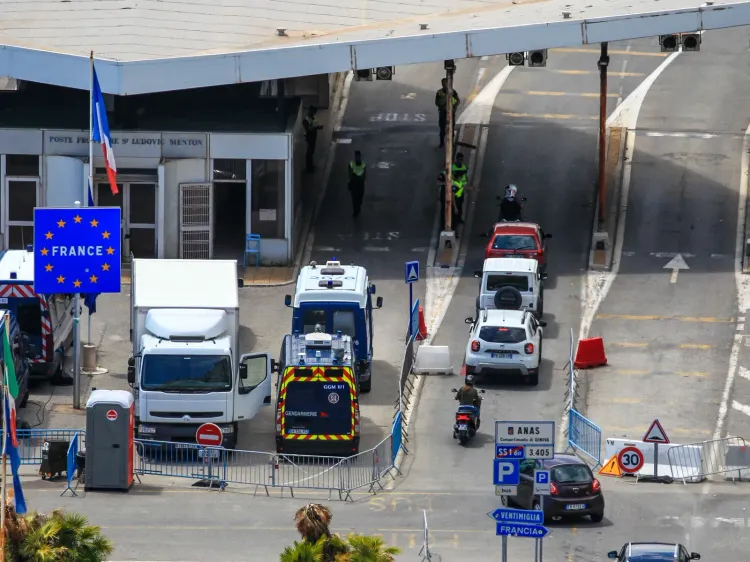
Italy will not reverse its temporary Schengen Agreement suspension for third-country nationals from Spain until at least 15 August 2025 .
The government stated it 'does not accept ultimatums or external pressure' on national security matters.
Controls will be lifted only when Italy is satisfied there are no terrorism risks, no large-scale migration waves, and no irregular migrants transiting via Spain.
Spanish officials have warned of a possible new migrant influx at the enclave of Ceuta around 15 August , a key factor in Rome's calculus.
The restrictions do not apply to EU citizens travelling by air or sea.
Italy cited precedent, noting similar past controls with Slovenia and comparable measures by other European states.
Italy has firmly rejected calls to reverse its temporary suspension of the Schengen Agreement for third-country nationals arriving from Spain, with the measure set to remain in force until at least 15 August 2025. The Italian government stated on Friday, 7 August that national security and border management concerns leave no room for external pressure to dictate policy.
Italy's Position
The government declared that Italy 'does not accept ultimatums or external pressure' on matters of national security. Officials made clear that the temporary controls will stay in place until three conditions are met: confirmation that there are no security or terrorism risks to Italy, no new large-scale migration waves toward Europe, and no irregular migrants heading to Italian territory via Spain.
Crucially, the restrictions do not apply to Spanish or other European Union citizens travelling by air or sea. Italian border authorities have been instructed to minimise disruptions to legitimate cross-border travel.
The Ceuta Warning Factor
Italian authorities have pointed to warnings from Spanish officials about a possible new wave of migrant arrivals at the Spanish enclave of Ceuta around 15 August. Rome indicated that any reassessment of the measure will only follow after related security risks have been conclusively ruled out. The Ceuta corridor has historically been a flashpoint for irregular migration into Europe, lending weight to Italy's stated rationale.
Spain's Objections
Madrid has pushed back sharply, arguing that the Italian measure is disproportionate and inconsistent with the Schengen area's foundational principle of free movement. The dispute marks a rare public friction between two major European Union member states over border policy, at a time when migration management is already a divisive issue across the bloc.
Italy's Precedent and Broader Context
Rome stressed that the move is not directed against Spain, describing it as 'a friendly country.' The government noted that Italy has adopted comparable temporary border controls in the past — including with Slovenia — and that other European nations have similarly imposed controls on both Italy and Spain at various points. This context positions the measure as a routine, if politically charged, instrument of national border governance rather than a bilateral provocation.
Italy said it remains open to constructive dialogue with Madrid once the current security concerns subside, signalling that the standoff, while firm, is not intended to be permanent.
Point of View
Italy has built-in political cover. What mainstream coverage underplays is that this dispute exposes a structural tension at the heart of Schengen — the framework assumes mutual trust in external border management, but that trust has eroded steadily since 2015. If Italy's reassessment on 15 August finds any residual risk, the suspension could extend further, setting a precedent that other right-leaning European governments may be watching closely.
NationPress
22 Sept 2026
Frequently Asked Questions
Why has Italy suspended Schengen rules for travellers from Spain?
Italy temporarily suspended the Schengen Agreement for third-country nationals arriving from Spain over concerns about irregular migration and potential terrorism risks linked to migration flows through Spain. The measure was announced citing national security and border management grounds.
Until when will Italy's Schengen suspension on Spain remain in effect?
The temporary controls will remain in place until at least 15 August 2025. Italy has said the measure will only be reassessed after security and terrorism risks — including a potential new migrant wave at Ceuta — have been ruled out.
Does Italy's Schengen suspension affect EU citizens or Spanish nationals?
No. The restrictions apply only to third-country nationals — those who are not citizens of European Union member states. Spanish citizens and other EU nationals travelling by air or sea are not affected by the measure.
How has Spain responded to Italy's border controls?
Madrid has objected, arguing that the Italian measure is disproportionate and inconsistent with the Schengen area's principle of free movement. The dispute represents a rare public rift between two major EU member states over migration policy.
Has Italy imposed similar border controls before?
Yes. Italy has adopted comparable temporary border measures in the past, including with Slovenia. The government also noted that other European countries have previously imposed similar controls on both Italy and Spain, framing the current measure as consistent with established European practice.