Spain warns Italy of 'proportional measures' over Schengen border controls

Synopsis
Spain has given Italy a Sunday deadline to lift Schengen border controls or face unspecified 'proportional measures' — a rare public ultimatum between EU allies. The row, triggered by a mass migrant entry into Ceuta, coincides with Spain dismantling one of the Mediterranean's largest trafficking networks, arresting 78 people and seizing boats worth over five million Euros.
Key Takeaways
Spain has warned Italy of 'proportional measures' unless border controls on Spanish travellers are lifted by Sunday, 9 August .
Italy suspended the Schengen Agreement with Spain following a mass migrant entry into Ceuta last week.
Spanish Prime Minister Pedro Sanchez chaired an emergency video conference and demanded Italy 'rectify' its position.
Spanish police arrested 78 people and seized 18 high-speed boats worth over five million Euros in a major trafficking bust.
The dismantled network is linked to at least 64 trafficking operations , moving over 2,000 migrants and earning over 24 million Euros .
The operation was conducted with Europol and police from France , Portugal , and Poland .
Spain has issued a formal warning to Italy, threatening to adopt 'proportional measures' unless Rome withdraws border controls imposed on travellers from the Iberian country by Sunday, 9 August. The standoff marks one of the sharpest bilateral tensions within the European Union's Schengen zone in recent memory.
How the Dispute Began
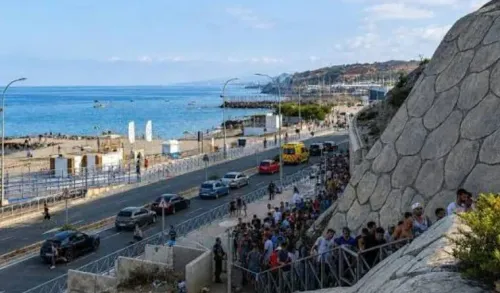
Italy suspended the Schengen Agreement with Spain — effectively restoring passport and identity checks for third-country travellers — following the mass entry of migrants into the Spanish enclave of Ceuta last week. Rome's move was framed as a security response, but Madrid has rejected that justification outright.
A video conference chaired by Spanish Prime Minister Pedro Sanchez, attended by several ministers, concluded with a formal demand that Italy 'rectify' its position and lift controls on the movement of travellers arriving from Spain. The Spanish government reiterated that it views the measure as 'unjust, contrary to EU interests and discriminatory for the Spanish population.'
Spain's Ultimatum to Rome
A note issued by the Madrid government and cited by Spanish media stated: 'For this reason, we urge the Italian Government to rectify, to end the controls and to treat Spaniards like the rest of European citizens. If it does not do so before Sunday, August 9, Spain will be obliged to adopt proportional measures to protect the interests and dignity of its citizens.'
The nature of these 'proportional measures' was not specified, leaving Rome — and EU observers — to interpret the scope of Madrid's intended response. Notably, this is the first time Spain has publicly threatened reciprocal action against a fellow EU member over Schengen compliance in this migration cycle.
Major Trafficking Network Dismantled
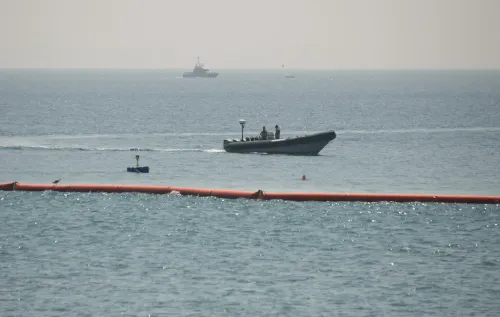
Separately, Spanish police announced the dismantling of what they described as one of the largest criminal networks involved in migrant trafficking across the Mediterranean. The operation resulted in the arrest of 78 people, including four alleged leaders, and the seizure of 18 high-speed boats valued at over five million Euros.
According to authorities, the network used the boats to transport synthetic drugs — including ecstasy — from Spain to Algeria, and on the return journey, smuggled migrants to the Spanish Mediterranean coast and the island of Ibiza. Investigators believe the group is responsible for at least 64 trafficking operations, during which more than 2,000 people were transported, generating over 24 million Euros in criminal proceeds.
Police described the crossings as 'extremely dangerous,' with migrants travelling 'crammed, at high speed, in rough seas.' In some cases, passengers were reportedly tied up to prevent them from falling overboard. The network charged up to 12,000 Euros per person, with some crossings carrying up to 50 migrants at a time. The operation was conducted in collaboration with Europol and the police forces of France, Portugal, and Poland.
Wider EU Implications
The Spain-Italy standoff arrives at a moment of heightened political sensitivity around migration within the EU. Critics argue that unilateral Schengen suspensions — even when framed as temporary security measures — risk normalising the erosion of one of the bloc's foundational freedoms. This comes amid broader debates in Brussels over reforming the EU's migration and asylum framework. With the 9 August deadline now in focus, the next 48 hours could determine whether the dispute escalates into a formal EU-level complaint or is resolved through diplomatic channels.
Point of View
The agreement's integrity is effectively optional. Spain's threat of 'proportional measures' is deliberately vague — almost certainly by design, to preserve diplomatic room — but the public ultimatum itself signals that Madrid calculates political cost in staying silent outweighs the risk of escalation. What mainstream coverage underplays is the timing: Spain simultaneously announcing the bust of a 24-million-Euro trafficking network suggests Madrid is also managing its own domestic optics, demonstrating enforcement credibility while pushing back against Rome. The EU's silence so far is the real story — Brussels has yet to publicly back either side, which tells you something about how fractured the bloc's migration consensus actually is.
NationPress
22 Sept 2026
Frequently Asked Questions
Why has Italy imposed border controls on Spain?
Italy suspended the Schengen Agreement with Spain after a mass entry of migrants into the Spanish enclave of Ceuta last week, restoring identity checks for third-country travellers arriving from Spain. Rome framed the move as a security measure in response to the migration surge.
What has Spain threatened to do if Italy does not lift the controls?
Spain has warned it will adopt 'proportional measures' to protect the interests and dignity of its citizens if Italy does not end the border controls before Sunday, 9 August. The specific nature of these measures has not been publicly detailed.
What was the outcome of the Spanish migrant trafficking bust?
Spanish police, working with Europol and forces from France, Portugal, and Poland, arrested 78 people and seized 18 high-speed boats worth over five million Euros. The network is accused of conducting at least 64 trafficking operations involving more than 2,000 migrants and earning over 24 million Euros.
How does this dispute affect the Schengen Agreement?
Italy's suspension of Schengen rules with Spain effectively restores border checks between two EU member states, which critics argue is contrary to EU principles. Spain has called the measure 'unjust, contrary to EU interests and discriminatory for the Spanish population.'
What happens if the Sunday deadline passes without resolution?
If Italy does not lift the controls by 9 August, Spain has said it will be 'obliged' to adopt proportional countermeasures. The dispute could also be escalated to EU-level institutions, though Brussels has not publicly intervened so far.