Ceuta migration crisis: France and Italy tighten Spain border controls
Synopsis
Some 60,000 migrants flooded the Spanish enclave of Ceuta from Morocco in days — and Europe's response has cracked the Schengen consensus open. France has deployed drones and police at the Spanish border; Italy has gone further, suspending free movement with Spain entirely for a month. With 57 dead and tens of thousands still in flux, this is the continent's most acute migration flashpoint since 2021.
Key Takeaways
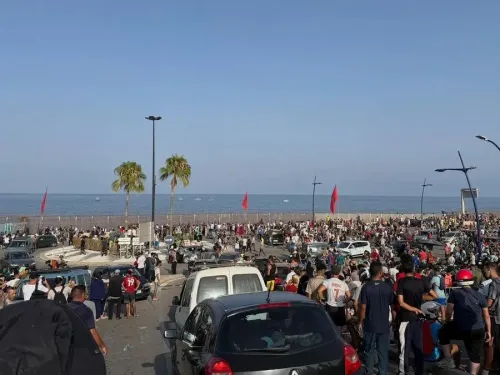
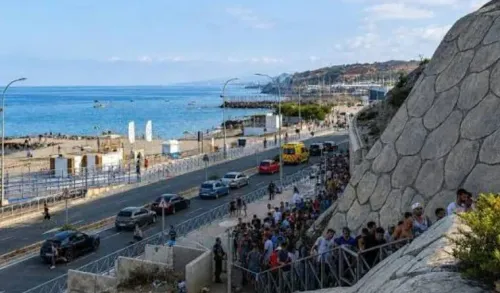
Approximately 60,000 migrants entered Ceuta , a Spanish enclave bordering Morocco, illegally by land and sea in recent days.
At least 57 migrants died attempting to swim to the territory, according to reports citing Spanish daily El País .
Around 48,000 migrants had returned to Morocco by late Friday, the Spanish government confirmed.
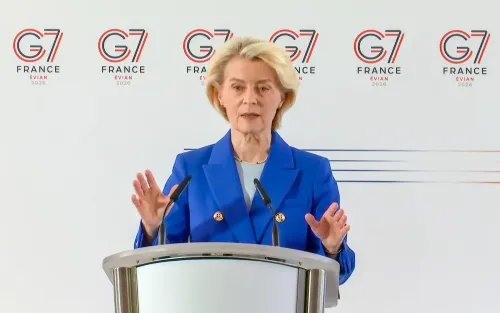
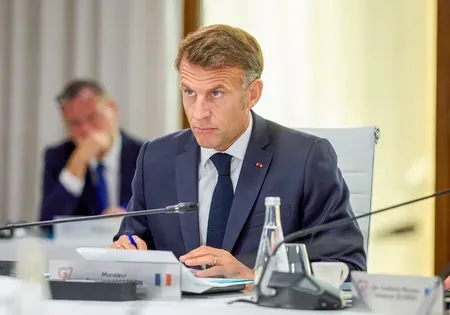
French President Emmanuel Macron deployed four mobile police units, aircraft, and drones to the France-Spain border.
Italian Prime Minister Giorgia Meloni suspended Schengen free movement on maritime and air links with Spain for one month from Saturday.
Italy's border police will conduct targeted checks on third-country nationals arriving from Spain at Italian ports and airports.
France and Italy have moved swiftly to reinforce border controls with Spain following an unprecedented surge of migrants into Ceuta, the Spanish enclave on the northern tip of Morocco, with French President Emmanuel Macron and Italian Prime Minister Giorgia Meloni both announcing emergency measures on 1 August. The crisis has exposed fresh fault lines within the Schengen Area, as European governments scramble to contain the fallout from one of the largest single migration events in recent memory.
Scale of the Crisis
According to local authorities in Ceuta, approximately 60,000 migrants entered the enclave illegally over recent days, arriving by land and by sea from Morocco. At least 57 migrants died while attempting to reach the territory by swimming, according to reports citing the Spanish daily El País. By late Friday afternoon, around 48,000 migrants had left Ceuta and returned to Morocco, the Spanish government announced — a significant reversal, though tens of thousands remained.
What Macron Announced
President Macron confirmed France's response in a post on social media platform X. 'Ceuta does not enjoy free movement to the rest of the Schengen Area. However, yesterday I asked the Minister of the Interior to strengthen controls at our border with Spain if necessary: four mobile police units, aircraft, and drones have been deployed,' Macron wrote. The deployment signals Paris's intent to prevent any secondary movement of migrants from Spain into French territory, even as the Schengen framework technically permits free travel within its zone.
Italy Suspends Schengen Links with Spain
Italy went further. Prime Minister Meloni announced on Friday evening that Rome had decided to temporarily suspend the Schengen free-movement regime for maritime and air links with Spain, reintroducing border checks at Italian ports and airports. The suspension is set to last one month from Saturday. 'This is an extraordinary measure adopted to protect national security and prevent possible repercussions for our country. The measure will remain in place only for as long as necessary, with particular attention paid to limiting any impact on summer tourism flows,' Meloni said in her own post on X. Border police will conduct 'targeted' and 'selective' checks, focusing primarily on third-country nationals arriving from Spain who may lack valid Schengen-area travel documents.
Why This Matters for Europe
The Ceuta crisis is not the first of its kind — a comparable surge occurred in May 2021, when roughly 10,000 migrants crossed into the enclave in a single day amid a diplomatic row between Spain and Morocco. The current wave, reportedly several times larger, underscores the fragility of Europe's external border architecture. Notably, Ceuta's unique legal status — it is Spanish territory but excluded from the Schengen free-movement zone — creates a jurisdictional grey area that complicates EU-level responses. Critics argue that unilateral national measures by France and Italy, while politically understandable, risk fragmenting the Schengen framework rather than addressing root causes in North Africa.
What Happens Next
Spain faces immediate pressure to manage both the humanitarian situation in Ceuta and its diplomatic relationship with Morocco, whose border posture has historically been a lever in bilateral negotiations. The European Union is expected to face calls for an emergency response mechanism. Italy's one-month suspension of Schengen links with Spain will be closely watched as a precedent — if extended or replicated by other member states, it could signal a broader re-evaluation of the bloc's open-borders consensus heading into autumn.
Point of View
But from member states increasingly willing to suspend its foundational guarantee whenever domestic pressure spikes. Italy's one-month suspension of maritime and air links with Spain is particularly striking: it sets a precedent that any member state can effectively opt out of free movement during a migration spike, without EU-level authorisation. The deeper problem is structural. Ceuta's ambiguous status — Spanish but non-Schengen — has long been an exploitable gap, and Morocco's border management has historically tracked the temperature of its bilateral relationship with Madrid. Until the EU builds a credible external border mechanism with genuine burden-sharing, each Ceuta-style crisis will produce the same cycle: national panics, temporary suspensions, and no durable fix.
NationPress
15 Sept 2026
Frequently Asked Questions
What happened in Ceuta that triggered the European border response?
Approximately 60,000 migrants entered Ceuta, a Spanish enclave on the northern tip of Morocco, illegally by land and sea over recent days. At least 57 people died attempting to swim to the territory, and around 48,000 had returned to Morocco by late Friday, according to the Spanish government.
What measures did France announce at its border with Spain?
French President Emmanuel Macron announced the deployment of four mobile police units, aircraft, and drones to reinforce controls at the France-Spain border. Macron confirmed the measures in a post on X, noting that Ceuta does not fall within the Schengen free-movement zone.
What did Italy decide regarding Schengen and Spain?
Italian Prime Minister Giorgia Meloni announced that Italy would temporarily suspend the Schengen free-movement regime for maritime and air links with Spain for one month starting Saturday. Border police will conduct targeted checks at Italian ports and airports on third-country nationals arriving from Spain.
Why is Ceuta significant in the context of European migration?
Ceuta is a Spanish territory on the northern coast of Morocco but is excluded from the Schengen Area's free-movement provisions, creating a legal grey zone. It has been a flashpoint before — a comparable surge occurred in May 2021 — making it a recurring pressure point in EU migration governance.
What happens next for Spain and the EU?
Spain faces dual pressure to manage the humanitarian situation in Ceuta and its diplomatic relationship with Morocco. The EU is expected to face calls for an emergency response mechanism, while Italy's one-month Schengen suspension will be watched as a potential precedent for other member states.