Spain imposes border checks on Italy arrivals over Ceuta migration row
Synopsis
Spain and Italy are now trading retaliatory border checks inside the Schengen Area — a bloc built on passport-free travel — after roughly 80,000 migrants flooded the Spanish enclave of Ceuta in late July. With thousands still stranded and both governments digging in, the standoff is a live stress test for EU solidarity on migration.
Key Takeaways
Spain will impose temporary border checks on arrivals from Italy from 9 August to 7 September 2025 .
Measures include random identity and document checks at ports and airports; they do not target EU citizens.
Italy reimposed controls on travellers from Spain on 1 August , citing national security, without prior notification.
The crisis was triggered by an influx of approximately 80,000 migrants into Ceuta in late July; nearly 75,000 returned voluntarily.
Between 3,000 and 5,000 migrants remain in Ceuta, overwhelming reception facilities.
Italian PM Giorgia Meloni has said Rome will not yield to 'ultimatums or external pressure' on border management.
Spain has announced the temporary restoration of internal border checks on travellers arriving from Italy, escalating a diplomatic standoff rooted in the recent migration crisis at Ceuta, the Spanish North African enclave. The checks at ports and airports take effect from Saturday, 9 August and will remain in force until 7 September, unless circumstances change, according to a statement issued by the Spanish government on Friday.
What the Measures Entail
The controls will consist of random identity and document checks at entry points — not blanket screening of all arrivals. The Spanish government described Italy's earlier move as 'unjustified, discriminatory and contrary to the interests of the European Union (EU)', and has called on Rome to withdraw the measures immediately.
How the Standoff Began
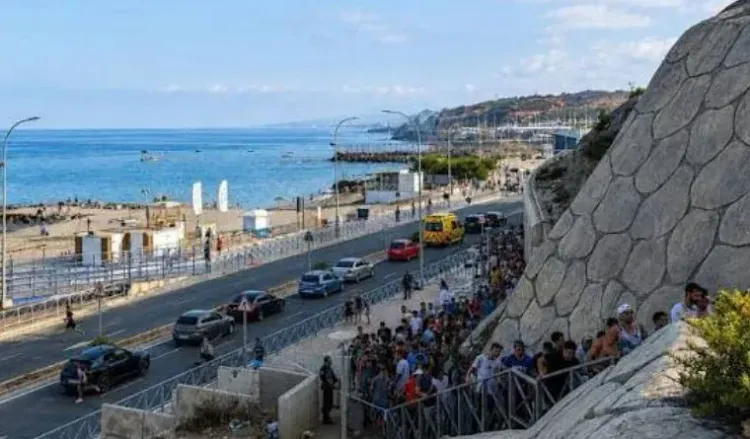
Italian Prime Minister Giorgia Meloni announced border control measures on 31 July following a massive influx of migrants into Ceuta. According to reports, approximately 80,000 people entered the enclave at the end of July, of whom nearly 75,000 subsequently returned voluntarily. Between 3,000 and 5,000 migrants remain in the enclave, overwhelming reception facilities and triggering what Ceuta President Juan Jesus Vivas described on Thursday as a 'severe humanitarian emergency.'
Italy's Position
The Italian government said on Friday it would maintain temporary checks on third-country nationals arriving from Spain until at least 15 August, citing national security and border-management concerns. Rome stated it 'does not accept ultimatums or external pressure' on matters of national security. Italian authorities also stressed that the controls do not apply to Spanish or other EU citizens travelling by air or sea, and said border authorities would seek to minimise disruption to legitimate cross-border travel.
Broader EU Implications
The bilateral spat has amplified tensions across EU member states over border controls and the possible onward movement of migrants within the Schengen Area. Notably, the unilateral reimposition of internal border checks — without prior notification, as Spain alleged — runs counter to established Schengen protocols, which require member states to consult one another before reintroducing controls. This is not the first time migration pressure on Spain's North African enclaves has strained EU cohesion; similar flashpoints occurred in 2021 when a surge into Ceuta triggered a diplomatic crisis with Morocco.
What Happens Next
With Spain's retaliatory measures now in place and Italy showing no sign of backing down, the dispute is likely to land on the agenda of EU institutions. The European Commission has not yet issued a formal response. Both countries face domestic political pressures — migration remains one of the most electorally charged issues across Southern Europe — making a swift bilateral resolution uncertain.
Point of View
Not a first response — yet member states are now deploying them reflexively and without coordination, precisely the scenario the framework was built to prevent. What is missing is a binding EU mechanism that distributes migration pressure equitably; without it, Southern European states will keep externalising their domestic political costs onto neighbours. The Ceuta flashpoint, like the 2021 surge before it, will pass — but the structural vacuum that makes these crises inevitable will not.
NationPress
22 Sept 2026
Frequently Asked Questions
Why is Spain imposing border checks on travellers from Italy?
Spain is imposing temporary border checks on arrivals from Italy in retaliation for Italy's decision on 1 August to reimpose controls on travellers arriving from Spain, a move Madrid described as unjustified and contrary to EU rules. The underlying trigger is the migration crisis in Ceuta, where around 80,000 migrants arrived in late July.
How long will Spain's border checks on Italy last?
The checks take effect on Saturday, 9 August, and are scheduled to remain in force until 7 September 2025, unless circumstances change before then.
What happened in Ceuta that started this dispute?
Approximately 80,000 migrants entered the Spanish North African enclave of Ceuta at the end of July 2025. Nearly 75,000 returned voluntarily, but between 3,000 and 5,000 remain, overwhelming reception facilities and prompting Italian PM Giorgia Meloni to impose border controls on 31 July.
Do the checks affect EU citizens travelling between Spain and Italy?
Italy has clarified that its controls do not apply to Spanish or other EU citizens travelling by air or sea. Spain's retaliatory checks are described as random identity and document checks, not blanket screening of all travellers.
What is the EU's position on these internal border controls?
The European Commission had not issued a formal response as of Friday. Spain has argued that Italy's unilateral reimposition of controls without prior notification violates Schengen protocols, and has called on EU institutions to weigh in. The dispute is expected to escalate to the EU level if neither side backs down.