Ceuta crisis: Spain's FM says Italy failed to meet expectations on migration
Synopsis
At least 50,000 people crossed into Ceuta irregularly in a single weekend — and Spain repatriated the vast majority within 48 hours with Morocco's help. Now Madrid's foreign minister is turning the spotlight on Italy, calling out Rome for failing to show solidarity while itself holding the record for Europe's highest irregular migrant arrivals.
Key Takeaways
Spanish Foreign Minister Jose Manuel Albares said Italy 'did not live up to expectations' in responding to the Ceuta migration crisis .
Albares noted that Italy has the highest number of irregular migrant entries in Europe, while Spain has the lowest.
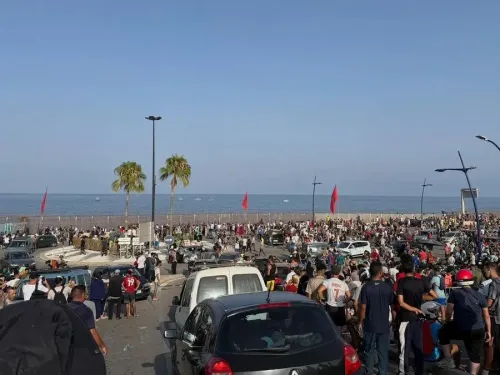
At least 50,000 people from Morocco entered Ceuta irregularly by swimming across the border between last Thursday and Friday .
The vast majority were repatriated within 48 hours with the 'full collaboration' of Morocco .
Albares called for EU solidarity ahead of an Interior Ministers' meeting on Tuesday , stressing Ceuta and Melilla are the EU's only land border with Africa.
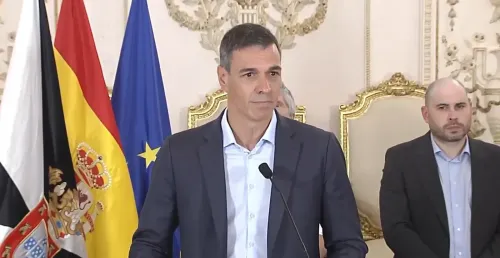
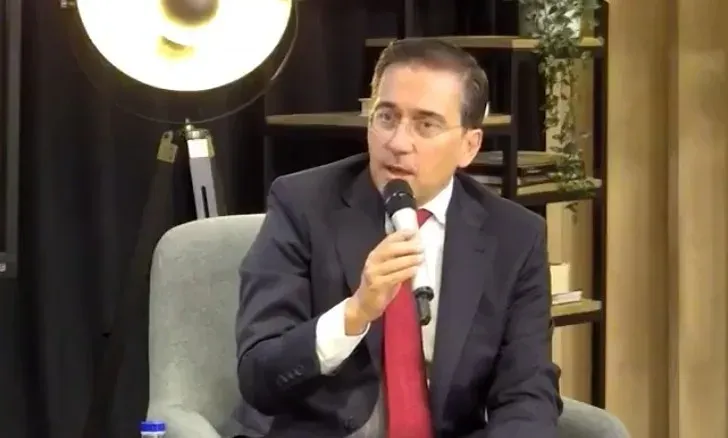
Spanish Foreign Minister Jose Manuel Albares on Monday, 3 August said that Italy had failed to meet expectations in responding to the Ceuta migration crisis, pointedly noting that Italy currently records the highest number of irregular migrant entries in Europe — while Spain registers the lowest. Albares made the remarks in an interview with broadcaster RTVE, as EU interior ministers prepared to convene on Tuesday to address the situation.
Albares Targets Italy and Domestic Opposition
'There have been countries and governments that have not lived up to expectations, as well as politicians and parties, even in Spain,' Albares said. 'The Italian government was one of them. Here in Spain, I hear irresponsible statements from the Popular Party and Vox,' he added.
He drew a direct comparison between the two countries' migration pressures, arguing that Italy — which faces sustained arrivals at Lampedusa — would, in his view, welcome a resolution similar to the one achieved at Ceuta. The remark was widely seen as a rebuke of Italian criticism of Spain's handling of the crisis.
Scale of the Ceuta Crossing and Morocco's Role
According to Albares, the crisis unfolded between last Thursday and Friday, when at least 50,000 people from Morocco arrived irregularly at the autonomous city of Ceuta — by swimming across the border — in what he described as an 'unprecedented event.' He was equally emphatic about what followed: the repatriation of the vast majority of those individuals within 48 hours, achieved with the 'full collaboration' of Morocco.
'The vast majority of those who entered have already returned to Morocco, and we continue to offer our collaboration so that even the last person who entered can return,' Albares said in a separate interview with the programme 'La Hora de la 1'.
Morocco Described as a Reliable Partner
Asked directly whether Morocco was a dependable partner, Albares was unequivocal. 'I stick to the facts. And the facts are that, from the very first moment, Morocco offered its collaboration to try to stop that flow of people and, above all, for them to return immediately,' he said.
He also underscored Morocco's 'collaborative attitude from the outset,' framing the bilateral response as a model for managing the border.
Call for EU Solidarity Ahead of Interior Ministers' Meeting
Albares argued that Ceuta and Melilla — Spain's two autonomous cities on the African continent — occupy a unique position as the only external land border of the European Union (EU) with Africa. He called on all EU member states to recognise this distinction and rally around a solidarity framework, with the Interior Ministers' meeting on Tuesday providing an immediate test of European cohesion.
'Strengthen these mechanisms and remind all EU states that without solidarity, there is no Europe,' he emphasised, urging Brussels to treat the two cities differently from other European border cities. With the EU's migration architecture under renewed strain, how member states respond to Spain's call for burden-sharing will shape the bloc's approach to the Mediterranean frontier in the months ahead.
Point of View
Madrid deflects from the raw optics of 50,000 people crossing in a weekend. The 48-hour repatriation is a genuine operational achievement, but it rests entirely on Morocco's goodwill, which raises a structural question Spain has not answered: what happens when Rabat decides not to cooperate? The EU solidarity call is well-worn rhetoric; the harder test is whether Tuesday's Interior Ministers' meeting produces binding burden-sharing commitments or another communiqué.
NationPress
18 Sept 2026
Frequently Asked Questions
What happened during the Ceuta migration crisis?
At least 50,000 people from Morocco crossed irregularly into the Spanish autonomous city of Ceuta by swimming, in an event that unfolded between last Thursday and Friday. Spanish authorities, with Morocco's cooperation, repatriated the vast majority within 48 hours, according to Foreign Minister Jose Manuel Albares.
Why did Spain's foreign minister criticise Italy over the Ceuta crisis?
Albares said Italy 'did not live up to expectations' in showing solidarity with Spain during the crisis. He noted that Italy records the highest number of irregular migrant entries in Europe, arguing Rome was in no position to criticise Madrid's handling of the situation.
What is the significance of Ceuta and Melilla for the EU?
Ceuta and Melilla are Spain's two autonomous cities on the African continent and constitute the only external land border of the European Union with Africa. Albares argued this unique status warrants special treatment from Brussels and fellow EU member states.
What role did Morocco play in resolving the Ceuta crisis?
Morocco collaborated with Spain from the outset to stem the flow of people and facilitate their return. Albares described Morocco as offering its cooperation 'from the very first moment,' crediting this partnership for enabling the rapid repatriation within 48 hours.
What is Spain asking of the EU ahead of the Interior Ministers' meeting?
Spain is calling on all EU member states to show solidarity and strengthen migration management mechanisms, with Albares warning that 'without solidarity, there is no Europe.' The Interior Ministers are scheduled to meet on Tuesday to discuss the crisis.