Ceuta migrant crisis: 2,500 still stranded after mass border breach
Synopsis
Tens of thousands crossed into Ceuta last week — but 2,500 remain, the reception centre is full, and migrants are sleeping in a cemetery. Spain and Morocco are now locked in a blame war over a Supreme Court ruling, with neither side willing to blink first. The EU's southern border problem just got a new, urgent face.
Key Takeaways
Around 2,500 irregular migrants remain in Ceuta four days after a mass border breach from Morocco .
Migrants include both Moroccans and people from sub-Saharan Africa .
Ceuta's reception centre is overcrowded with no remaining capacity; some migrants are sheltering in the Sidi Embarek Muslim cemetery .
Morocco says it warned Spain around 22-23 July that a Spanish Supreme Court ruling on sea arrivals would trigger a surge.
Spanish government spokeswoman Elma Saiz denied prior warning of the scale of the event.
The crisis has escalated to an EU-level diplomatic and humanitarian emergency.
Around 2,500 irregular migrants remain in Ceuta, the Spanish enclave on Morocco's northern coast, four days after tens of thousands breached the border in what has escalated into a full-blown European Union-level crisis. The migrants are a mix of Moroccans and people from sub-Saharan Africa, according to reports.
Situation on the Ground
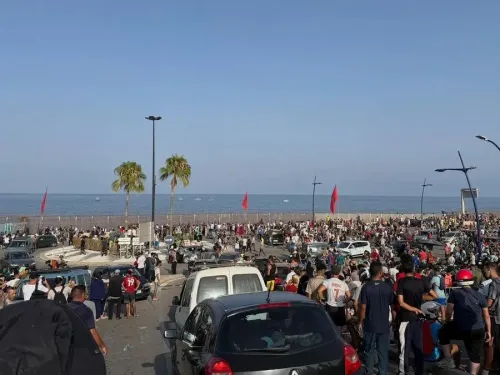
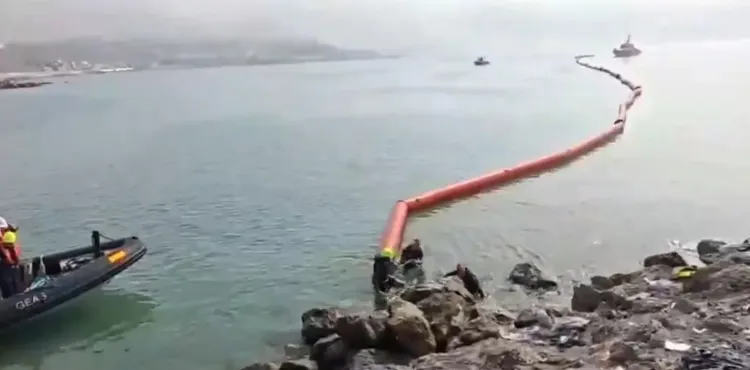
The city centre of Ceuta is showing signs of returning to normalcy, with tourists back on the streets under the watch of the Civil Guard and the army. On Tarajal beach — the primary arrival point during last week's mass crossing from neighbouring Morocco — bathers were reportedly spotted for the first time since the crisis began, according to Spanish newspaper El Pais.
However, conditions just outside the city centre remain dire. Ceuta's reception centre is overcrowded and has no remaining capacity, according to reports. Several migrants have reportedly taken refuge in the Sidi Embarek Muslim cemetery, sleeping on tombstones and using the site to wash themselves. Reporters on the ground note an unusually high level of hostility toward the press — from both migrants and local residents — amid an unprecedented influx of international journalists, including from China and Russia, according to a resident of the Hadu neighbourhood.
Spain-Morocco Diplomatic Standoff
A sharp diplomatic back-and-forth has broken out between Madrid and Rabat over responsibility for the crisis. Moroccan authorities claim they had warned Spain in advance, linking the surge to a ruling by the Spanish Supreme Court that made the rejection of sea-arriving migrants more legally complex.
'We explained that this ruling would create a problem for us. And the problem occurred,' Moroccan officials said, according to reports. Rabat added that contacts with Madrid began around 22-23 July, when migrant communication networks began circulating news of the ruling.
Spanish government spokeswoman Elma Saiz pushed back, stating: 'At no time was there any evidence or report indicating the scale of this unprecedented event.'
Morocco's Position on Shared Responsibility
Rabat has been explicit in rejecting sole responsibility for managing the influx. 'It is reductive to say that Morocco should have simply used force to stop them. It means not understanding anything about this phenomenon. It is not Morocco's exclusive responsibility to manage this phenomenon. Today it is up to Spain to find answers to these challenges posed by this ruling,' Moroccan officials said, according to reports.
The statement signals that Morocco views the crisis as a consequence of European legal frameworks, not a failure of its own border management — a position likely to complicate EU-level negotiations going forward.
What Happens Next
With Ceuta's reception infrastructure overwhelmed and diplomatic positions hardening on both sides, the path to resolution remains unclear. The EU faces mounting pressure to broker a coordinated response, as the enclave's limited resources are stretched beyond capacity. How Spain, Morocco, and Brussels navigate the legal and humanitarian dimensions of this standoff will set a precedent for future border crises along Europe's southern frontier.
Point of View
Which has little incentive to absorb the political cost of border enforcement alone. The Spanish Supreme Court ruling — whatever its domestic legal merit — has become a geopolitical variable, and Rabat knows it. What mainstream coverage underplays is that Morocco's willingness to 'open the tap' on migration has historically tracked its diplomatic tensions with Madrid; this crisis did not emerge in a vacuum. The EU faces a harder question than logistics: how do you build a durable border policy when a neighbouring state can credibly threaten to undo it overnight?
NationPress
19 Sept 2026
Frequently Asked Questions
How many migrants are still in Ceuta after the border breach?
Around 2,500 irregular migrants remain in Ceuta four days after the mass crossing. The city's reception centre is overcrowded with no remaining capacity, and some migrants have sought shelter in the Sidi Embarek Muslim cemetery.
Who are the migrants that entered Ceuta?
The migrants are a mix of Moroccans and people from sub-Saharan Africa, according to reports. Tens of thousands breached the border last week, though the majority have since been returned or dispersed.
Why did Morocco allow the mass crossing into Ceuta?
Morocco has not officially acknowledged allowing the crossing, but Rabat claims it warned Spain that a Spanish Supreme Court ruling — which made rejecting sea-arriving migrants more legally complex — would trigger a surge. Moroccan officials say contacts with Madrid began around 22-23 July.
What is Spain's response to Morocco's claims?
Spanish government spokeswoman Elma Saiz denied that Spain had received any prior warning about the scale of the crossing, stating that 'at no time was there any evidence or report indicating the scale of this unprecedented event.'
What is the EU's role in the Ceuta migrant crisis?
The crisis has been characterised as an EU-level emergency, with Brussels under pressure to coordinate a response. The diplomatic standoff between Spain and Morocco, rooted in a domestic court ruling, complicates any swift resolution at the European level.