100 deaths in Ceuta mass border crossing, EU raises alert for Aug 15
Synopsis
Ceuta's president told the European Parliament that roughly 100 people died when 80,000 crossed into the Spanish enclave — and EU officials are now warning that a second mass attempt could come as soon as 15 August, with signals pointing to external actors, including Russian channels, having amplified the crisis.
Key Takeaways
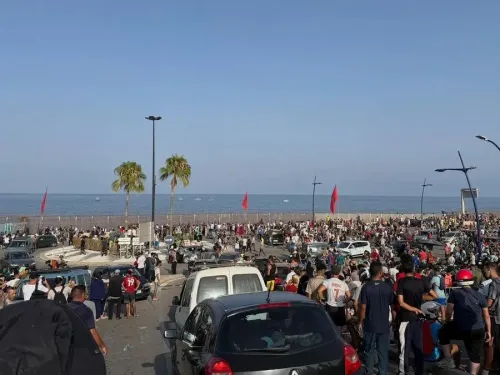
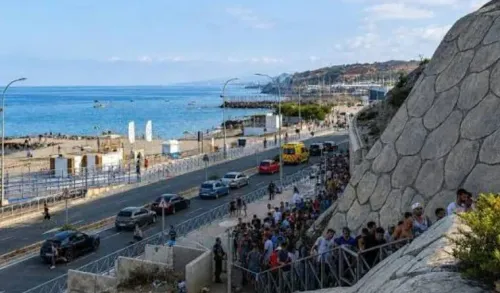
Around 100 people died during a mass border crossing into Ceuta , Spain's North African enclave, last week.
Ceuta President Juan Jesus Vivas told the European Parliament that approximately 80,000 people entered, with nearly 75,000 returning voluntarily.
Between 3,000 and 5,000 migrants remain in Ceuta, overwhelming reception facilities.
The European Commission is preparing additional funds and coordinating with Frontex and the European Asylum Agency .
EU officials have flagged 15 August as a high-risk date for a possible repeat crossing attempt.
Commission spokesman Guillaume Mercier cited 'Russian channels' as among those that helped escalate the situation.
Around 100 people died during a mass border crossing into Spain's North African enclave of Ceuta last week, Ceuta President Juan Jesus Vivas told an extraordinary session of the European Parliament's Committee on Civil Liberties, Justice and Home Affairs on Thursday. The disclosure came as European authorities raised alarm over a possible repeat crossing attempt on 15 August.
Scale of the Crisis
Vivas told the parliamentary committee that approximately 80,000 people entered Ceuta during the crossing, of whom nearly 75,000 subsequently returned voluntarily. Between 3,000 and 5,000 migrants remain in the enclave, leaving reception centres overwhelmed and triggering what he described as a severe humanitarian emergency.
Vivas did not mince words in characterising the event. 'An attack, a violation of territorial integrity. It is not a migratory crisis, but an episode in which the integrity of the city, of Spain, and of Europe has been called into question,' he said, addressing the committee.
EU Response and Emergency Funding
The European Commission confirmed it is moving rapidly to provide additional financial support to Spain. Commission spokesman Guillaume Mercier said the Commission received a first needs assessment from Spain on Wednesday and is examining it to identify the best form of assistance. The support, he indicated, 'could cover a range of elements, starting from equipment and services for border management' and could extend to 'humanitarian and medical assistance.'
Mercier confirmed that a meeting was held between DG Home and the heads of executive agencies — including Frontex and the European Asylum Agency — to coordinate information-sharing and support. He added that a formal request from Spain to the Commission is the next required step before funds are disbursed.
August 15 Warning and External Interference
European Commission officials say attention is 'very high' ahead of 15 August, a date flagged by multiple rumours and intelligence signals as a possible window for another mass crossing attempt at the Morocco-Ceuta border. 'Threats to external borders can happen, as we have seen. We have seen the alerts and are in contact with the Spanish authorities on this,' Mercier said during a press briefing in Brussels.
Notably, Mercier also pointed to the role of external actors in escalating the situation. 'We have seen that through various channels, including Russian ones, the situation we saw on the ground last week has rapidly escalated,' he said — a rare public attribution of information-warfare dimensions to a migration crisis on EU's southern flank.
What Happens Next
Spain is expected to submit a formal request to the Commission to unlock additional EU support. Frontex and Europol remain on heightened alert. With the 15 August date approaching, European authorities are coordinating across multiple fronts to prevent a repeat of last week's crossing, which stands as one of the largest single border events in Ceuta's recent history.
Point of View
A framing that will have serious policy consequences. With 15 August flagged as a second potential flashpoint, the test is whether Frontex and bilateral Spain-Morocco diplomacy can hold — or whether Europe's external border architecture, already strained, faces a structural credibility crisis.
NationPress
21 Sept 2026
Frequently Asked Questions
How many people died in the Ceuta border crossing?
Around 100 people died during the mass border crossing into Ceuta, Spain's North African enclave, according to Ceuta President Juan Jesus Vivas, who disclosed the figure to the European Parliament's Committee on Civil Liberties, Justice and Home Affairs.
How many migrants entered Ceuta during the crossing?
Approximately 80,000 people crossed into Ceuta, of whom nearly 75,000 subsequently returned voluntarily. Between 3,000 and 5,000 migrants remain in the enclave, overwhelming local reception centres.
What is the EU doing in response to the Ceuta crisis?
The European Commission is preparing additional financial and logistical support for Spain, covering border management equipment, services, and potentially humanitarian and medical assistance. It is coordinating with Frontex and the European Asylum Agency, and is awaiting a formal request from Spain to release funds.
Why is 15 August significant in the Ceuta crisis?
European Commission officials have flagged 15 August as a high-risk date based on rumours and intelligence signals pointing to a possible second mass crossing attempt at the Morocco-Ceuta border. Frontex, Europol, and Spanish authorities are on heightened alert.
What did the EU say about Russian involvement in the Ceuta crisis?
Commission spokesman Guillaume Mercier stated that the situation 'rapidly escalated' through 'various channels, including Russian ones,' suggesting external actors may have played a role in amplifying the crisis — a notable public attribution by EU officials.