Ceuta migration crisis resolved, no border crossings to mainland Europe: EU
Synopsis
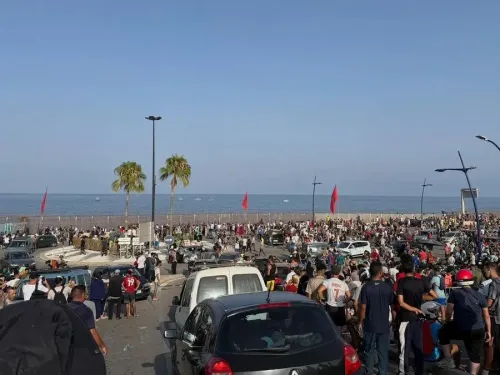
The Ceuta migration crisis is over — at least by Brussels’ account. EU Commissioner Magnus Brunner confirmed on Tuesday that virtually all migrants who entered the Spanish enclave have returned and the Schengen perimeter held. But his pointed warning that Spain’s mass regularisations send ‘not a positive message’ to Europe signals that the political fallout is far from settled.
Key Takeaways
EU Commissioner Magnus Brunner declared the Ceuta migration crisis “resolved” on 4 August at a press conference in Brussels .
Brunner confirmed that no migrants crossed from Ceuta into mainland Spain or continental Europe .
The Schengen Area’s integrity was preserved through close cooperation between Spain , Morocco , and the European Commission .
Brunner said Spain’s mass regularisation of migrants sends “not a positive message” to the rest of Europe , though no formal criticism was raised at the ministerial meeting.
5 or 6 EU Member States are reportedly in talks on setting up repatriation centres in third countries; the Italy-Albania project was cited as a separate arrangement.
Brunner called for parallel focus on conducting asylum procedures outside EU territory under safe third country frameworks.
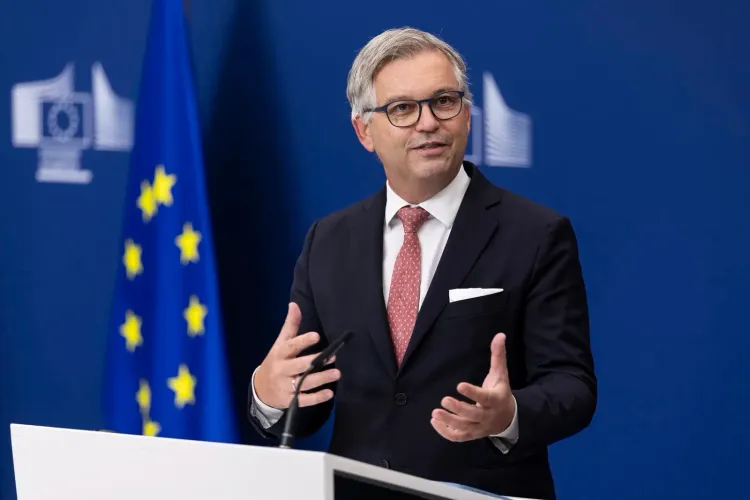
European Commissioner for Home Affairs and Migration Magnus Brunner on Tuesday declared the Ceuta migration crisis officially “resolved,” confirming that virtually all migrants who had entered the Spanish enclave have since returned and that no one crossed from Ceuta into mainland Spain or continental Europe. The announcement came at a press conference in Brussels at the close of an informal videoconference of the Council of Interior Ministers.
What Brunner Confirmed
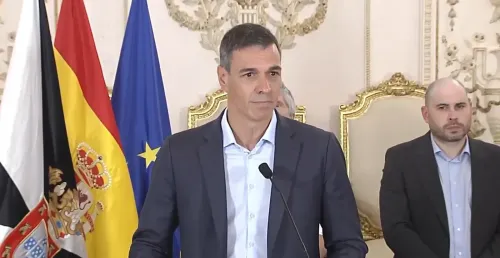
“Spain confirmed today, as previously stated, that practically all those who entered Ceuta have now returned. No one has crossed the border from Ceuta to mainland Spain and continental Europe,” Brunner stated. He credited the outcome to “close and constant cooperation” between Spain, Morocco, and the European Commission, adding: “I also wish to clearly acknowledge and thank Spain and the administration of Ceuta for restoring order and for the close collaboration with Morocco, to ensure a rapid return to normality.”
EU’s Position on Spain’s Migrant Regularisations
Brunner addressed concerns over Spain’s mass regularisation of migrants, saying the Commission does not currently see a “direct link” between those regularisations and the events in Ceuta, and that no formal criticisms were raised at the meeting. However, he did not spare the broader signal such moves send. “Regularisations are not a good signal for the rest of Europe, absolutely not,” he said, acknowledging that regularisation is a national competence and that Spain’s measures primarily concern Latin American migrants who share the country’s language and culture. “But the message for the rest of Europe is not positive. Absolutely not,” he added.
Schengen Integrity and Bilateral Cooperation
Brunner confirmed that the integrity of the Schengen Area has been preserved throughout the crisis. The rapid containment, he said, was a direct result of coordinated action between Spanish authorities, the administration of Ceuta, and Morocco — underscoring how bilateral border management partnerships remain central to EU migration control, even outside formal EU mechanisms.
Repatriation Hubs and Asylum Outside the EU
Looking beyond the immediate crisis, Brunner outlined a broader EU-level debate on migration management tools. He described the creation of repatriation hubs in safe third countries as “legitimate” for member states that wish to pursue them, but stressed that equal focus must be placed on conducting asylum procedures outside EU territory where safe third country frameworks permit. “Both things — repatriation hubs, but also asylum procedures outside the European Union — have been mentioned by some Member States,” he said. He noted that 5 or 6 Member States are currently in discussions with third countries on repatriation centres, while distinguishing the Italy-Albania arrangement as a separate bilateral project. The Schengen area’s resilience in this episode is likely to reinforce calls within the EU for a more unified external border management framework ahead of upcoming migration policy reviews.
Point of View
Even while calling them a national competence, reflects a deeper EU tension: member states retain sovereign tools that collectively undermine the bloc’s migration deterrence posture. The pivot to repatriation hubs and offshore asylum processing signals that the Commission is moving toward a harder-edged framework, but without binding mechanisms, it risks remaining aspirational. The real test will be whether the 5 or 6 member states in repatriation hub talks can produce a workable model before the next crisis, not after it.
NationPress
19 Sept 2026
Frequently Asked Questions
What happened in the Ceuta migration crisis?
A large number of migrants entered Ceuta , the Spanish enclave on the northern coast of Africa, prompting an emergency response by Spanish and Moroccan authorities. EU Commissioner Magnus Brunner confirmed on 4 August that the crisis is now resolved, with virtually all those who had entered having returned and no crossings made to mainland Spain.
Did any migrants cross from Ceuta into mainland Spain?
No. Commissioner Brunner explicitly confirmed that “no one has crossed the border from Ceuta to mainland Spain and continental Europe,” and that the integrity of the Schengen Area was fully preserved throughout the episode.
Why did the EU criticise Spain’s migrant regularisations?
While the Commission found no direct link between Spain’s mass regularisation of migrants and the Ceuta crisis, Commissioner Brunner said such regularisations send “not a positive message” to the rest of Europe. He acknowledged regularisation is a national competence but cautioned it could be seen as a pull factor by other member states.
What are repatriation hubs and why are they being discussed?
Repatriation hubs are centres set up in safe third countries to process and return migrants who do not qualify for asylum in the EU. Commissioner Brunner described them as “legitimate” tools, noting that 5 or 6 EU Member States are in talks with third countries on establishing such centres. He also called for parallel focus on conducting asylum procedures outside EU territory.
How did Spain and Morocco handle the Ceuta crisis?
Commissioner Brunner praised both Spain and Morocco for their rapid and coordinated response, crediting “close and constant cooperation” between the two countries and the European Commission for the swift return to normality in Ceuta.