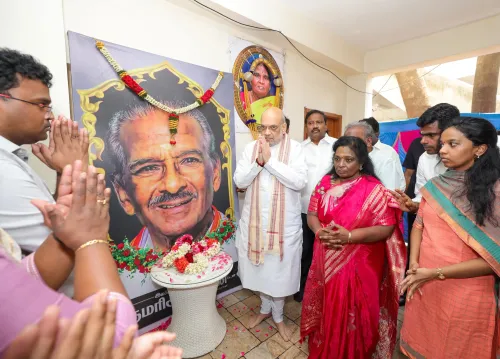
Amit Shah visits Sri Ramanasramam in Tiruvannamalai
Synopsis
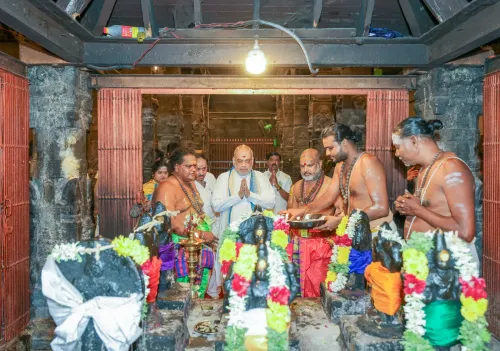
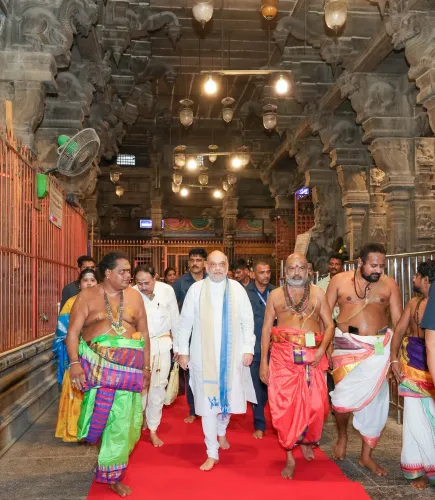
Union Home Minister Amit Shah visited Sri Ramanasramam in Tiruvannamalai, Tamil Nadu on 8 August 2026, honouring the legacy of 20th-century sage Bhagwan Sri Ramana Maharshi and invoking his blessings for universal well-being and prosperity.
Key Takeaways
Union Home Minister Amit Shah visited Sri Ramanasramam in Tiruvannamalai, Tamil Nadu on 8 August 2026 .
Bhagwan Sri Ramana Maharshi (1879–1950) was a 20th-century Indian sage whose core teaching centred on atma vichara (self-inquiry).
Sri Ramanasramam is located at the foot of the sacred Arunachala hill and remains a major global spiritual destination.
Shah called the sage's life and teachings 'a fountain of wisdom that will continue to light humanity's path for eternity.' The visit is part of a recurring pattern of senior BJP leaders publicly acknowledging India's traditional philosophical and spiritual lineages.
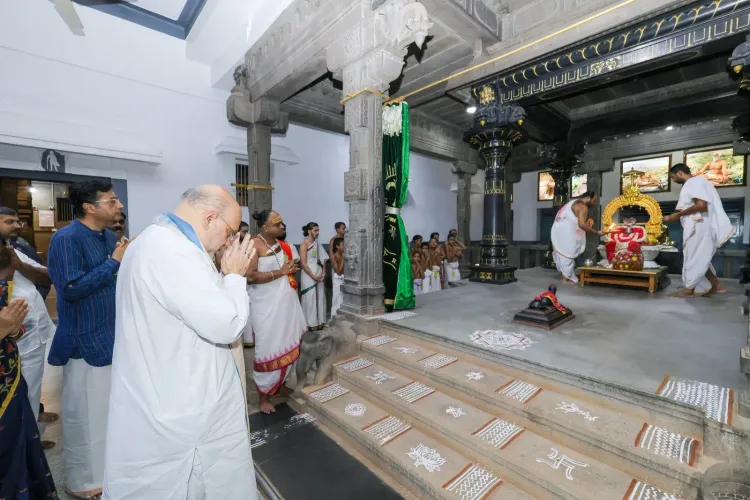
At the foot of the ancient Arunachala hill in Tiruvannamalai, Tamil Nadu, Union Home Minister Amit Shah stepped into the hallowed grounds of Sri Ramanasramam on Saturday, 8 August 2026 — paying homage to one of modern India's most revered spiritual luminaries, Bhagwan Sri Ramana Maharshi.
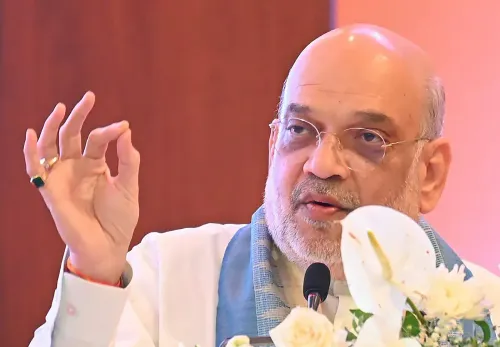
Shah described the life and teachings of the 20th-century sage as 'a fountain of wisdom that will continue to light humanity's path for eternity,' invoking a blessing that the great saint's grace 'fill everyone's life with well-being and prosperity.'
The sage of Arunachala and his enduring legacy
Ramana Maharshi, born in 1879 in Tamil Nadu, anchored his entire philosophical output in a single, radical discipline: atma vichara (self-inquiry). His method — turning the attention inward to ask 'Who am I?' — attracted seekers from across India and the world during his lifetime and continues to draw pilgrims to Sri Ramanasramam decades after his passing in 1950. The ashram, established at the base of Arunachala, a hill considered sacred in Shaivite tradition, remains a living centre of Advaita Vedanta practice and study. Tiruvannamalai itself is among Tamil Nadu's most spiritually significant towns — home to the towering Annamalaiyar Temple and the annual Karthigai Deepam festival, which draws millions. A visit here carries weight beyond the personal; it is a public acknowledgement of a philosophical lineage that has shaped Indian spiritual thought for over a century.BJP leadership and India's spiritual heritage circuit
Union ministers periodically visit prominent ashrams and temples across India, signalling recognition of the country's diverse traditional and philosophical lineages. Such visits to Advaita and other indigenous spiritual centres have become a recurring feature of BJP leadership's public calendar — part of a broader pattern of engaging with the subcontinent's living heritage institutions. Shah's presence at Sri Ramanasramam fits squarely within that frame, lending the ashram renewed national visibility. The ashram community and Ramana Maharshi's global following mark key dates — including his birth anniversary (30 December) and mahasamadhi (14 April) — with large gatherings. Whether Saturday's visit coincides with or precedes any such commemorative event at the ashram was not specified in the minister's post. For a teaching tradition that insists the deepest truth is found in silence, the attention of India's most powerful home minister is, in its own way, a loud endorsement.Point of View
Shaivite, and beyond — as an expression of cultural nationalism rooted in philosophy rather than politics alone. Ramana Maharshi's universal appeal, drawing seekers from across religions and nationalities, gives such a visit a breadth that transcends any narrow constituency. The choice of Tiruvannamalai, a town of deep Tamil religious identity, also carries a subtle outreach dimension in a state where the BJP continues to build its presence. It signals that engagement with Tamil Nadu's sacred geography is a sustained priority, not a one-off gesture.
NationPress
9 Aug 2026
Frequently Asked Questions
Why did Amit Shah visit Sri Ramanasramam?
Union Home Minister Amit Shah visited Sri Ramanasramam in Tiruvannamalai on 8 August 2026 to pay homage to the teachings of sage Bhagwan Sri Ramana Maharshi , describing them as 'a fountain of wisdom' for humanity.
Where is Sri Ramanasramam located?
Sri Ramanasramam is located at the foot of Arunachala hill in Tiruvannamalai , northern Tamil Nadu , and was established as the centre of Ramana Maharshi's teachings during his lifetime.
Who was Bhagwan Sri Ramana Maharshi?
Bhagwan Sri Ramana Maharshi (1879–1950) was a Tamil Nadu-born sage whose central teaching was atma vichara (self-inquiry) — the practice of turning attention inward to realise the Self — within the Advaita Vedanta tradition.
What is the significance of Tiruvannamalai?
Tiruvannamalai is one of Tamil Nadu's most sacred towns, home to the Annamalaiyar Temple , the sacred Arunachala hill , and Sri Ramanasramam . It is also the site of the annual Karthigai Deepam festival, which draws millions of pilgrims.
Do BJP leaders frequently visit spiritual sites in India?
Yes. Senior BJP leaders, including Union ministers, regularly visit prominent ashrams, temples, and spiritual centres across India as part of a broader pattern of publicly recognising the country's traditional philosophical and religious lineages.