Nadda pays tribute to Sardar Patel on National Unity Day
Synopsis
Union Health Minister J. P. Nadda honoured Sardar Vallabhbhai Patel on his birth anniversary and National Unity Day, saluting Patel's integration of 565 princely states and his lifelong commitment to farmer welfare.
Key Takeaways
Nadda posted a Hindi tribute to Sardar Patel on 31 October 2026 , his birth anniversary and National Unity Day.
Patel served as India's first Deputy Prime Minister and Home Minister, integrating 565 princely states into the Union between 1947 and 1950.
Nadda highlighted Patel's belief that 'the axis of the country's development lies in the prosperity of farmers.' Rashtriya Ekta Diwas was formally instituted on 31 October 2014 by the Government of India to commemorate Patel's birth anniversary.
The tribute is part of an annual pattern of official observances that have elevated Patel's legacy prominently in public life since 2014.
On the 151st birth anniversary of Sardar Vallabhbhai Patel, Union Health Minister J. P. Nadda paid his respects to the architect of modern India — honouring the man who stitched together a fractured subcontinent into a single sovereign nation, and calling on every citizen to draw inspiration from that unfinished mission of unity.
The Bhagiratha task of weaving 565 princely states into one India
Nadda's tribute, posted on 31 October 2026, recalled Patel's defining achievement in terms that carry genuine historical weight. Between 1947 and 1950, as India's first Deputy Prime Minister and Home Minister, Sardar Patel negotiated, persuaded, and where necessary pressured 565 princely states to accede to the Union — a feat of statecraft that had no precedent in modern history. Nadda described it as a Bhagiratha karya (a task of Herculean, almost divine scale), invoking the mythological king who brought the Ganges to earth.
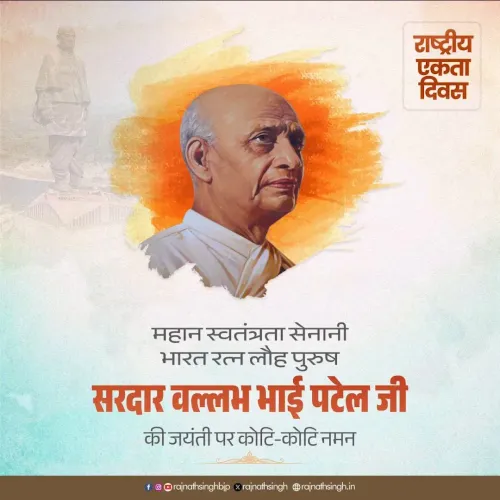
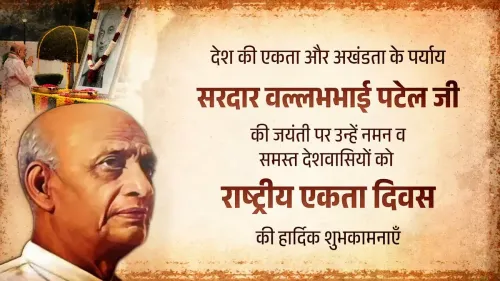
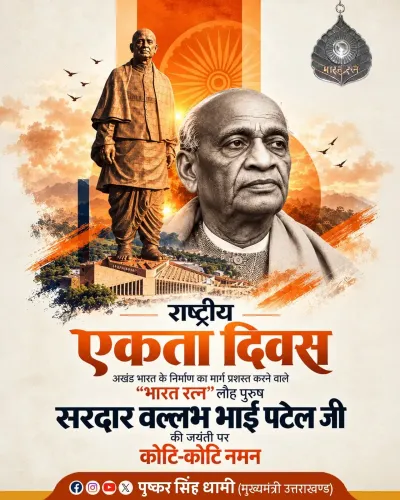
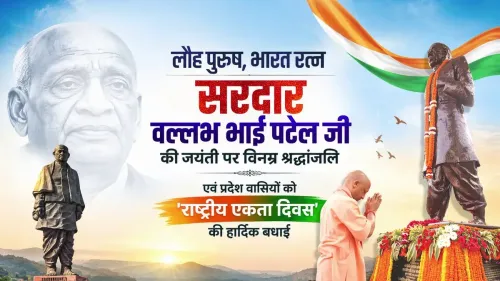
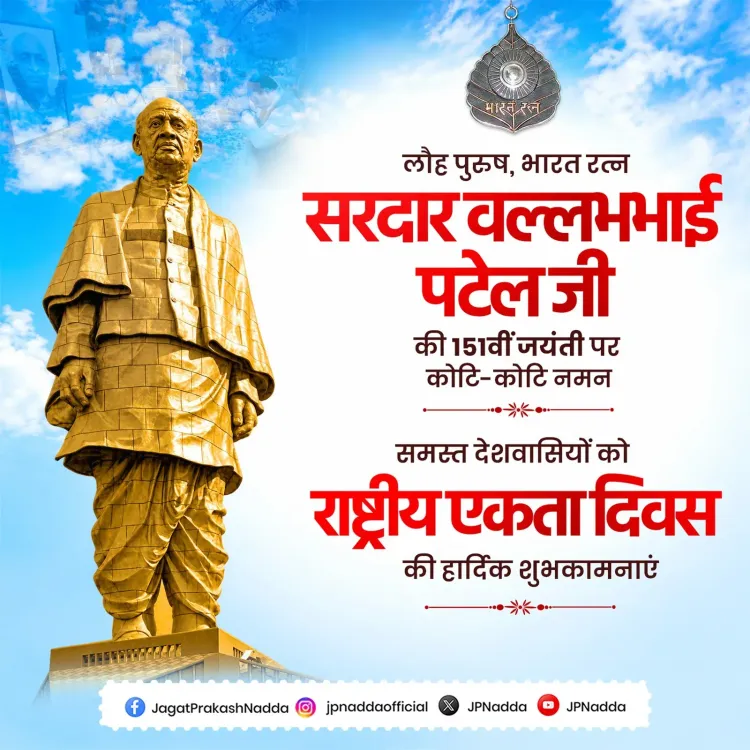
The post — written in Hindi — offered a layered tribute: 'Salutations a crore times to Sardar Patel, the sculptor of modern India, the symbol of national unity and integrity, Bharat Ratna, the Iron Man, on his birth anniversary. Heartfelt wishes to all citizens on Rashtriya Ekta Diwas (National Unity Day).'
Patel's farmer-first philosophy, revived in the tribute
Beyond the headlines of territorial integration, Nadda drew attention to a quieter strand of Patel's legacy — his lifelong commitment to farmers. The post noted that Patel held a firm belief: 'the axis of the country's development lies in the prosperity of farmers.' He remained, Nadda wrote, dedicated throughout his life to their welfare and the protection of their rights.
It is a reminder that Patel came from agrarian Gujarat, trained first as a barrister but shaped by the soil. That detail matters: in contemporary Indian political discourse, farmer welfare is perennially contested ground, and invoking Patel's name on the subject carries its own quiet resonance.
Rashtriya Ekta Diwas at 12 — from formal institution to national ritual
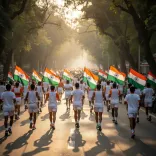
The day itself has a deliberate origin. In 2014, the Government of India formally instituted Rashtriya Ekta Diwas on 31 October to anchor Patel's legacy into the official calendar — a recognition that the anniversary of the Iron Man's birth was the right moment to recommit to the idea of a united India. Twelve years on, it has become a fixture of state and central government observances: unity runs, pledge-taking ceremonies, and ministerial statements like Nadda's stream across the country each year on this date.
The consistent annual tribute also reflects a broader pattern: Patel's image has been actively rehabilitated and elevated in public life since 2014, culminating in the Statue of Unity in Gujarat — at 182 metres, the world's tallest statue — which stands as a permanent monument to the man who held India together at its most fragile hour.
Point of View
Decade-long effort to position Sardar Patel as a pan-national icon — one whose legacy of territorial integration and rural rootedness speaks simultaneously to patriotism and agrarian politics. By foregrounding the farmer-welfare strand of Patel's philosophy, the statement subtly links a historical giant to a policy priority that remains politically charged in contemporary India. The annual Rashtriya Ekta Diwas ritual, now in its twelfth year, has effectively institutionalised this framing. Senior ministers using the occasion to restate unity and agricultural themes is less a departure than a confirmation of a well-established political and cultural calendar.
NationPress
31 Oct 2026
Frequently Asked Questions
Why is 31 October celebrated as National Unity Day in India?
31 October is celebrated as Rashtriya Ekta Diwas (National Unity Day) because it marks the birth anniversary of Sardar Vallabhbhai Patel. The Government of India formally instituted the day in 2014 to honour his role in unifying the nation by integrating 565 princely states after Independence.
What did J. P. Nadda say about Sardar Patel on National Unity Day 2026?
J. P. Nadda paid tribute to Sardar Patel as the 'sculptor of modern India' and the 'Iron Man,' saluting his integration of hundreds of princely states. Nadda also highlighted Patel's conviction that farmers' prosperity is central to national development, describing his unification work as a Herculean, Bhagiratha achievement.
How many princely states did Sardar Patel integrate into India?
Sardar Vallabhbhai Patel, as India's first Home Minister and Deputy Prime Minister, led the integration of 565 princely states into the Union of India between 1947 and 1950 — one of the most complex feats of statecraft in modern history.
What was Sardar Patel's connection to farmers?
Patel championed agrarian causes throughout his political life, holding the view that the 'axis of the country's development lies in the prosperity of farmers.' He remained committed to protecting farmers' rights and welfare, a legacy that national leaders frequently invoke in contemporary policy discussions.
What is the Statue of Unity and why is it linked to Sardar Patel?
The Statue of Unity in Gujarat is a 182-metre monument — the world's tallest statue — built to honour Sardar Vallabhbhai Patel. It was inaugurated as a permanent symbol of his role in uniting India and is a focal point for National Unity Day observances.