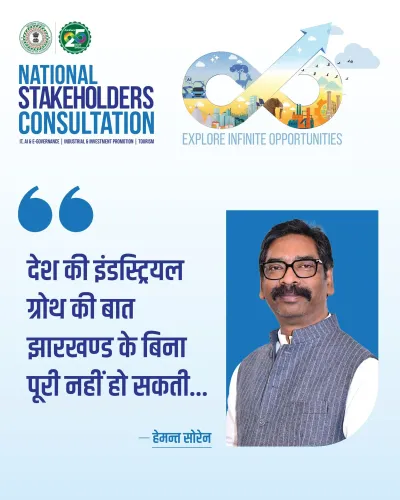
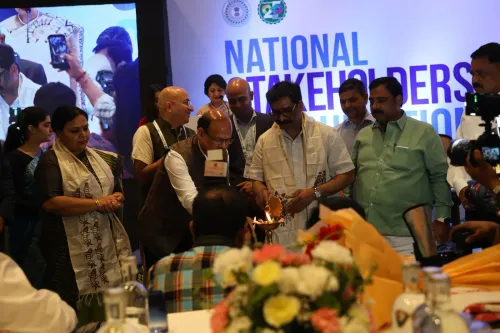
CM Hemant Soren Chairs Vision 2050 Consultation in Delhi
Synopsis
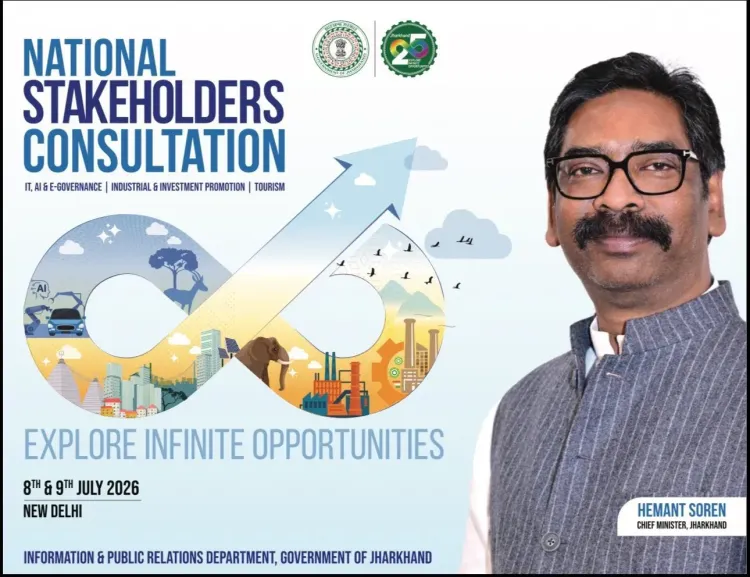
Jharkhand's Chief Minister's Office announced a National Stakeholders Consultation in New Delhi on 8 July 2026, chaired by CM Hemant Soren, to build a new roadmap for IT, AI, tourism and industrial investment under the state's long-term Vision 2050 framework.
Key Takeaways
The Chief Minister's Office of Jharkhand announced a National Stakeholders Consultation in New Delhi on 8 July 2026 .
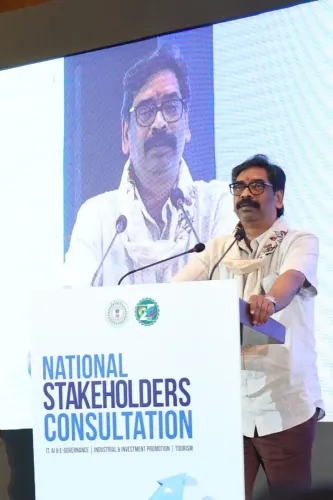
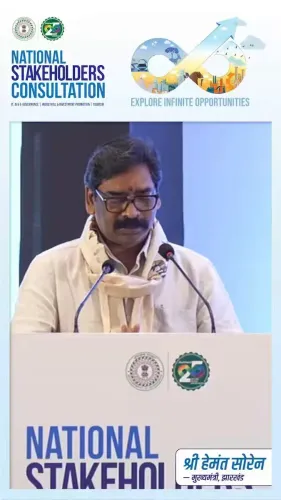
Chief Minister Hemant Soren presided over the deliberations, signalling direct executive commitment to the agenda.
The consultation focuses on four sectors: IT, artificial intelligence, tourism and industrial investment .
The meeting is framed as a key driver of Vision 2050 , Jharkhand's long-term economic transformation blueprint.
The New Delhi venue reflects the state's strategy of engaging central stakeholders and national investors simultaneously.
Key outcomes to watch include a formal Vision 2050 document, sector-specific policies and potential MoUs with industry players.
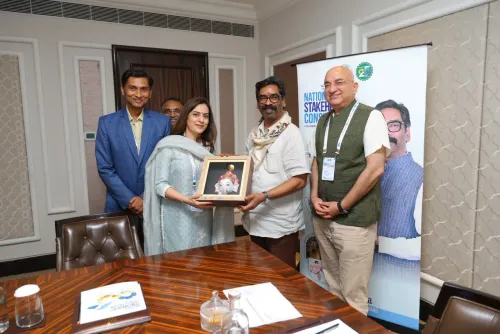
The Chief Minister's Office of Jharkhand announced on Wednesday, 8 July 2026 that a National Stakeholders Consultation was set to begin in New Delhi, convened to accelerate the state's long-term development blueprint, Vision 2050, with a focus on IT, artificial intelligence, tourism and industrial investment.
The official post stated — 'Jharkhand ke badalte swaroop aur Vision 2050 ko gati dene ke liye' ('To give momentum to Jharkhand's changing face and Vision 2050') — that the consultation would take place in the presence of Chief Minister Hemant Soren, with deliberations centred on a 'new roadmap' across the four priority sectors.
Context
The National Stakeholders Consultation represents a structured effort by the Jharkhand government to bring together voices from industry, technology and tourism under one forum in the national capital. Holding such a meeting in New Delhi signals an intent to engage central government stakeholders, policy institutions and private investors simultaneously. The choice of venue underscores the state's bid for visibility and capital at the national level.Policy Backdrop
Vision 2050 is Jharkhand's state-level long-term development framework aimed at reshaping the economy and governance of the mineral-rich eastern Indian state by the middle of the century. Earlier industrial and investment policies had already sought to broaden the state's economic base beyond its historically dominant mining sector. The current consultation fits within a wider national pattern: Indian states have increasingly aligned sub-national visions with the Viksit Bharat 2047 framework, prioritising AI, digital infrastructure and services-led growth alongside conventional sectors. Resource-rich states such as Jharkhand are using multi-stakeholder consultations in national capitals to attract fresh capital and policy support for economic diversification — a dynamic that analysts describe as competitive federalism in action.Stakeholders and Impact
The four sectors on the agenda — IT, AI, tourism and industrial investment — represent a deliberate pivot away from extractive industries toward knowledge- and services-based growth. IT firms, tourism operators and industrial investors are the primary constituencies whose participation is expected to shape the roadmap emerging from this consultation. For a state whose economic identity has long been tied to coal, iron ore and other minerals, a credible technology and tourism strategy could unlock new employment avenues and diversify revenue streams. The presence of Chief Minister Hemant Soren at the consultation lends political weight and signals that the Vision 2050 agenda carries direct executive backing.What's Next
The immediate outcome to watch is the release of a formal Vision 2050 document or sector-specific investment policies following the consultation. Subsequent state budget allocations, memoranda of understanding with technology companies or tourism players, and any follow-up investor summits would indicate how effectively the roadmap translates into binding commitments. As Indian states compete intensely for private capital and skilled talent, Jharkhand's ability to convert this consultation into concrete policy announcements will be a key test of the initiative's ambition.Point of View
Where states increasingly court national and global capital from the political centre. By anchoring the event around Vision 2050 and four high-growth sectors, the Soren government is attempting to reframe Jharkhand's identity from a mineral-extraction economy to a diversified investment destination. The alignment with the broader Viksit Bharat 2047 narrative also positions the state to claim a share of centrally-facilitated investment flows. The real measure of success, however, will be whether the consultation produces binding policy instruments rather than aspirational roadmaps.
NationPress
6 Oct 2026
Frequently Asked Questions
What is Jharkhand's Vision 2050?
Vision 2050 is Jharkhand's state-level long-term development framework designed to reshape the state's economy and governance by the middle of the century, with a focus on diversifying beyond mining into sectors such as IT, AI and tourism.
What is the National Stakeholders Consultation held in New Delhi about?
The National Stakeholders Consultation , announced by the Jharkhand CMO on 8 July 2026 , is a structured forum in New Delhi where stakeholders from IT, artificial intelligence, tourism and industrial investment are deliberating a new roadmap to advance Vision 2050 .
Who is chairing the Jharkhand stakeholders meeting in Delhi?
Chief Minister Hemant Soren of Jharkhand is presiding over the National Stakeholders Consultation in New Delhi.
Why is Jharkhand holding an investment consultation in New Delhi instead of Ranchi?
Holding the consultation in New Delhi allows the Jharkhand government to simultaneously engage central government stakeholders, national policy institutions and private investors, maximising visibility and potential capital commitments for the state.
What sectors does Jharkhand's Vision 2050 focus on?
The Vision 2050 roadmap being deliberated at the July 2026 consultation covers four priority sectors: information technology, artificial intelligence, tourism and industrial investment , reflecting a strategic shift away from the state's traditional mining-led economy.