CM Samrat Choudhary pays tribute to C.V. Raman on death anniversary
Synopsis
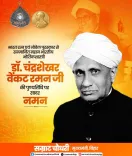
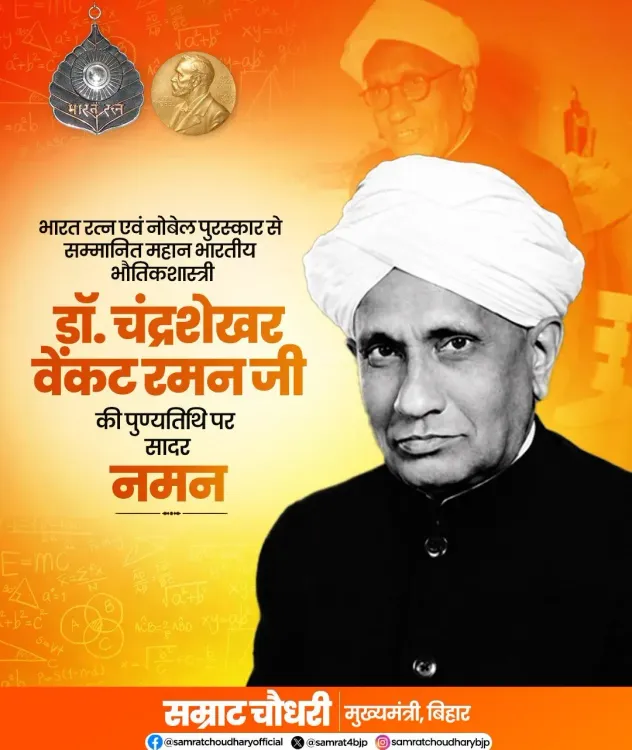
Bihar Chief Minister Samrat Choudhary paid homage to Nobel laureate Dr. C.V. Raman on his death anniversary, calling his scientific contributions an enduring inspiration for future generations of Indians.
Key Takeaways
Bihar CM Samrat Choudhary posted a tribute to Dr.
Raman on his death anniversary, 21 November 2026 .
Raman won the Nobel Prize in Physics in 1930 for the discovery of the Raman Effect.
He was awarded the Bharat Ratna in 1954 , India's highest civilian honour.
The Raman Effect was discovered on 28 February 1928 , now observed as National Science Day in India.
Raman on his death anniversary are a recurring feature of Indian public life across political and scientific communities.
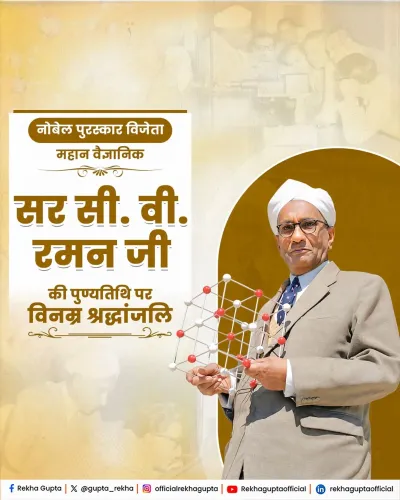
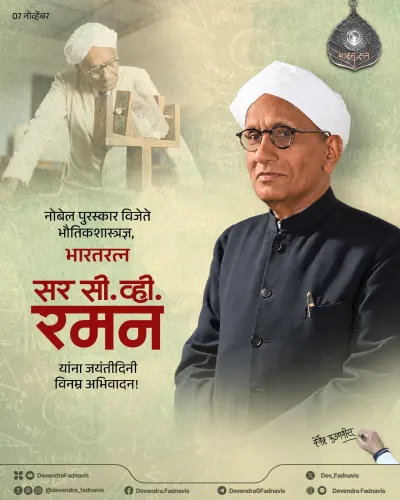
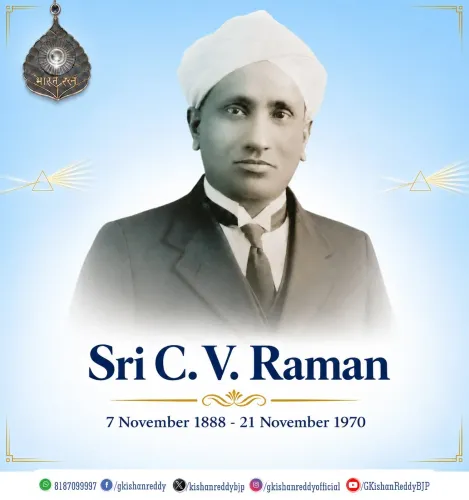
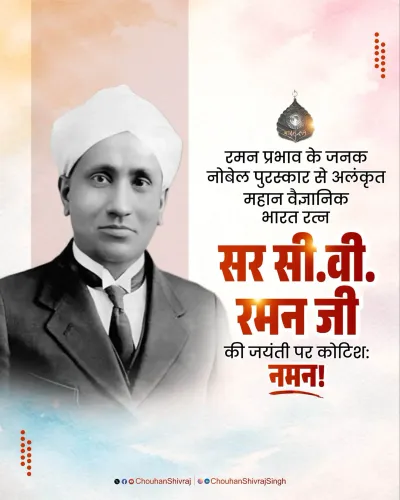
On the death anniversary of one of India's greatest scientific minds, Bihar Chief Minister Samrat Choudhary paused to honour the legacy of Dr. Chandrashekhara Venkata Raman — the physicist whose curiosity about scattered light changed science forever.
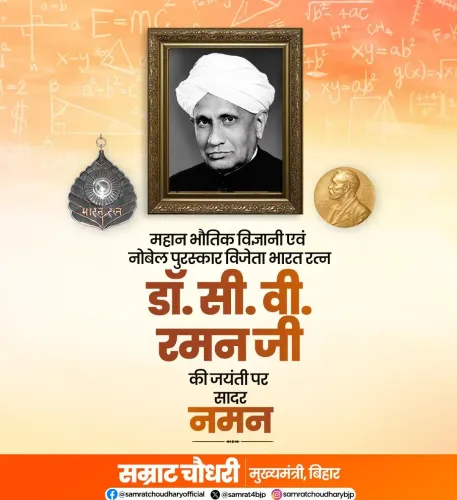
Posting on Saturday, 21 November 2026, CM Choudhary wrote in Hindi: 'Bharat Ratna evam Nobel Puraskar se sammanit mahan vaigyanik Dr. Chandrashekhara Venkata Raman ji ki punyatithi par unhe sadar naman' — 'Respectful salutations to the great scientist Dr. C.V. Raman, honoured with the Bharat Ratna and the Nobel Prize, on his death anniversary.' He added that Raman's unparalleled contribution to science and his achievements 'will continue to inspire generations to come.'
Who was C.V. Raman?
Dr. C.V. Raman remains the towering figure of Indian experimental physics. In 1930, he became the first Asian scientist to win the Nobel Prize in Physics, recognised for his discovery of what the world now calls the Raman Effect — the phenomenon by which light changes wavelength when it passes through a transparent material, scattering in ways that reveal a substance's molecular fingerprint. The discovery, made on 28 February 1928, is now commemorated annually as National Science Day in India. In 1954, the Government of India conferred upon him the Bharat Ratna, the nation's highest civilian honour.
His death anniversary on 21 November prompts annual tributes across India's political and scientific communities — a moment to reconnect public discourse with the country's deep roots in original scientific inquiry.
India's scientific community and political leadership consistently invoke Raman's name as proof that world-class discovery is woven into the nation's DNA — an argument that carries particular weight at a time when India is investing heavily in research infrastructure and science education. A ceremonial tribute is a small gesture. But the name it invokes carries enormous weight.
Point of View
Invoking Raman aligns with a broader cultural emphasis on India's pre-eminent place in global knowledge systems. CM Choudhary's post, though ceremonial, participates in that larger pattern of science-heritage messaging. With India scaling up research investment, keeping these figures visible in public discourse carries quiet policy resonance.
NationPress
21 Nov 2026
Frequently Asked Questions
When did C.V. Raman die?
Dr. C.V. Raman passed away on 21 November 1970 , and his death anniversary is marked each year with tributes from India's scientific and political communities.
What is C.V. Raman famous for?
C.V. Raman is famous for discovering the Raman Effect in 1928 — the scattering of light that reveals a material's molecular structure — a breakthrough that earned him the Nobel Prize in Physics in 1930 .
What awards did C.V. Raman receive?
Dr. C.V. Raman received the Nobel Prize in Physics in 1930 and the Bharat Ratna in 1954 , India's highest civilian honour.
Why is 28 February celebrated as National Science Day in India?
28 February is celebrated as National Science Day in India to commemorate the discovery of the Raman Effect by Dr. C.V. Raman on that date in 1928 .
Who is Samrat Choudhary?
Samrat Choudhary is the Chief Minister of Bihar and a senior leader of the Bharatiya Janata Party (BJP) .