Thailand scraps tariffs on US goods in Trump trade deal, eyes $2.6bn farm buys
Synopsis
Trump returned from a four-day Asia trip declaring Thailand had agreed to scrap all tariffs on American goods and buy $2.6 billion in US farm products a year — a preliminary figure he immediately said he would push higher. With a Philippines framework and $17 billion in commercial deals also on the board, the visit marks Washington's most aggressive trade push into Southeast Asia in years.
Key Takeaways
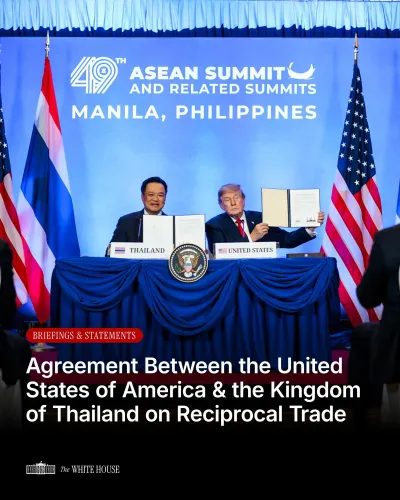
Thailand signed an agreement to eliminate all tariffs on US goods and remove non-tariff barriers, as announced by President Donald Trump on 21 November 2026 .
Thailand indicated it would purchase $2.6 billion in US farm goods annually — a figure Trump described as preliminary and said he would seek to increase.
A separate trade framework was announced with the Philippines , which Trump pressed to source all agricultural imports from American farmers from 1 January .
Total commercial deals from Trump's Asia trip were valued at more than $17 billion , including a Philippine Airlines order for 20 Boeing 787 Dreamliners .
No timeline was given for when Thai tariff cuts would formally take effect.
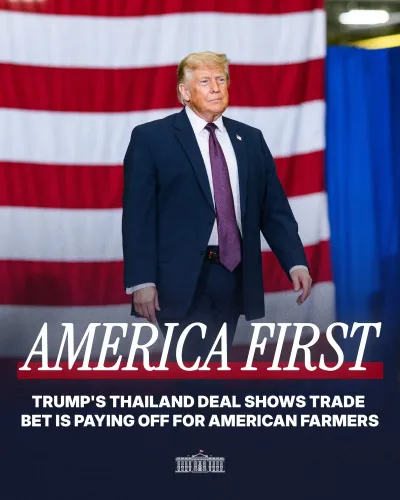
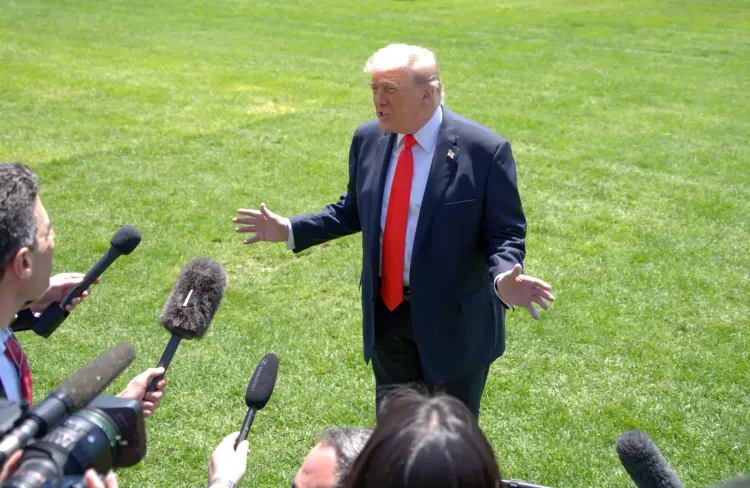
US President Donald Trump announced on 21 November 2026 that Thailand had signed an agreement to eliminate tariffs on all American products and indicated it would purchase $2.6 billion in US farm goods annually. The announcement came at a White House news conference following Trump's four-day Asia visit, and forms part of a broader set of trade arrangements secured during the trip.
Key Terms of the Thailand Agreement
Trump confirmed Thailand had signed a deal to remove all tariffs on American goods and had also eliminated non-tariff barriers, though he did not specify which barriers were lifted or when the tariff cuts would formally take effect. On the farm goods commitment, Trump described the $2.6 billion figure as preliminary. 'That's just a preliminary number. We're going to ask for more than that, $2.6 billion,' he said, naming no specific commodities or providing a purchase breakdown.
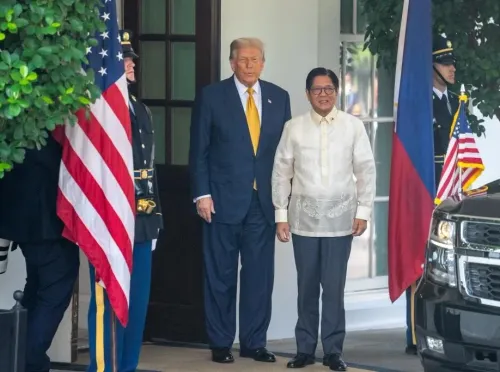
The Thai deal was one of two trade arrangements Trump outlined from the Asia trip. The other was a framework agreement with the Philippines, which Trump said he would press to source all its agricultural imports exclusively from American farmers starting 1 January. He noted the Philippines had previously been buying heavily from Brazil, and argued that, given its strategic reliance on Washington in any confrontation with China, Manila should pivot its agricultural sourcing accordingly.
Broader Commercial Deals from the Asia Trip
Trump placed the total value of commercial deals secured during his Southeast Asia meetings at more than $17 billion. Among the headline announcements was a Philippine Airlines order for 20 Boeing 787 Dreamliners fitted with General Electric engines. Trump also said both the Philippines and Malaysia had agreed to adopt US technology and services for their cloud infrastructure.
Secretary of State Marco Rubio, who appeared alongside Trump at the news conference, underlined the strategic rationale for US engagement with the Association of Southeast Asian Nations (ASEAN), saying the region's economies represented direct markets for American-made goods and that sales there supported domestic jobs.
Thailand-Cambodia Conflict: Trump Claims Credit
Trump also recounted discussions with the leaders of Thailand and Cambodia over an ongoing conflict between the two countries. He said the Thai prime minister had personally thanked him for his intervention and informed him that Thailand had written to the Nobel committee about his role. Cambodian Prime Minister Hun Manet had also reportedly approached Trump to say the fighting would have continued without his involvement. Trump gave no indication that the tariff deal was conditional on either country taking further steps related to the conflict.
ASEAN Context and What Comes Next
Thailand was one of the five founding members of ASEAN, established in Bangkok in 1967, alongside the Philippines, Indonesia, Malaysia, and Singapore. The grouping provides Washington with a multilateral forum to run trade discussions in parallel with bilateral negotiations. Notably, Trump left open the question of how much more Bangkok might ultimately agree to purchase from US farmers, suggesting further rounds of negotiation are anticipated. No timeline was provided for when the Thai tariff eliminations would formally enter into force.
Point of View
No commodity breakdown, and a farm-purchase figure Trump himself called provisional. That vagueness is a pattern in Trump-era trade deals, where headline numbers often precede the harder work of binding legal text. The Philippines angle is geopolitically sharper — tying agricultural sourcing to security dependence on Washington is an explicit leverage play against China's regional influence. For India, which runs its own tariff friction with Washington and competes in some Southeast Asian markets, the speed at which ASEAN members are cutting deals raises the stakes for New Delhi's own trade posture.
NationPress
21 Nov 2026
Frequently Asked Questions
What did Thailand agree to in the trade deal with the US?
Thailand signed an agreement to eliminate all tariffs on American products and to remove non-tariff barriers, according to President Trump. The country also indicated it would purchase $2.6 billion in US farm goods each year, though no specific commodities or implementation date were announced.
When will Thailand's tariff cuts on US goods take effect?
No timeline has been announced. Trump did not specify when the tariff eliminations would formally enter into force, and the farm goods purchase figure was described as preliminary with further negotiations expected.
What was the trade framework announced with the Philippines?
Trump said he pressed Philippine President Ferdinand Marcos Jr. to source all of the country's agricultural imports from American farmers beginning 1 January. A framework agreement was announced, though detailed terms were not disclosed. Trump also cited the Philippines' strategic reliance on Washington in any conflict with China as leverage.
How much were the total commercial deals from Trump's Asia trip worth?
Trump put the combined value of commercial deals secured during his Southeast Asia meetings at more than $17 billion. The figure includes a Philippine Airlines order for 20 Boeing 787 Dreamliners with General Electric engines, and cloud infrastructure agreements with the Philippines and Malaysia.
Why is the US engaging ASEAN on trade?
Secretary of State Marco Rubio, speaking at the same news conference, said the US has a direct economic interest in ASEAN summits because the region's economies are markets for American-made goods and sales there support jobs at home. The grouping also gives Washington a multilateral forum to complement its bilateral trade talks with individual Southeast Asian nations.