India, Thailand push to resolve trade barriers and boost investment ties
Synopsis
In less than a fortnight, India and Thailand held multiple high-level meetings — from a BRICS sideline to a Bangkok ambassador call — signalling a deliberate push to turn their 79-year diplomatic relationship into concrete trade and investment gains. Resolving non-tariff barriers and building sector-specific cooperation in clean energy, pharma, and space are now firmly on the bilateral agenda.
Key Takeaways
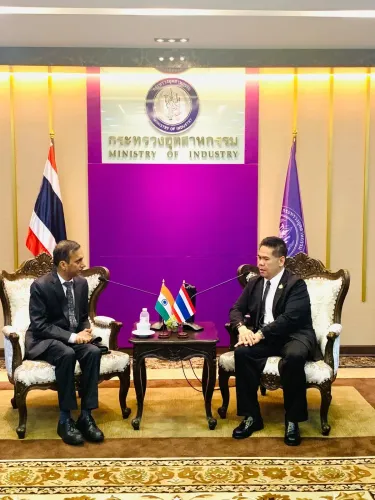
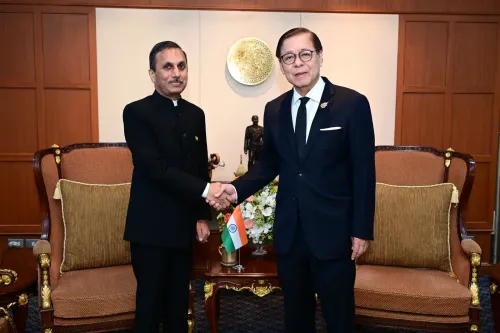
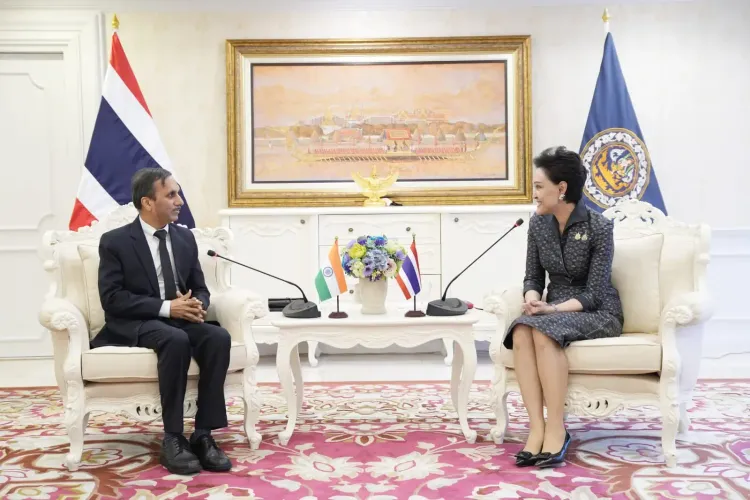
India's Ambassador Puneet Agrawal met Thailand's Deputy PM Suphajee Suthumpun in Bangkok on 17 September 2026 to discuss trade and investment ties.
Commerce Minister Piyush Goyal had earlier met the Thai delegation on 9 September 2026 , covering cooperation in pharmaceuticals, clean energy, automobiles, space, and other sectors.
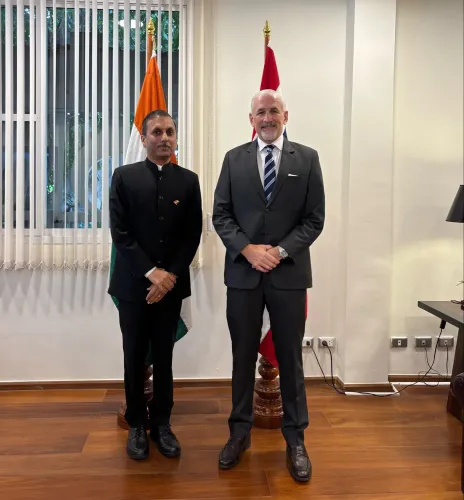
Thailand's Deputy PM Sihasak Phuangketkeow attended the 18th BRICS Summit in New Delhi on 12–13 September 2026 .
Both nations are working to resolve tariff and non-tariff barriers and achieve balanced bilateral trade .
India–Thailand diplomatic ties date to 1947 ; Thailand's ' Act West ' policy complements India's ' Act East ' policy.
India and Thailand have intensified diplomatic engagement on trade and investment, with both sides identifying areas of economic complementarity, working to resolve tariff and non-tariff barriers, and pursuing balanced bilateral trade for mutual benefit. The latest round of talks took place on 17 September 2026 in Bangkok, underscoring a steady uptick in high-level contact between the two nations.
Key Developments
India's Ambassador to Thailand, Puneet Agrawal, met Thailand's Deputy Prime Minister and Minister of Commerce Suphajee Suthumpun in Bangkok on 17 September 2026. According to a statement posted on X by the Indian Embassy in Thailand, the two sides exchanged views on 'further strengthening trade and investment ties between India and Thailand by identifying areas of complementarities, resolving tariff and non-tariff barriers and having a balanced trade for mutual benefit.'
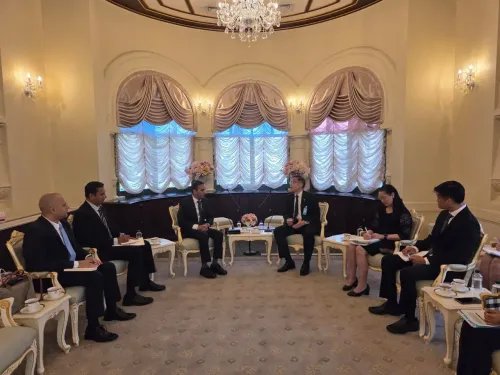
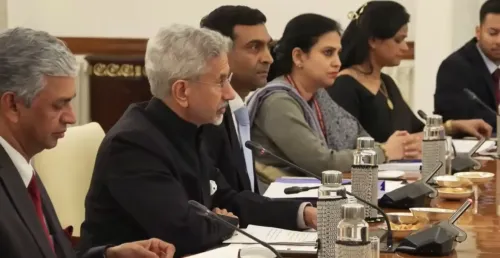
The meeting is the latest in a rapid sequence of bilateral exchanges. On 9 September 2026, Union Minister of Commerce and Industry Piyush Goyal held discussions in New Delhi with a Thai delegation led by Deputy PM Suthumpun, covering cooperation in trade, investment, tourism, logistics, pharmaceuticals, food processing, clean energy, automobiles, and space.
What the Ministers Said
Following his 9 September meeting, Minister Goyal posted on X: 'Held a productive meeting with the Thai delegation led by H.E. Ms. Suphajee Suthumpun, Deputy Prime Minister and Minister of Commerce of Thailand. Discussed ways to further strengthen India–Thailand economic relations and deepen cooperation across trade, investment, tourism, logistics, pharmaceuticals, food processing, clean energy, automobiles, and space. Look forward to continued engagement and stronger partnerships between India and Thailand, creating greater opportunities for businesses and people of both countries.'
Broader Diplomatic Momentum
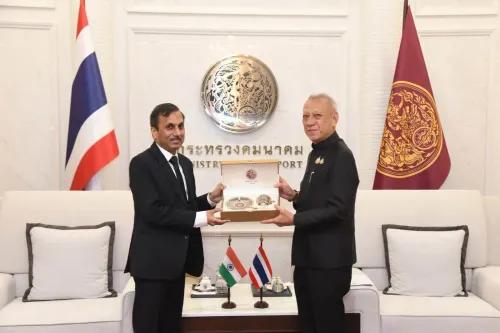
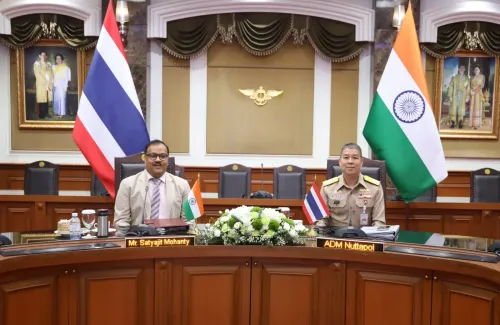
The bilateral engagement has extended well beyond commerce. On 7 September 2026, Ambassador Agrawal called on Thailand's Vice Minister for Foreign Affairs Vijavat Isarabhakdi, where discussions covered strengthening the strategic partnership across trade, investment, defence and security, and cultural exchanges, according to the Indian Embassy in Thailand.
Separately, Thailand's Deputy Prime Minister Sihasak Phuangketkeow visited India the week prior to attend the 18th BRICS Summit in New Delhi on 12–13 September 2026, adding a multilateral dimension to what is increasingly a dense bilateral calendar.
Strategic Context: Act East Meets Act West
Diplomatic ties between India and Thailand were established in 1947, with both nations celebrating the 75th anniversary of their diplomatic relationship in 2022. The relationship spans trade and investment, defence and security, connectivity, culture and tourism, education, science and technology, and people-to-people exchanges.
Notably, Thailand is India's maritime neighbour, and its 'Act West' policy is seen as a natural complement to India's 'Act East' policy — making Bangkok a pivotal node in New Delhi's Indo-Pacific and ASEAN outreach. This convergence gives the bilateral trade-barrier discussions a strategic weight beyond routine commerce.
What Comes Next
With senior officials from both sides having met multiple times within a fortnight, the expectation is that the two governments will move toward a structured framework addressing non-tariff barriers — an area that has historically constrained bilateral trade flows despite geographic proximity and policy alignment. Concrete outcomes, including sectoral cooperation agreements, could follow in the months ahead as both nations look to translate diplomatic momentum into measurable economic gains.
Point of View
Ministerial meetings, and a BRICS encounter — suggests both sides are engineering a deliberate upgrade of the relationship rather than following a routine diplomatic calendar. Yet the agenda items — tariff barriers, non-tariff barriers, balanced trade — are the same ones that have been discussed for years without a breakthrough. The real test is whether this diplomatic intensity produces a structured mechanism to cut barriers, particularly in agriculture and processed food where Thai imports have long been a friction point. India's Act East policy has generated considerable bilateral traffic but uneven economic outcomes; Thailand needs to become a showcase, not just a talking point.
NationPress
18 Sept 2026
Frequently Asked Questions
What did India and Thailand discuss in their September 2026 talks?
India and Thailand discussed further strengthening trade and investment ties, identifying areas of economic complementarity, resolving tariff and non-tariff barriers, and achieving balanced bilateral trade for mutual benefit. The talks were held between India's Ambassador Puneet Agrawal and Thailand's Deputy PM Suphajee Suthumpun in Bangkok on 17 September 2026.
Which sectors are India and Thailand focusing on for deeper cooperation?
The two nations are looking to deepen cooperation across trade, investment, tourism, logistics, pharmaceuticals, food processing, clean energy, automobiles, and space. These sectors were specifically identified during the 9 September 2026 meeting between Commerce Minister Piyush Goyal and the Thai delegation led by Deputy PM Suthumpun.
How long have India and Thailand maintained diplomatic ties?
India and Thailand established diplomatic ties in 1947, and both nations marked the 75th anniversary of their diplomatic relationship in 2022. The relationship covers trade and investment, defence and security, connectivity, culture and tourism, education, science and technology, and people-to-people exchanges.
How does Thailand fit into India's Act East policy?
Thailand is a maritime neighbour of India, and its 'Act West' policy is seen as a strategic complement to India's 'Act East' policy, making Bangkok a key node in India's ASEAN and Indo-Pacific outreach. This convergence gives bilateral trade discussions a broader strategic dimension beyond routine commerce.
Was there any BRICS-related engagement between India and Thailand recently?
Yes. Thailand's Deputy Prime Minister Sihasak Phuangketkeow visited New Delhi to attend the 18th BRICS Summit held on 12–13 September 2026, adding a multilateral dimension to the intensified India-Thailand bilateral calendar.